
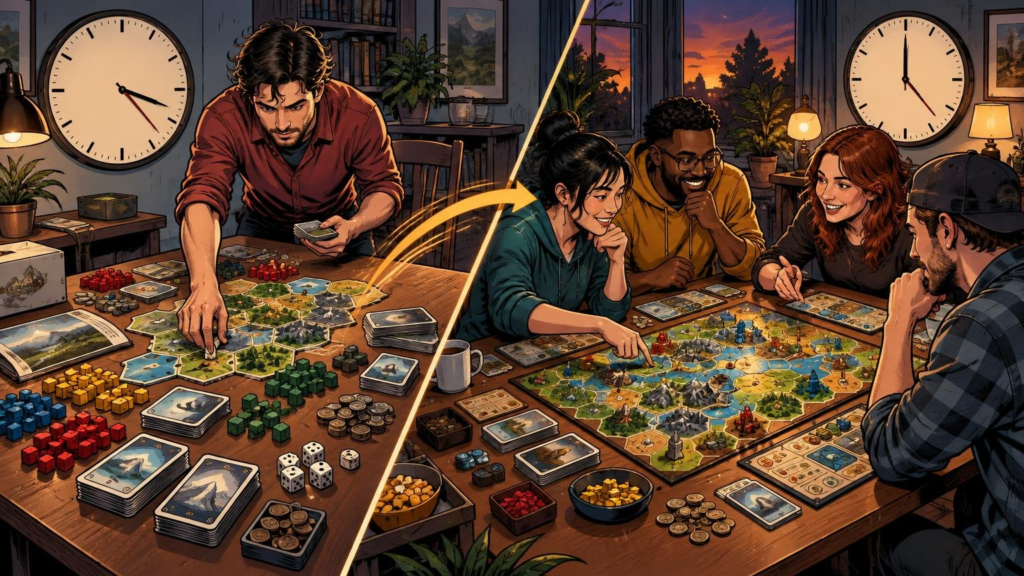
Setup Time vs Play Time: The Board Game Metric People Forget to Check
A box’s playing-time estimate rarely tells you how long the entire event will occupy. Use a full-session time budget to choose games your group can finish comfortably.

A box’s playing-time estimate rarely tells you how long the entire event will occupy. Use a full-session time budget to choose games your group can finish comfortably.
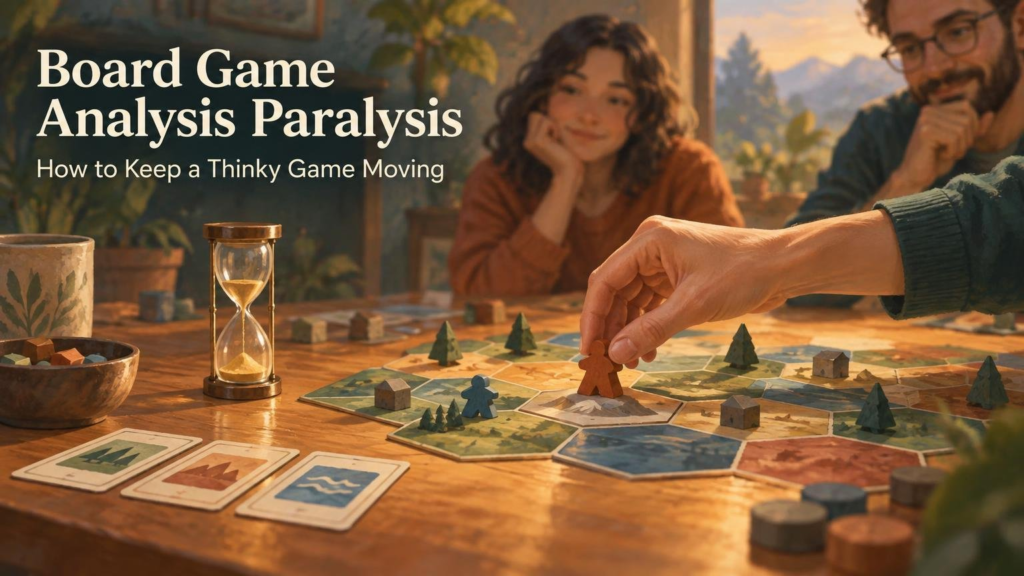
Slow turns do not have to ruin a thoughtful game. Use clearer teaching, manageable choices, and a shared pace agreement to reduce downtime without rushing players.
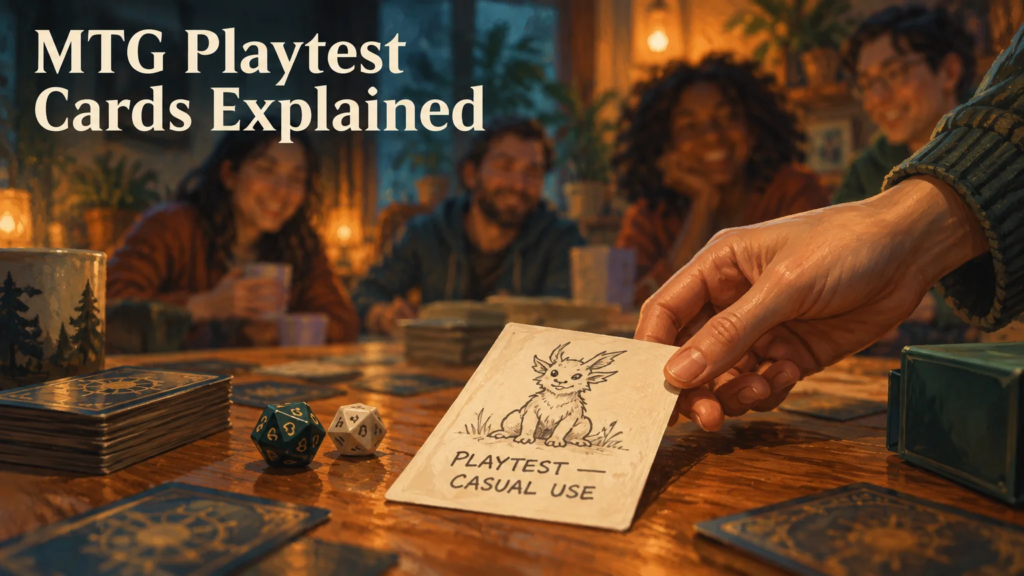
Playtest card can describe several very different things in Magic. Here is how to distinguish casual stand-ins, internal prototypes, and official Mystery Booster cards—and decide where each belongs.
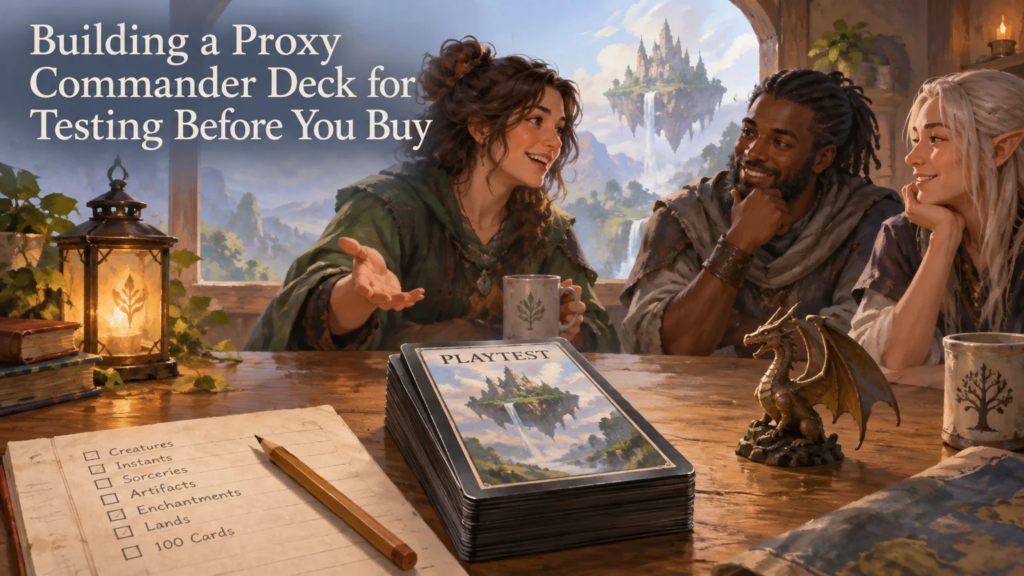
A practical guide to building and testing a complete Commander deck with playtest cards before spending money on the final list.

MTG foil curling is best understood as uneven movement within a layered, paper-based card. Here is what players can realistically do about it.
Prerelease is usually a beginner-friendly Sealed event, while Draft adds card-picking decisions before deckbuilding. Here is how to choose the right Limited experience.

Control turns supernatural combat, brutalist offices, institutional absurdity, and curiosity-led exploration into one exhilarating argument: order is only chaos wearing an office badge.
Reality Fracture Prerelease Packs and Play Boosters remain on schedule, but regional premium-product delays make local confirmation essential.

Five low-effort D&D recap formats that help players remember decisions, track unresolved problems, and arrive ready for the next session.

Reality Fracture gives each Two-Headed Giant Prerelease team one Prerelease Pack and two additional Play Boosters, putting more weight on shared deckbuilding decisions.