
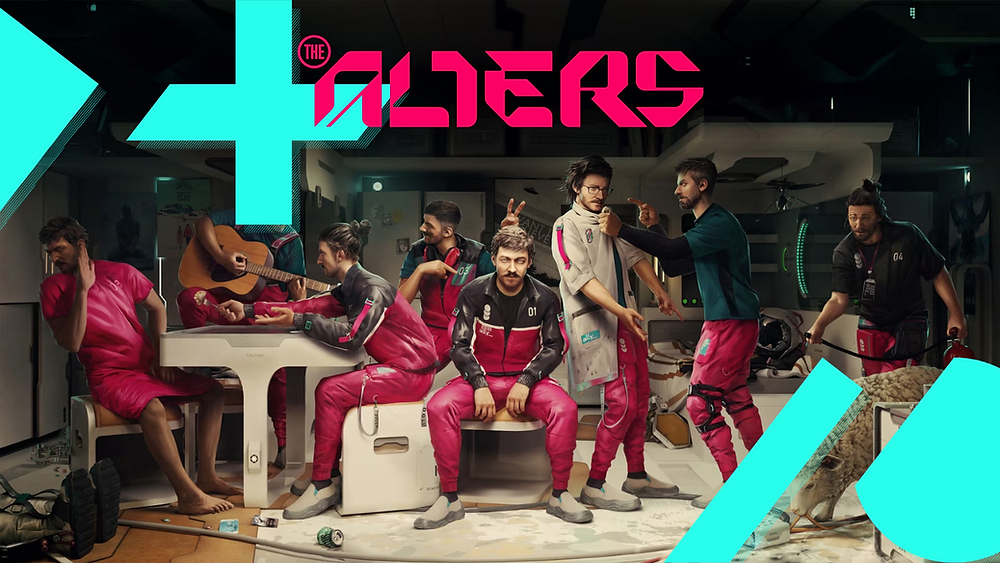
TL;DR: This The Alters review finds an exceptional survival-management game in which every practical decision also becomes an emotional one. Assigning work, extracting resources, managing fatigue, and preparing a mobile base for the next sunrise would already form a gripping loop. Making every worker another possible version of protagonist Jan Dolski turns that loop into something far more unsettling: a study of regret in which human lives appear on the same schedule as mining and maintenance.
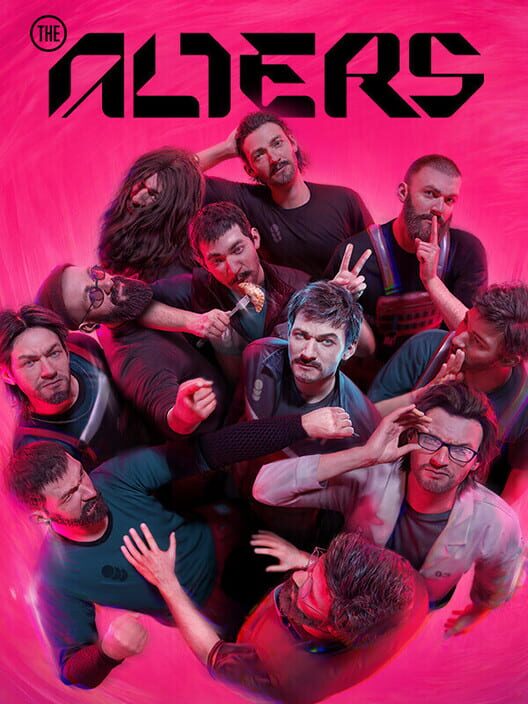
The Alters (2025)
- Developer
- 11 bit studios
- Genres
- Simulation · Adventure
- Platforms
- PC · PS5 · Xbox Series X|S
- Release date
- Jun 13, 2025
Our verdict
The Alters is an exceptional union of survival management and character-driven science fiction, turning schedules, scarce resources, and alternate lives into one tense, emotionally coherent whole.
The clever premise is only the beginning. What makes The Alters remarkable is the discipline with which 11 bit studios makes that premise playable. Jan cannot contemplate the roads he never took from a comfortable philosophical distance. He creates those unrealized selves, lives beside them, depends on their expertise, and asks them to work under lethal time pressure. For me, that fusion of regret, labor, and survival is the game’s defining achievement—and the reason it earns an essential recommendation.
Released in 2025 and developed and published by 11 bit studios, The Alters follows Jan after he becomes stranded on a hostile planet. His route to survival involves creating alternate versions of himself to operate an enormous mobile base before the advancing sunrise catches it. 11 bit studios’ official overview establishes that premise, but the game’s success lies in everything it builds around it. This is a spoiler-light assessment of the 2025 base game, separate from the later Last Variable expansion.
The Alters makes its science-fiction premise do real work
Alternate selves are an irresistible narrative device because they invite grand questions with almost no effort. Who would I have become if I had chosen another career, stayed in a relationship, or listened to a different influence? A weaker game could have treated those possibilities as a line of quirky clones, each ready to deliver a monologue about Jan’s past before becoming another upgrade icon. The Alters understands that the premise becomes meaningful only when those lives complicate what the player needs to do.
Different Alters bring specialist abilities suited to mining, technical work, research, and the base’s other demands. Jan needs that expertise because the operation cannot survive as a one-man project. Yet staffing the base is not equivalent to slotting anonymous workers into a production chain. Each recruit represents a life shaped by different choices, complete with the attitudes and conflicts that followed from them. The same person who solves an operational problem can create an emotional one, and reducing him to his output feels efficient precisely because it also feels morally inadequate.
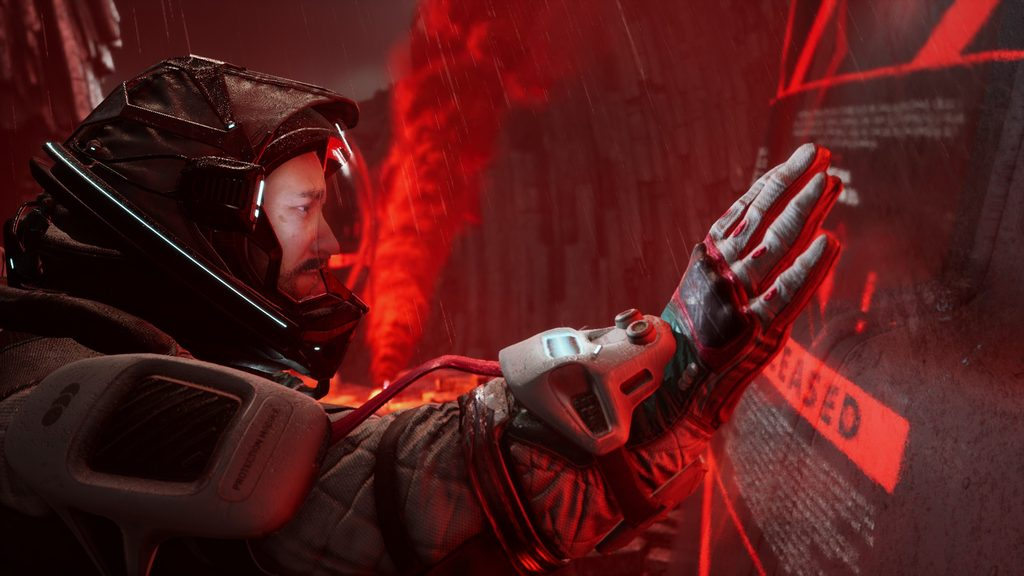
That tension gives ordinary workforce optimization unusual weight. A work assignment is still a mechanical decision: somebody must extract material, maintain equipment, or advance research. It is also Jan deciding what another version of himself is for. The language of management games—specialization, efficiency, productivity—suddenly sounds colder when applied to a person who shares the protagonist’s face and memories.
This is where The Alters moves beyond a good story attached to a competent survival game. Its narrative is not waiting in a separate room for the management systems to finish. The systems create the narrative pressure. Mechanical usefulness shapes relationships, while relationships make optimization uncomfortable. I admire that refusal to let either half of the game become decorative.
The sunrise turns a schedule into an antagonist
The approaching sunrise gives the campaign its pulse. Exploration, manual labor, fatigue, morale, research, resource processing, and preparation for relocation all compete for finite hours. A job completed late is not merely an inefficient number on a report; it can leave the base unprepared to move. Time pressure makes every apparent opportunity carry an implied cost.
Many management games eventually let competence drain the drama from their systems. Once production lines stabilize, the pleasure shifts toward expansion, decoration, or watching a well-built machine run. The Alters resists that comfort. Its mobile base is not a permanent monument. It is a lifeboat on wheels, and the lethal daylight keeps reminding everyone aboard that stability is temporary.
I like how that deadline transforms routine planning into drama. Sending an Alter to one station means leaving another need unanswered. Asking for more labor may preserve the base while worsening fatigue or resentment. Spending Jan’s time gathering a missing resource could save production, but it also consumes hours that might have opened another route or addressed a personal crisis. The game does not need every choice to announce itself with a theatrical morality prompt. Its strongest decisions arrive disguised as tomorrow’s rota.
The pressure also clarifies the game’s theme. Jan cannot become every possible version of himself, just as the base cannot pursue every useful objective before sunrise. Choosing one future necessarily abandons another. That idea could sound embarrassingly tidy in a cutscene; expressed through a schedule that simply does not have enough empty spaces, it becomes immediate and cruel.
Compact exploration serves the survival problem
The planet is hostile terrain rather than an open-world holiday destination. Its compact, handcrafted areas keep exploration directed toward survival, while fast travel and infrastructure built by the player gradually turn dangerous ground into a functioning logistical network. That progression matters because it changes the meaning of familiar routes. A distant resource deposit begins as a costly expedition and becomes manageable only after Jan invests time and material into reaching it efficiently.
This is exploration as preparation rather than sightseeing. The reward is not merely discovering another attractive horizon; it is shortening tomorrow’s journey, improving the flow of material, or opening an option before the next deadline. Infrastructure therefore feels like an argument made against the planet. Every connection says that this patch of hostile ground has been understood well enough to use, at least temporarily.
The smaller scale suits the game. A vast map would dilute the urgency and turn too much of Jan’s day into commuting. The compact environments instead keep attention on the cost of movement. They also give the base a stronger emotional pull: expeditions feel like departures from a vulnerable home rather than brief interruptions to a general wandering adventure.
Some gathering and traversal still become repetitive. Repeated resource runs do not always produce a fresh tactical or narrative wrinkle, and the friction can feel especially conspicuous when the surrounding systems are so tightly interconnected. Yet the repetition rarely becomes empty padding. Materials feed production, production supports relocation, and relocation keeps the entire strange household alive. Even a familiar errand usually belongs to an urgent larger plan.
Every specialist remains a person, not a perk
The Alters’ emotional force depends on its variations of Jan feeling like characters rather than skill bonuses with matching faces. Their different histories allow the game to examine regret through personality, behavior, and conflict. These are not clean demonstrations of how one altered decision produces one predictable outcome. They are people formed by accumulated circumstances, and their proximity denies Jan the comforting fantasy that another life would have been uncomplicated.
The voice work is vital to that distinction. Each Alter must sound recognizably connected to Jan without collapsing into the same performance, and the praised characterization helps the story scenes carry the same tension as the management layer. Differences in temperament then influence how the shared situation feels: the base is simultaneously workplace, shelter, laboratory, and a deeply unhealthy family reunion.
I find the game most affecting when usefulness and intimacy become impossible to separate. Jan needs these people because they possess skills he lacks, but that dependence does not grant him uncomplicated authority over them. They can recognize exploitation, resent decisions, and bring their own pain into a system that would prefer obedient specialists. The player may think in terms of coverage and output; the Alters insist that they have reasons to care about how that efficiency is achieved.
That concern gives The Alters a distinctive place among character-driven science-fiction games. Like the bureaucratic nightmare explored in our Control review, it finds personality inside institutions and procedures. Here, however, the institution is effectively one man trying to organize his unrealized lives into a viable workforce. The absurdity is funny until somebody has to take the night shift.
Combat is the one system that feels imported
The light combat is the weakest part of an otherwise unusually coherent design. Hostile encounters and the shared suit-battery constraint can make exploration more dangerous, but they do not offer the strategic richness of scheduling, staffing, and base development. Instead of deepening the central dilemma, they can become another tax on time and supplies.
That is not inherently disastrous. The planet should resist Jan, and exploration needs risk if infrastructure and preparation are going to matter. The issue is that combat expresses that resistance less elegantly than the sunrise, terrain, resource scarcity, or fatigue. Those pressures force decisions that reveal priorities. A thin encounter is more likely to consume a resource than expose a character.
The battery limitation can also make a difficult outing feel punitive. When exploration has already demanded careful routing and a meaningful time commitment, combat sometimes adds friction without adding an equally interesting choice. The Alters is at its best when I can understand why a setback emerged from my priorities. Its action is less satisfying because the answer can amount to having paid an extra toll.
Still, this weakness remains contained. Combat does not redefine the game or overpower its better ideas. The management loop retains its urgency, and the expeditions continue to feed consequential production and relationship decisions. This is a blemish on the design rather than a crack through its foundation.
A masterpiece of pressure, but not a relaxing base builder
The same intensity that makes The Alters exceptional will make it exhausting for some players. Fatigue, limited resources, manual work, morale, and the approaching sunrise are not optional seasoning. They are the structure. Players who want to construct at leisure, experiment without consequences, or treat a base as a decorative personal project should not mistake the accessible scale for a relaxed sandbox.
The pressure is valuable because it prevents the premise from becoming comfortable. There is no ethical weight in choosing between priorities when everything can be completed eventually. The Alters creates meaning by refusing sufficient time. It asks the player to live with incomplete work, compromised plans, and people whose needs do not politely pause while the base solves a supply problem.
That does not make it hostile for hostility’s sake. The compact environments, clear specialties, and infrastructure progression give the player tools to improve. Mastery still matters. It simply does not eliminate responsibility. Becoming better at the game means making more informed choices about what can be saved, not discovering a magical schedule in which nobody pays a cost.
Players primarily seeking action should also look elsewhere. The Alters’ confrontations are far less compelling than its planning, and its greatest victories may look mundane from outside: a sensible assignment, a route completed early, enough material processed before relocation, or a conversation addressed before resentment hardens. For players drawn to thoughtful science fiction and demanding time management, those quiet victories are exactly the point.
The Alters review verdict
The Alters is an outstanding example of a game discovering the mechanics already hidden inside its theme. Alternate lives become specialists. Regret becomes workplace tension. Mortality becomes a sunrise advancing across the map. Even the mobile base embodies the central idea: survival depends on gathering incompatible versions of one life and somehow keeping them moving together.
Its light combat and occasional gathering tedium are real weaknesses, but they are small beside the precision of the larger design. Few games connect character, atmosphere, resource management, and pacing this completely. The hostile planet is not merely a backdrop, and the Alters are not merely an ingenious hook. Every part contributes to the same anxiety—that time is finite, every choice excludes another, and no person can live all the lives they imagine.
That unity is why I consider The Alters essential. It respects management-game players by making schedules and supply chains dramatically meaningful, and it respects science-fiction players by trusting systems to carry ideas that dialogue alone could not. If you want a leisurely construction game, its pressure may be miserable. If you want survival management in which every shift assignment reveals something about work, identity, and the lives left behind, The Alters is a triumph.
