
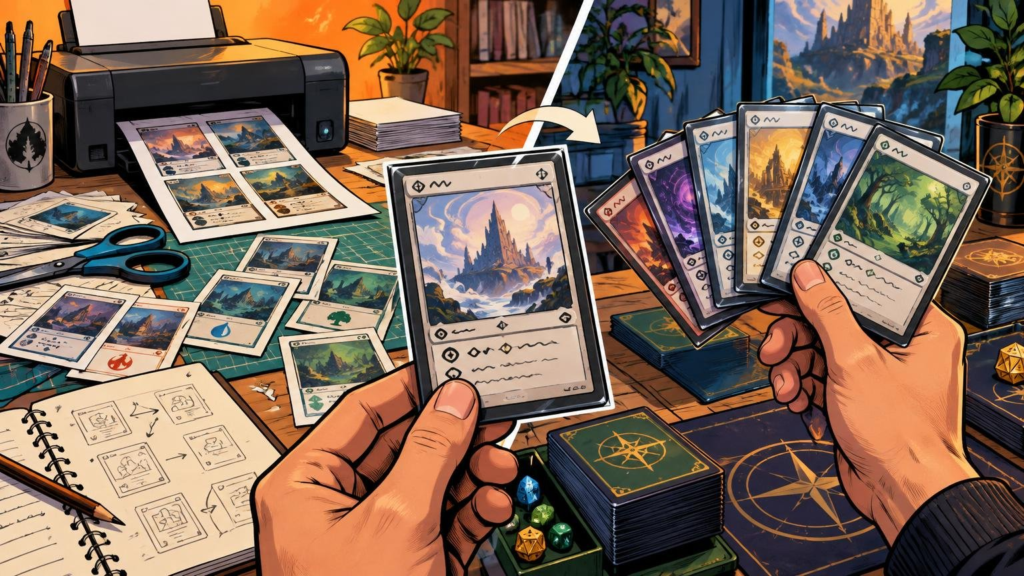
Home-Printed vs Professionally Printed MTG Proxies: Which Fits Your Use Case?
Home printing is ideal for fast deck changes and cheap experiments, while professional printing better suits stable lists, cubes, and repeated casual play.

Home printing is ideal for fast deck changes and cheap experiments, while professional printing better suits stable lists, cubes, and repeated casual play.

Learn how to recognize quarterbacking, offer useful advice without taking over, teach new players while preserving agency, and choose co-op structures that fit your group.
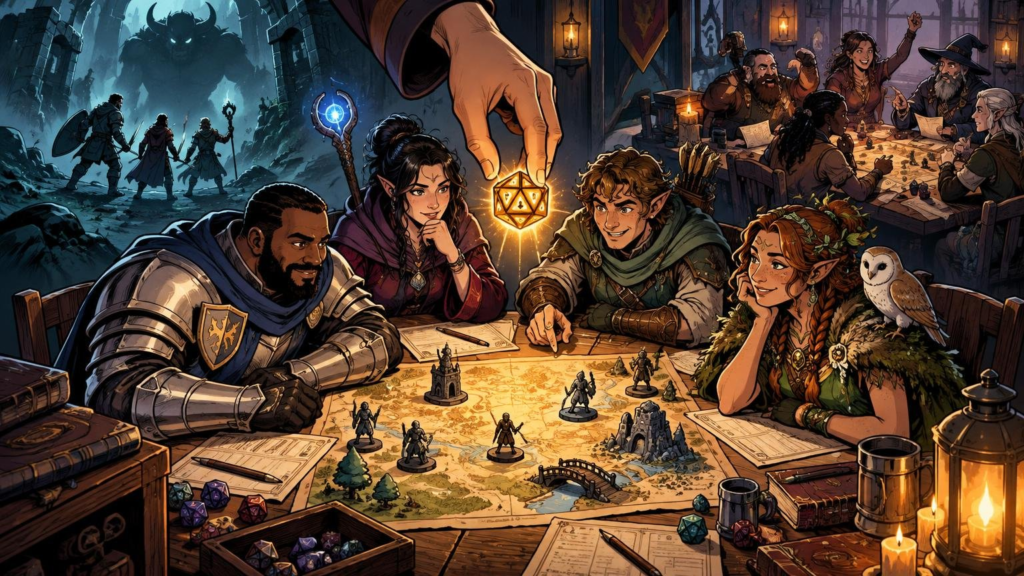
Four players is the most practical starting point for many D&D groups, but three, five, and six-player parties can all work with the right preparation.

House rules can solve real problems for a particular group, but they can also disrupt balance, confuse new players, and create arguments. Here is how to change a game without breaking trust at the table.

Board game weight is a useful estimate of how demanding a game may feel, but the number cannot tell you whether its challenge will suit your group.

A spoiler-light guide to scheduling a Baldur’s Gate 3 campaign, sharing dialogue choices, managing exploration, protecting saves, and handling mods.

ProxyMTG is the practical choice for a decklist-led 300-card Battle Box, while PrintMTG is a close alternative for custom-heavy projects.

A board game expansion earns its shelf space when it solves a real problem, creates meaningful variety, and fits your group’s tolerance for added rules and setup.

A practical, beginner-friendly guide to launch-party registration, machine queues, cabinet care, tournament conduct, coaching, nudging, and social etiquette.

Still Wakes the Deep transforms an oil rig into a terrifying industrial death trap. Limited stealth restricts player expression, but its atmosphere, performances, and momentum make the journey gripping.