
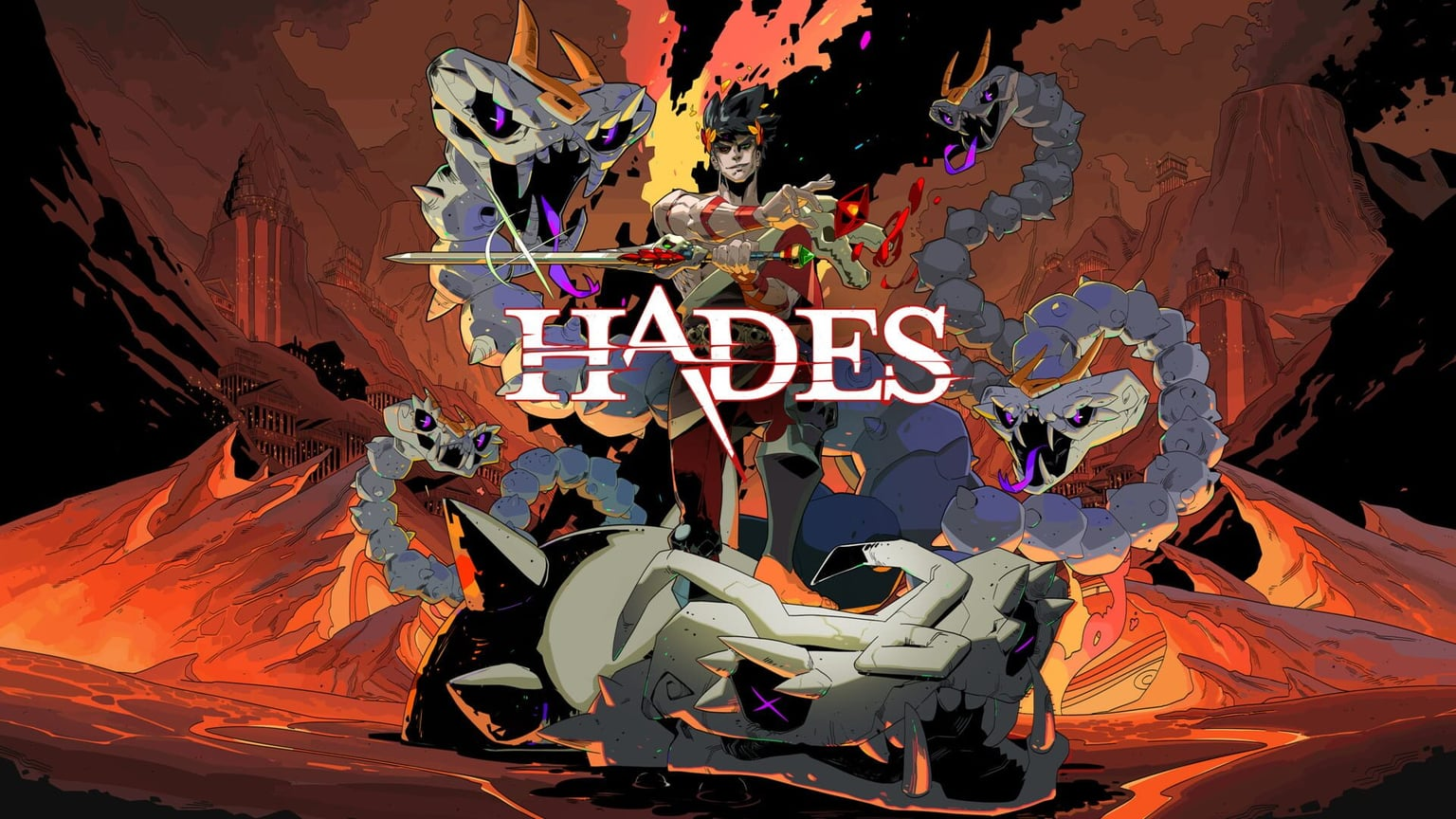
Hades is the rare roguelite in which victory and defeat feel like parts of the same irresistible rhythm. An escape attempt can collapse because of one reckless dash, an awkward collection of Boons, or a boss that exposes every bad habit you thought you had outgrown. Yet death does not simply erase the last half-hour. It gives Zagreus new conversations, new opportunities, permanent resources, and another reason to step through the courtyard with a different weapon. Hades earns its highest praise by making failure mechanically instructive, narratively rewarding, and genuinely exciting.
Our verdict Hades is a masterful action roguelite that turns every frantic escape attempt, improvised build, and inevitable death into meaningful progress. Its demanding combat and unusually reactive storytelling make repetition feel purposeful rather than punitive.
Hades (2020)
This Hades review covers Supergiant Games’ original single-player action roguelite, which reached its v1.0 release on September 17, 2020—not Hades II, which is a separate direct sequel starring Melinoë. Supergiant’s official Hades FAQ identifies the original game and its platforms, while the studio’s Hades II FAQ establishes the sequel as its own game rather than an expansion or replacement. Major story revelations are avoided here, but the structure of repeated escape attempts and long-term progression is discussed.
TLDR: Every failed escape still moves Hades forward
Hades combines fast, demanding combat with an unusually reactive story and one of the most satisfying progression structures in the genre. Six weapons become an enormous tactical playground once Boons, Aspects, Hammer upgrades, keepsakes, and permanent improvements begin interacting. More importantly, death returns Zagreus to a lively cast rather than a sterile menu. The familiar regions and repeated runs will not convert everyone who dislikes roguelites, and the fuller narrative payoff requires sustained commitment. For players who enjoy expressive builds, mechanical mastery, and character stories that unfold gradually, however, Hades is essential.
The dash turns movement into the heart of combat
Many action games give the player a dodge and call the defensive design finished. Hades builds almost its entire combat language around the dash. It creates distance, crosses danger, places Zagreus for his next attack, and becomes an offensive tool through dash-strikes and compatible Boons. Environmental hazards and tightly packed enemies make positioning matter constantly, so movement is never downtime between attacks. It is the connective tissue holding every exchange together.

That foundation gives combat tremendous momentum. Zagreus rarely feels as though he is waiting for permission to act. He can commit, reposition, interrupt his own complacency, and turn a defensive escape into immediate pressure. The result is action that feels aggressive without becoming thoughtless. Hades wants quick reactions, but it also wants the player to read the room: which enemy is controlling space, which projectile demands attention, and whether one more attack is worth the risk.
The impressive part is how clearly that speed communicates mistakes. Deaths can be abrupt, but the combat is structured around decisions a player can reconsider on the next attempt. Perhaps a dash was spent too early. Perhaps crowd control was sacrificed for boss damage. Perhaps a supposedly unstoppable build depended too heavily on standing still. The game’s intensity creates plenty of chaos, yet its movement remains readable enough for failure to teach rather than merely scold. PC Gamer likewise identified the dash and dash-strike as central to avoidance, positioning, environmental interaction, and the combat’s momentum. PC Gamer’s analysis of Hades’ combat supports that mechanical description.
Six weapons produce far more than six ways to fight
Hades has six Infernal Arms, and that modest number is one of its smartest exercises in restraint. Each establishes a distinct starting relationship with range, timing, and risk. A shield encourages a different kind of confidence from the spear; the Adamant Rail creates different spacing problems from weapons that put Zagreus directly beside his target. The arsenal is small enough for every weapon to develop an identity rather than becoming another icon in an overstuffed equipment screen.
The real variety appears once a run starts modifying that baseline. Olympian Boons alter attacks, special moves, casts, and dashes. Daedalus Hammers can reshape how a weapon behaves. Keepsakes influence planning, Mirror of Night upgrades provide permanent support, and unlockable Aspects create further variations on each arm. Hades does not need dozens of disposable swords because its systems keep asking new questions about the six weapons it already has.
This is where buildcraft becomes more than chasing a prewritten best answer. A player begins with preferences, but each chamber presents a limited choice of rewards. The pleasure comes from noticing what the run is offering and turning it into something coherent. A Boon that looks unremarkable in isolation can become the missing link between rapid attacks, status effects, and a defensive dash. A Hammer upgrade can push a familiar weapon into a style that initially feels wrong, then becomes the basis of the entire escape attempt.

For me, that improvisation is more important than sheer build count. Hades makes adaptation feel creative. There is satisfaction in recognizing an especially powerful combination, but there is just as much in rescuing a strange run—leaning into an unexpected effect, changing priorities, and discovering that a weapon you had mentally filed away can support another approach. The game leaves room for mastery without reducing mastery to memorizing one approved loadout.
Death is both a lesson and the next chapter
That changes the emotional shape of failure. Losing a promising run still hurts, particularly when the finish seems close, but returning home creates anticipation alongside frustration. Who will be waiting? Which conversation will continue? What has changed because Zagreus reached a new place, encountered a particular figure, or failed once again? The House is not a consolation room. It is one half of the game’s central rhythm.
The approach also gives the cast room to breathe. Rather than rushing every relationship through a conventional sequence of cutscenes, Hades lets familiarity accumulate. Characters can be funny, irritated, guarded, affectionate, or quietly revealing across many returns. The sheer volume of reactive dialogue helps maintain the illusion that these figures are following Zagreus’ struggle rather than resetting with the dungeon. Supergiant said the v1.0 release added thousands of voice lines alongside new character events, music, and art.
Crucially, the story and progression systems reinforce each other. A new conversation provides another reason to attempt an escape; an escape produces new circumstances for conversation. That mutual support solves a common problem in repeat-run games, where narrative scenes can feel detached from the activity consuming most of the player’s time. Here, Zagreus’ inability to leave cleanly is the premise, the mechanical reset, and the engine of his relationships.
The Underworld has a voice of its own
Hades could have functioned with its combat and progression alone, but its presentation gives the repetition a vivid identity. Jen Zee’s art direction renders gods, shades, and monsters with sharp silhouettes and theatrical confidence. Characters look immediately legible without becoming simple. They appear grand enough for myth while retaining the expressions and attitudes of a deeply complicated family—a family that happens to control death, war, wine, and several other things best kept away from an awkward dinner.
Darren Korb’s score performs a similar balancing act. It can drive combat with heavy urgency and then make room for the more reflective tone of the House. Supergiant identifies Korb as composer and audio director and describes the original soundtrack as approximately two and a half hours long. D.I.C.E. credits also identify Greg Kasavin as creative director and Zee as art director. Those production details matter because Hades feels unusually unified: art, music, writing, and combat all serve the same mixture of mythic drama, rebellious energy, and intimate family conflict.
The voice work completes that cohesion. Hades contains an enormous amount of dialogue, yet quantity is valuable here because it supports the repeated structure. New lines and situational responses make familiar spaces feel alive. Even routine returns carry a small possibility of discovery, and that possibility helps the House remain somewhere I want to revisit rather than somewhere the game sends me after taking away a run.
An escape is a milestone, not the end of the road
Hades understands that becoming successful can be dangerous for a roguelite. Once the player has learned the bosses and assembled a winning build, the mystery could evaporate. Instead, later unlocks, weapon Aspects, boss variations, additional goals, and the Pact of Punishment keep mastery moving. The Pact introduces difficulty modifiers that let players decide how to make subsequent attempts harsher rather than relying on one blunt escalation.
That flexibility matters. Increased challenge becomes a conversation between the player and the game: accept a condition, see how it changes the run, and decide whether the resulting pressure is interesting. It supports experimentation without pretending every player wants the same definition of difficulty. At the other end, God Mode offers an official way to soften the struggle while retaining the essential structure and progression. Accessibility here does not mean stripping away the cycle that defines Hades; it means giving more players a workable path through it.
The first successful escape is also not the complete narrative endpoint. The wider resolution and a substantial amount of later material require continued runs, with v1.0 adding a true ending, further character events, late-game unlocks, and a final-boss variation. This is not postgame content stapled onto an already closed story. It extends the same argument Hades has made from the beginning: one run cannot contain everything that matters.
Its repetition is purposeful, but still repetition
Hades handles the roguelite cadence exceptionally well, but it cannot make that cadence universal. Players revisit familiar regions, encounter recurring enemy groups, and fight through many attempts. The arrangement of chambers, offered rewards, builds, and dialogue changes the texture, yet the underlying journey remains recognizable. Anyone who fundamentally dislikes restarting after death may admire the craft while still feeling the structure pushing against them.
The narrative pacing carries the same tradeoff. Story developments arrive through accumulated conversations and repeated encounters rather than through a short chain of conventionally staged climaxes. GameSpot noted both the strength of that integration and the sustained engagement required to reach fuller narrative resolution. GameSpot’s review of Hades’ long-form structure captures why that cadence can be rewarding while remaining taste-dependent.
This is the meaningful reservation, not a hidden defect that disappears under praise. Hades asks for commitment. It wants players to enjoy the process of refining execution, revising builds, and checking in with characters over time. Someone looking for a tightly linear campaign may find that its finest payoff arrives too deliberately. The game provides persistent progression and God Mode to soften the genre’s harsher edges, but it does not—and should not—pretend to be something other than a repeat-run game.
Hades makes the cycle worth embracing
Hades succeeds because none of its major parts merely sits beside the others. Dashing creates the combat’s speed and precision. Weapons provide strong foundations for improvisation. Boons and upgrades make each attempt a tactical argument assembled under pressure. Death returns Zagreus to characters whose stories reward failure with curiosity rather than emptiness. Long-term modifiers then turn eventual success into the beginning of a deeper test.
That unity makes Hades more than an excellent action game with unusually good writing. It is a game in which structure expresses theme. Zagreus keeps pushing against a seemingly immovable order; the player keeps testing skill and judgment against a system designed to send him home. Progress comes through persistence, changed relationships, accumulated knowledge, and the willingness to try a different approach after the last one fell apart.
Players who enjoy fast single-player action, adaptive buildcraft, demanding mastery, and gradually unfolding character stories should treat Hades as essential. Those who dislike resets or want a short, linear adventure should approach with clear expectations. For everyone willing to accept its cycle, Hades turns dying into discovery and repetition into momentum. Few games make another failed escape feel so much like time well spent—and fewer still make the next attempt so difficult to resist.
