
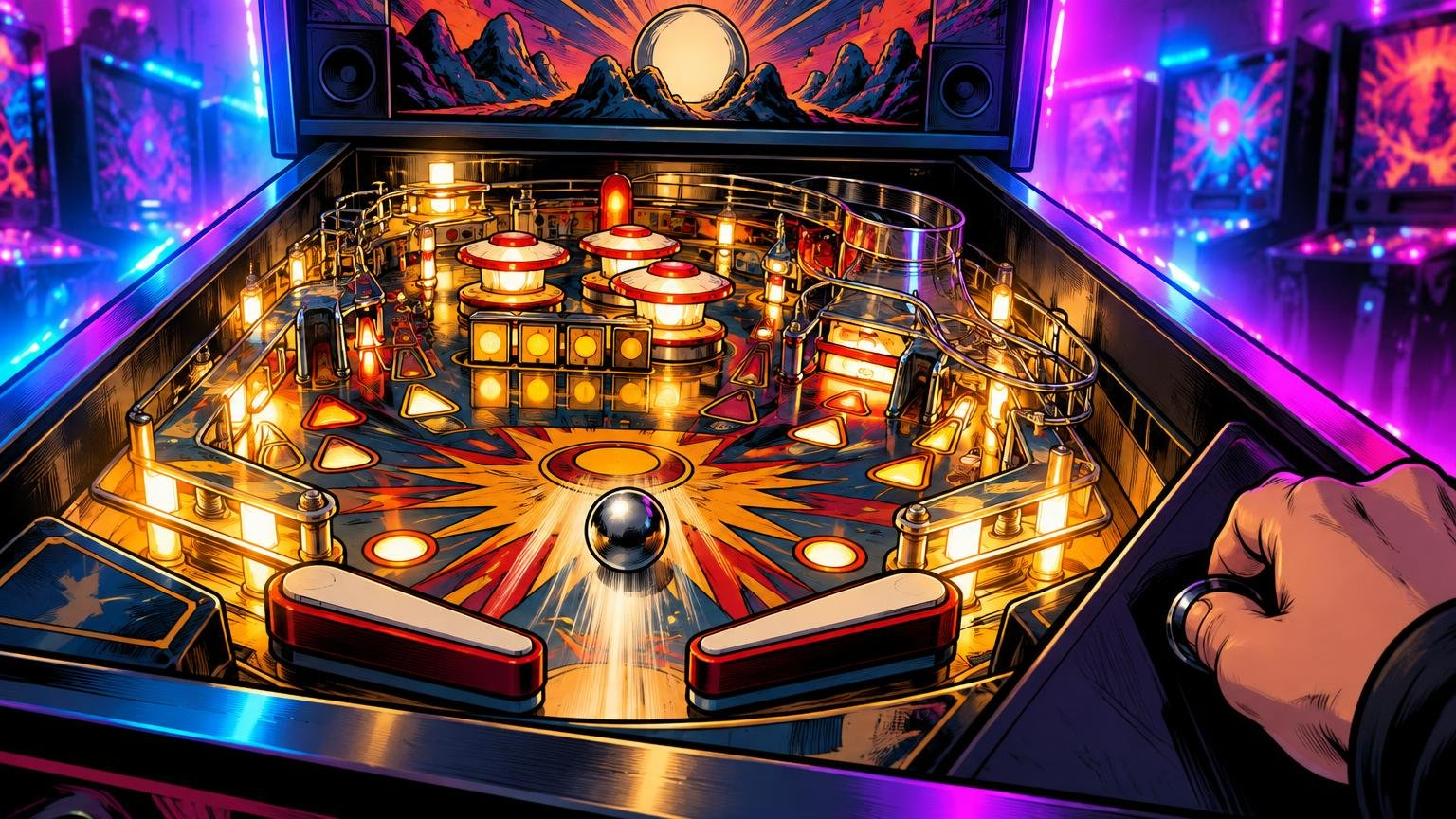
TLDR
Pinball lighting mods are worth it when they solve a specific problem: dim inserts, excessive heat, poor shot visibility, an unreadable backbox, or lighting that no longer communicates game events clearly. A careful LED conversion can substantially improve an older incandescent machine. On a modern factory-LED game, extra cabinet strips, speaker lights, toppers, and synchronized effects are usually presentation upgrades rather than necessary improvements. Start by fixing visibility and glare, verify electrical and software compatibility, and treat anything beyond that as decoration you should buy because you enjoy it—not because it will reliably raise the machine’s value.
The useful question is what the lighting changes while you play
Asking whether pinball lighting mods are worth it is a little like asking whether louder speakers are better. Sometimes they reveal detail that was missing. Sometimes they merely make the room more aggressive.
Functional lighting helps you read inserts, identify available shots, follow changing game states, and keep your eyes on the ball. Decorative lighting supports theme, spectacle, ambience, and attract mode. Both can be enjoyable, but they solve different problems. A lighting package that looks spectacular while the machine waits for a coin may contribute very little once the ball starts moving.
Before buying anything, play several games in the room where the machine normally lives. Note which inserts are hard to read, where reflections obscure the playfield, whether exposed bulbs create hotspots, and whether the backbox reflects in the glass. That list is more useful than beginning with a catalog and deciding that your cabinet has an alarming shortage of RGB.
Older machines benefit most from a careful LED conversion
For an older incandescent-era machine, LEDs can improve insert legibility while reducing heat and power draw. Those advantages are real, but the result depends on the machine’s lamp circuitry, the bulbs selected, and where they are installed. The detailed Comet Pinball LED guide emphasizes choices such as color, brightness, diffusion, and lamp placement rather than treating every socket alike.
The strongest conversions are selective. Bright, diffused LEDs may help deep inserts become readable, while warmer or dimmer lamps can preserve the look of exposed general illumination. Frosted or diffused bulbs soften hotspots and glare. Reducing backbox brightness can also improve playfield visibility by cutting reflections in the glass. Maximum brightness is not the objective; useful contrast is.
Color temperature matters as well. Cool white can make a playfield appear crisp but may drain warmth from older artwork. Warm white often stays closer to the original incandescent character. Colored LEDs can reinforce an insert’s intended color, although an overly saturated lamp may make text harder to read. These choices are subjective, so test a small area before ordering an entire game’s worth of bulbs.
Flicker and ghosting can spoil the upgrade
LEDs respond more quickly than incandescent bulbs. On some lamp matrices, that speed exposes electrical behavior that the slower original lamps concealed. The visible result can include flicker, abrupt transitions, strobing, or ghosting—a faint glow or flash from a lamp that should appear off. The LED OCD technical overview explains why controlling those transitions can require more than swapping bulbs.
Non-ghosting LEDs can solve some cases, but they are not a universal repair. They may affect intended fading, and certain machines benefit from a dedicated lighting-control board or from retaining incandescent lamps in selected positions. If one troublesome insert causes a problem, fix that position before replacing every bulb again. Pinball ownership already provides enough opportunities to turn a five-minute task into a weekend ceremony.
| Lighting change | Likely effect on play | Best use |
|---|---|---|
| Diffused LED insert lamps | Clearer text with fewer hotspots | Dim or uneven older inserts |
| Warmer general illumination | Preserves an incandescent-style appearance | Classic artwork and exposed bulbs |
| Dimmer backbox lighting | Reduces reflections in playfield glass | Bright backboxes in darker rooms |
| Non-ghosting LEDs | May reduce unwanted glow or flicker | Compatible lamp-matrix problems |
| Cabinet or speaker RGB kits | Adds ambience and synchronized spectacle | Modern showpiece machines and game rooms |
| Lighted topper | Improves theme presentation more than ball visibility | Collectors who value the complete visual package |
Modern pinball already arrives with a lighting design
Current machines often use lighting as part of the rules presentation, not merely as illumination. Stern’s feature matrix for The Walking Dead Remastered lists RGB-lit pop bumpers, multicolor LED general illumination, and full-spectrum RGB arrow inserts. The Premium edition also supports optional cabinet and speaker expression lighting.
That does not make accessories pointless. It changes the standard they must meet. Added lights should reinforce events, improve atmosphere, or complete a theme without drowning out the factory cues that tell you where to shoot. This distinction also matters when choosing a first home game: a strong factory presentation may be more valuable than a cheaper machine followed by a long accessory campaign. Our guide to beginner-friendly pinball machines for home use covers the broader choice of machine, complexity, and household fit.
Modern lighting packages can be elaborate. As listed on November 10, 2026, Stern’s SPIKE 3 Cabinet Expression Lighting cost $299.99 and used 96 intelligent RGB LEDs in cabinet-side pockets for synchronized, event-responsive lighting. Stern listed compatibility with specific games and editions, including The Walking Dead Remastered Premium, Pokémon Pro and Premium, and Transformers: More Than Meets the Eye Pro and Premium.
Other checked examples ranged from $199.99 for a SPIKE 3 Pro/Premium speaker-lighting system and $249.99 for side-armor lighting to $599.99 for John Wick Cabinet Expression Lights. Stern also listed an Expression Light Topper at $399.99, with decorative plates sold separately for $99.99. These are meaningful purchases, especially when several systems are combined.
Their value is mostly experiential. Synchronized cabinet lights can make multiball, jackpots, and major modes feel larger, while speaker lights and toppers extend the theme beyond the playfield. If your machine anchors a game room and presentation is part of the pleasure, that can be money well spent. If you mainly care about shot flow, rules, and score progression, the same budget may produce little practical improvement.
Check the exact title, edition, hardware, and code
Compatibility labels deserve literal reading. A kit that works with one title or Premium edition is not automatically suitable for the Pro, Limited Edition, Home Edition, or another SPIKE generation. Connectors, cabinet construction, available mounting points, power requirements, and software support can differ.
Code matters when lights respond to modes or game events. Stern publishes title- and edition-specific game files and read-me documents. The research snapshot recorded The Walking Dead Remastered 0.94.0 files dated October 22, 2026 and Transformers: More Than Meets the Eye 0.95.0 files dated October 2, 2026, but owners should check the current code page and accessory documentation before installation. An accessory’s behavior should not be assumed to remain separate from firmware.
The same caution applies when evaluating highly illuminated modern games such as the machines discussed in our Stern Pokémon pinball review and Stern Transformers pinball feature. Edition-specific lighting may be part of the purchasing decision, so compare the factory package before budgeting for additions.
Protect reliability, safety, and other players’ comfort
A plug-in bulb replacement is different from tapping a power rail, modifying a board, or installing custom control software. A Stern manual warns that substitute parts and circuit modifications are not recommended for safety and reliability, may affect gameplay or safety, and may void warranty coverage. That warning becomes especially relevant when an aftermarket kit draws power from lamp or control circuitry.
Custom firmware deserves another layer of caution. Stern’s software terms distinguish authorized updates from unauthorized software or content and warn that unauthorized software may cause a machine to stop working or lose access to online services. A lighting project that requires altered game code is therefore a different proposition from an officially supported accessory.
Also consider the people who will play. More flashing is not automatically more fun, and Stern manuals include a photosensitive-seizure warning. If a mod adds intense strobes or fills peripheral vision with synchronized cabinet light, look for brightness controls or a practical way to disable it.
A simple way to decide what is worth buying
- Name the problem. Identify a dim insert, distracting reflection, hot lamp area, weak event feedback, or specific presentation goal.
- Make the cheapest reversible change first. Adjust room lighting, clean the glass and playfield, replace failed lamps, or test a few diffused bulbs before converting the whole machine.
- Preserve contrast. Brighten information the player needs and soften light that competes with it.
- Verify the exact machine title, edition, board platform, accessory list, power requirements, and current code documentation.
- Set a decoration budget. Cabinet lights, speaker rings, and toppers can be delightful, but compare their combined price with other improvements you would enjoy more.
- Keep original parts and document changes. Reversibility makes troubleshooting easier and lets a future owner restore the intended appearance.
The verdict: improve the game before illuminating the room
Lighting mods offer the clearest value on older machines where a thoughtful LED conversion improves readability, reduces heat, and preserves the game’s visual character. The best result is rarely the brightest possible result. It is the one that makes shots and states easier to understand without introducing glare, ghosting, or a cold wall of light.
On modern factory-LED machines, expression lights, speaker systems, illuminated armor, and toppers are primarily showpiece upgrades. Buy them when synchronized spectacle genuinely adds to your enjoyment of the machine and the room around it. The available evidence does not establish that cosmetic lighting consistently recoups its cost or increases resale value. Treat that possibility as a bonus, not the business plan behind a glowing cabinet.
References
- The Art of LEDs – Comet Pinball, Inc.
- Repairs, Restorations and Insights for LED OCD
- How to fix ghosting bulbs in your pinball machine – Comet Pinball, Inc.
- Action Pinball – LED Lighting Guide
- PICNIC Matrix
- Spike 3 Cabinet Expression Lighting – Stern Pinball
- Accessories – Stern Pinball
- John Wick Cabinet Expression Lights – Stern Pinball
- Stern Expression Light Topper – Stern Pinball
- Game Code – Stern Pinball
- Jurassic Park Home Edition Game Information
- Game Code – Stern Pinball
