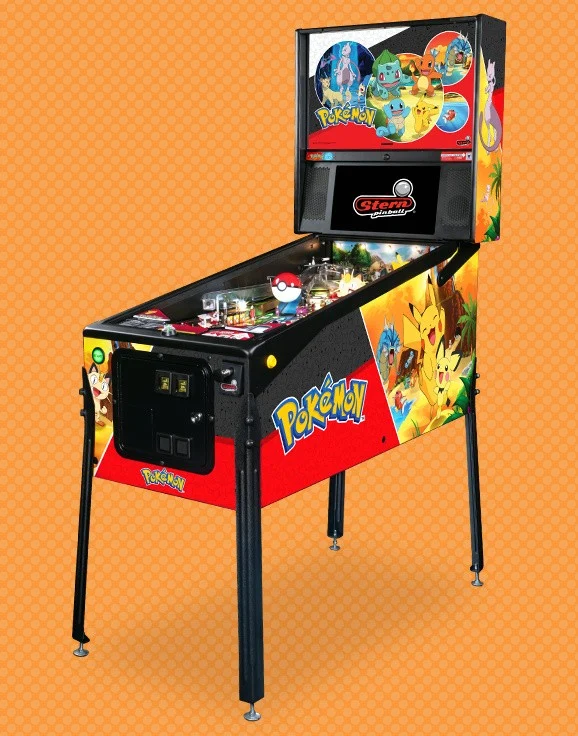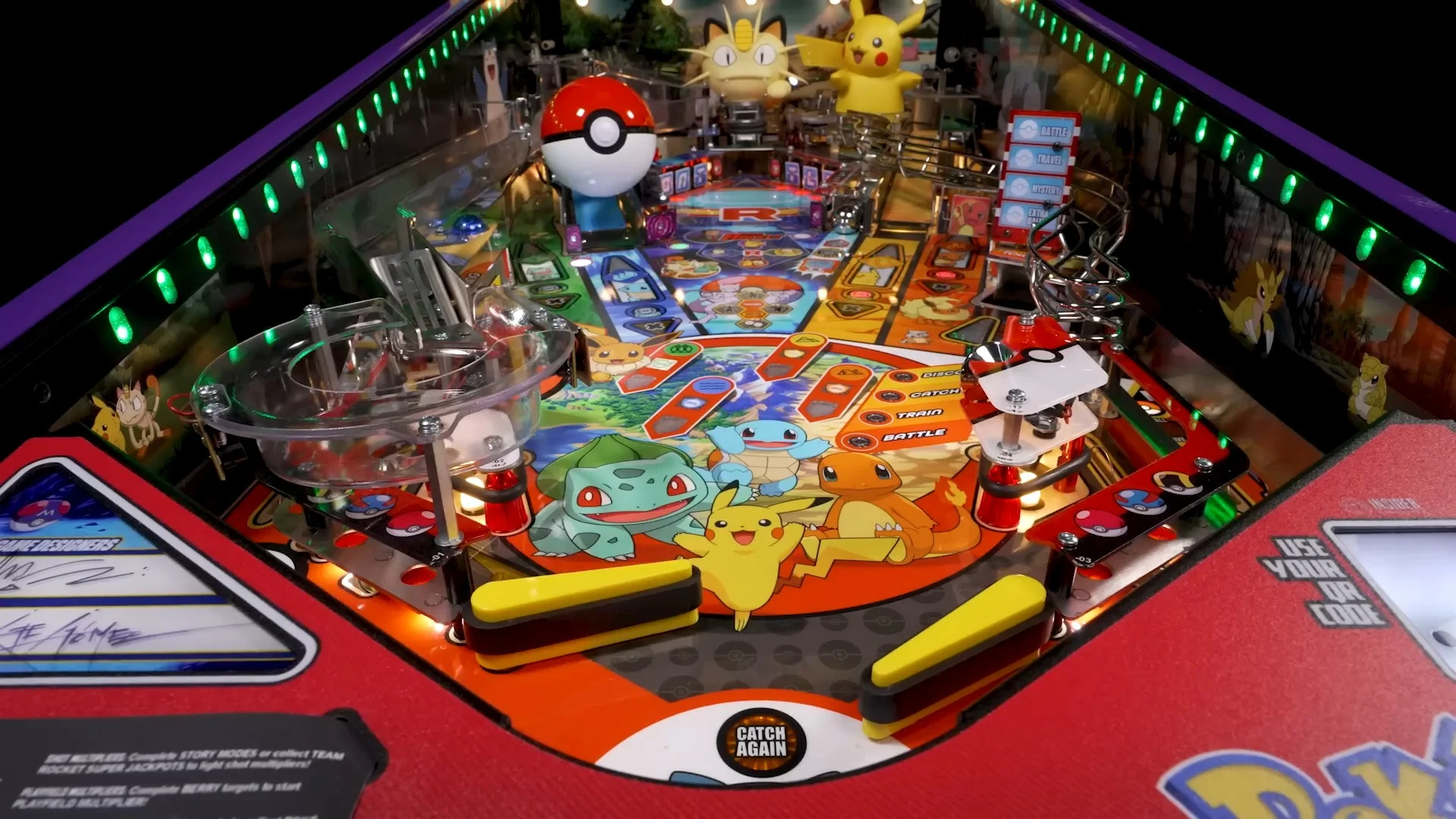
The Pokémon pinball machine is real, and honestly, that still sounds a little fake. Stern launched the 2026 table in Pro, Premium, and Limited Edition versions at $6,999, $9,699, and $12,999, with the LE limited to 750 units. The core layout and rules are the same across all three, while the Premium and LE add extras like animatronic Pikachu, a magnetic battlefield effect, and the fancier presentation package.
Because the machine is so new, the honest version of this review is a first-wave review built from Stern’s official feature set, early hands-on coverage, and early player reaction, not from me pretending I already have one in a game room next to a mini fridge.
TLDR
This looks like a very smart Pokémon machine and a promising, but not fully settled, pinball machine. The theme integration seems excellent, the location and family appeal look real, and the catch-and-save progression is one of the more interesting things Stern has done with connected features. The caution is that early player reaction has been mixed on code depth and a few layout and drain issues, so this feels more like “definitely play it” than “blind-buy it sight unseen.”
The Best Part Is That It Actually Feels Like Pokémon
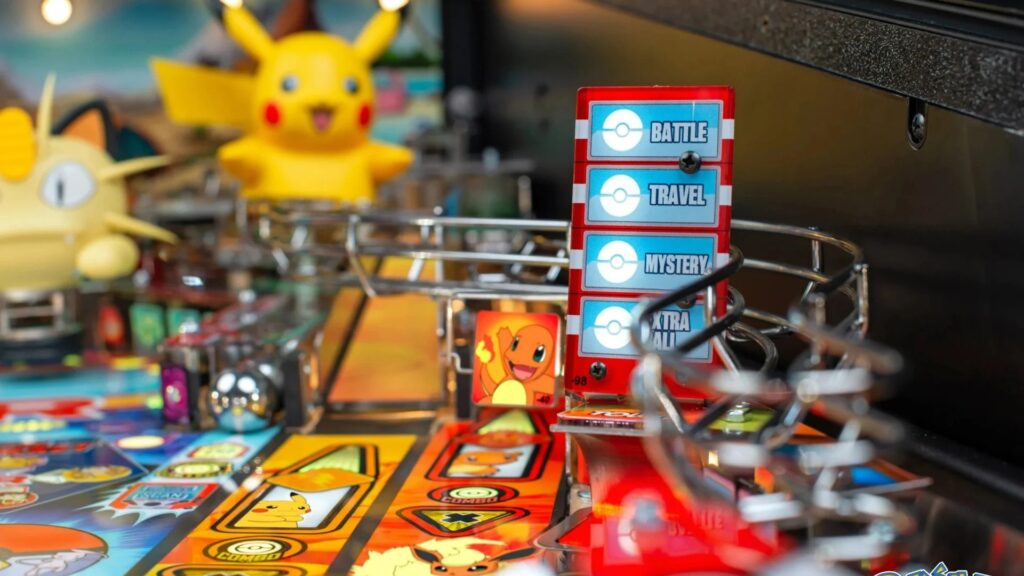
Stern did more than put Pikachu on a backglass and hope nostalgia does the heavy lifting. The game is structured around four habitats, random biome starts, catching Pokémon, rival battles, Team Rocket encounters, Gym Battles, and a late-game Pokémon Arena run that can eventually lead to Giovanni. That is a real attempt to turn the shape of a Pokémon adventure into pinball rules, and it is a lot more interesting than simple skin-deep branding.
It also seems to understand what fans actually wanted from the presentation. Stern says the table uses clips from the original animated series, custom voice work for Pikachu and Giovanni, and the Pokémon Theme song, while NintendoWire’s early hands-on says the machine starts out Gen 1 heavy but pulls in Pokémon from multiple regions as you play deeper into the modes.
The Toys And Presentation Sound Like A Win
On paper, the playfield has plenty of personality. Stern built the table around a mechanically animated Poké Ball, an interactive Meowth balloon in the center battle arena, and on Premium and LE models, an animatronic Pikachu plus an electromagnet that adds chaos to battles. NintendoWire’s hands-on liked the physical toys quite a bit and singled out the Meowth balloon as the centerpiece, while Gizmodo described the machine as hectic, tactile, and a strong real-world take on Pokémon Pinball.
The Smartest Idea Is The Persistent Collection
The feature that makes this machine feel most modern is the catch system. Stern’s Insider Connected lets players sign in, catch Pokémon during play, and keep building a collection across multiple machines and locations. NintendoWire reported that 180 Pokémon are available to catch at launch, with more planned through updates. That gives the table a real progression hook, which matters a lot for a theme built around collecting things until your brain turns into a spreadsheet.
Why Pinball Regulars Are More Cautious
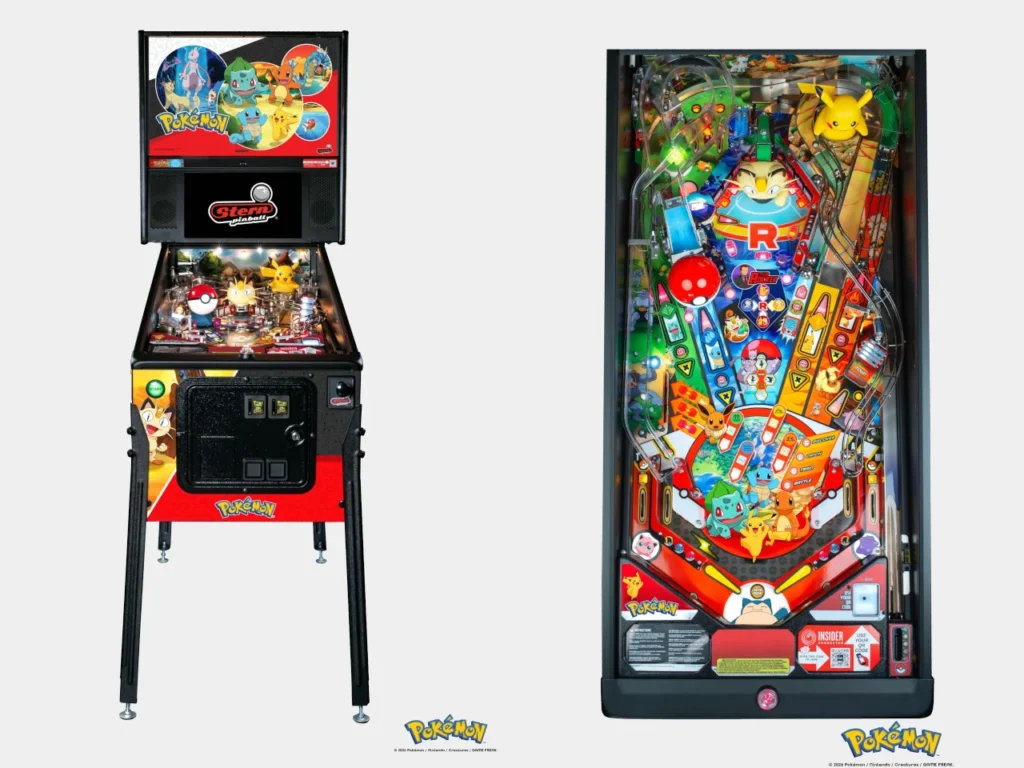
This is where the review gets less cute. Early community reaction has been genuinely mixed. On Pinside, some players describe the game as smooth, approachable, kid-friendly, and a strong location piece that can pull non-pinball people onto the machine. Others call the layout too basic, the code too thin at launch, and the long-term home value questionable unless you are very bought into the Pokémon theme.
There were also specific complaints about harsh drains and orbit behavior on some early examples. One Pinside thread summarized the early gripes as basic art and layout, brutal outlanes, orbit SDTM issues, and shallow early code, although later posts in the same thread said the orbit issue was being addressed and that the game felt better afterward, even if it still did not wow veteran players. That is why the safest recommendation right now is still “play before buying.”
My Verdict
In my opinion, Stern probably nailed the part that mattered most. This machine looks like it will do very well in arcades, family spaces, and collections owned by people who actually love Pokémon instead of just tolerating it. The theme fit is strong, the presentation sounds fun, and the persistent collection system is more than a gimmick.
But I would still stop short of calling it a day-one must-buy for hardcore pinball collectors. The early signal says this table may need more code growth and more time in the wild before it earns that kind of confidence. So my review is simple: the Pokémon pinball machine looks worth seeking out, worth playing, and maybe worth buying, but only after you get a few games on it unless you were already halfway sold the moment you heard “animatronic Pikachu.”