
TLDR: Control is an essential supernatural action game in which telekinetic combat, destructible spaces, hostile architecture, and bureaucratic absurdity all serve the same magnificent idea. The map is dreadful, character progression is less imaginative than the fighting, and Jesse Faden’s personal story can feel remote. None of that breaks the spell. The Oldest House is one of gaming’s great places, and wrecking its offices with paranormal force is as expressive as exploring them.
Our verdict Control is a singular supernatural action game whose telekinetic combat, destructible spaces, and unnerving bureaucratic world operate in thrilling harmony. Its clumsy map and restrained buildcraft cannot diminish an essential, imagination-expanding adventure.
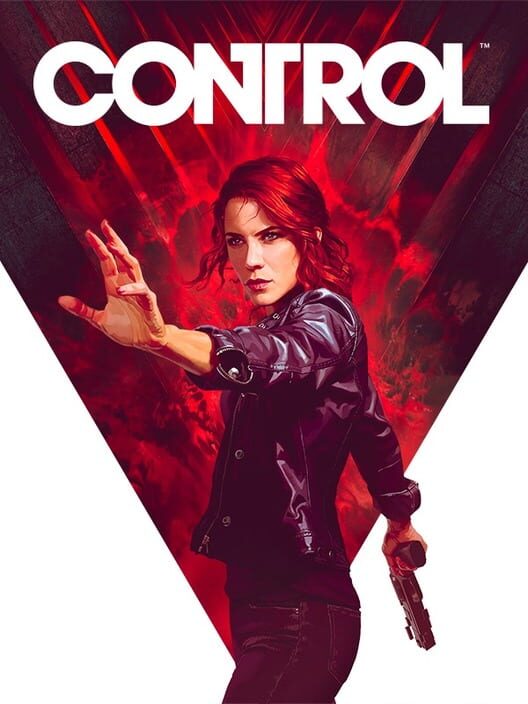
Control (2019)
This Control review covers Remedy Entertainment’s 2019 base game without revealing its major mysteries. Control launched for PC, PlayStation 4, and Xbox One on August 27, 2019, with Remedy as developer and 505 Games as its original publisher. Its finest achievement is not merely creating a memorable setting or a satisfying set of supernatural powers. It makes the two inseparable. Every shifting corridor, red-lit chamber, floating body, and weaponized office chair advances the same intoxicating idea: apparent order is only chaos wearing an office badge.
Jesse Faden enters the Federal Bureau of Control looking for her missing brother, walks into an otherworldly emergency, and becomes the Bureau’s new Director. That is enough conventional narrative machinery to point her through the building. The compelling part is everything the job title fails to explain: an institution attempting to file, label, contain, and occasionally attach a stern memo to forces that do not recognize human categories. Control is funny, unsettling, and intellectually playful because the Bureau’s confidence never quite conceals how little control it possesses.
Control’s combat turns every room into a weapon
Telekinesis is the center of Control’s combat, and rightly so. Jesse can fire the shape-changing Service Weapon, move aggressively through the air, and deploy other supernatural abilities, but the defining pleasure is seizing some nearby object and hurling it across the room. Remedy presents the game around supernatural powers, adjustable loadouts, and reactive environments. Remedy’s official Control overview What makes those ingredients special is the way they combine instead of politely waiting for separate turns.
A conventional firefight asks where the ammunition and cover are. Control asks what the room is made of. Concrete chunks, desks, machinery, and miscellaneous pieces of Bureau property become part of Jesse’s combat vocabulary. The scenery is not a painted backdrop; it is a reserve of possible decisions. That changes the emotional rhythm of an encounter. A room can initially feel hostile and exposing, then become an improvised playground once the furniture begins flying and the walls start shedding usable pieces.
The Service Weapon’s transforming forms add range and cadence without cluttering an inventory with a dozen nearly identical firearms. Gunfire pressures an enemy, movement opens an angle, and Launch—the signature telekinetic throw—provides the heavy punctuation. Switching among those tools feels like sustaining momentum rather than consulting a toolbox. Control’s combat is at its best when Jesse is never settled, moving between elevation, cover, targets, and whatever expensive piece of brutalist décor looks throwable.
This is also why its power fantasy works so well. Jesse does not feel formidable merely because numbers rise. She feels powerful because the space visibly gives way around her. A polished lobby becomes a storm of paper, pulverized masonry, twisted fixtures, and airborne furniture. The aftermath records the encounter, giving even an ordinary fight a scrappy sense of authored spectacle. Destruction is not just decoration here. It provides feedback, tactical possibility, physical comedy, and character expression all at once.
Control is not endlessly deep in the manner of a dedicated character-action game, and its customization systems never match the imagination of its fighting. Weapon forms, personal mods, and upgrades provide useful adjustments, but much of that progression feels like numerical administration attached to a wonderfully physical game. Different configurations can nudge a preferred approach, yet few choices are as exciting as the basic ability to rip something from the environment and send it through an enemy.
For me, that limitation barely reduces the thrill because Control’s richest build is the room itself. The interesting decision is usually not whether one percentage bonus is marginally better than another. It is whether to shoot, evade, seize incoming danger, change elevation, or convert the nearest filing cabinet into an argument against hostile workplace culture. The upgrade screen deals in arithmetic; the combat deals in improvisation.
The Oldest House makes bureaucracy feel supernatural
The Oldest House is more than an excellent location. It is Control’s governing design principle. Severe concrete, institutional carpeting, security checkpoints, pneumatic tubes, noticeboards, and anonymous office equipment establish a recognizable language of authority. Then the building begins refusing to obey it. Spaces fold into impossible forms. Mundane objects acquire terrifying significance. Corporate procedure and cosmic horror occupy the same fluorescent-lit corridor.
That contrast gives Control a singular tone. Plenty of games can produce a sinister hallway; fewer can make an internal memorandum feel like a fragment of occult scripture. The Bureau’s documents, recordings, experiments, and terminology repeatedly turn administrative language into deadpan comedy without dissolving the threat. Its employees discuss impossible phenomena as workplace problems because procedure is the institution’s emotional armor. Much of the fun lies in seeing where that armor cracks.
Control is at its most imaginative when it trusts this collision between the ordinary and the unknowable. It does not need to abandon the office for a generic alien dimension because the office is already strange. Anyone who has encountered a policy that appears to have generated itself can appreciate the joke. Here, however, the filing cabinet might also be paranatural, hostile, or subject to a containment protocol nobody remembered to include during orientation.
The visual transformation of these spaces supports both atmosphere and play. Long sightlines invite gunfire and telekinetic attacks, balconies create vertical pressure, and destructible clutter gives Jesse material to manipulate. Meanwhile, the building’s unstable geometry makes exploration feel faintly illicit, as though each newly discovered threshold opens into a part of the institution that the institution itself cannot explain. Place, premise, and mechanics keep restating the same argument in different forms.
For me, that harmony is Control’s defining triumph. The Oldest House is memorable not simply because it looks distinctive, but because its identity reaches into everything the player does. Exploring it means studying an institution’s failed attempt to organize the impossible. Fighting inside it means physically dismantling that performance of order. Even becoming Director feels like a joke about authority: Jesse receives the title long before either she or the player understands what is being directed.
Exploration succeeds when the map gets out of the way
Control rewards curiosity with authored spaces that feel worth reading. A department sign, an oddly placed shelter, or a corridor that appears too architecturally emphatic to be meaningless can pull attention away from the direct route. Documents add context, but exploration rarely feels like vacuuming icons from a checklist. It feels investigative. The interesting question is not simply whether a collectible is nearby, but what kind of institution would produce this room, this warning, or this alarming quantity of red light.
The Oldest House also understands the pleasure of returning with expanded capabilities. Previously inaccessible routes and suspicious architectural details gain new meaning as Jesse’s mobility and clearance develop. This gating suits the fiction beautifully. Becoming Director grants a title immediately, but understanding and traversing the Bureau remain gradual acts. Authority is nominal; knowledge has to be earned.
Unfortunately, the formal map is the game’s clearest design failure. Overlapping floors and layered spaces are communicated poorly, turning some journeys into arguments with a diagram that has already stopped listening. This is not productive mystery. The Oldest House is supposed to be complicated, but the interface often represents that complexity badly, obscuring practical information rather than deepening the atmosphere.
GameSpot’s launch-era review made a useful distinction here, criticizing the map’s readability in multi-level areas while praising environmental signage as a better guide. GameSpot’s original discussion of Control’s navigation I agree with the diagnosis because it separates the building’s intentional disorientation from the interface’s avoidable confusion. A difficult place and a difficult map are not automatically the same design achievement.
Wall signs can consequently be more dependable than the map. Following them is thematically satisfying—this is a government building, after all—and it encourages players to read the environment instead of chasing an objective marker. But environmental signage should feel like deliberate navigation, not emergency compensation for a weak interface. The distinction matters whenever a wrong turn stops feeling like exploration and starts feeling like lost time.
Even so, getting temporarily lost does not make the building less compelling. I would rather wander through an authored environment with a distinct spatial identity than glide efficiently between anonymous objectives. Control’s mistake is practical rather than imaginative. Its map wastes time, but the Oldest House has enough character to make some of that wasted time strangely rewarding.
Mystery gives Control power—and keeps Jesse at a distance
Jesse’s search for her brother gives Control direction, but the surrounding fiction supplies its intellectual charge. The Bureau’s history, altered objects, thresholds, rituals, and contradictory attempts at classification invite interpretation without collapsing into a tidy encyclopedia. Control understands that explanation and understanding are not identical. A phenomenon can acquire a label, case number, and containment procedure while remaining fundamentally unknowable.
That opacity is one of the game’s great strengths. The writing provides enough recurring language and institutional logic to make speculation rewarding while preserving the sense that the Bureau has built its knowledge on unstable ground. The best mysteries become richer as their outlines emerge. They do not merely hide an answer and insist that absence is profundity. Control gives the player patterns to recognize, then leaves enough space around them for unease and imagination.
Jesse herself is less consistently magnetic than the world around her. Her controlled determination suits a protagonist who voluntarily enters an impossible institution, but her personal drama does not always generate the same emotional force as the Bureau’s broader mysteries. The setting seems to vibrate with implication; Jesse can sometimes feel like the necessary line drawn through it. Her search supplies purpose, yet the building is what lingers.
PC Gamer’s contemporary review raised reservations about Jesse’s characterization and described the ending as abrupt. I agree more with the first criticism than the second. Jesse can feel emotionally distant, and several character beats are thinner than the world-building surrounding them. The ending, however, works better for me as an extension of Control’s deliberate instability. Players wanting intimate closure may find it withholding, but a perfectly obedient conclusion would make the Oldest House feel smaller.
That reading does not excuse every underdeveloped relationship or dramatic shortcut. It explains why the unresolved atmosphere remains more powerful than the character resolution. Control is fundamentally about the arrogance of believing a name, title, classification, or filing system can contain the unknown. Its fiction should provide shape without making every mystery submit the correct paperwork before the credits.
Which version—and who should enter the Bureau?
This verdict concerns the original base campaign rather than treating every edition as interchangeable. Control Ultimate Edition packages the base game with The Foundation and AWE expansions. Those expansions are separate from the 2019 campaign and are not being used to strengthen this judgment. Platform-specific performance is also outside the verdict because the tested system, build, display mode, and settings were not documented.
Control is an essential recommendation for solo players who value atmosphere, interpretive science fiction, environmental storytelling, aggressive third-person action, and exploration that rewards attention. Its strongest pleasures come from discovery and improvisation: understanding a peculiar space, noticing a route, interpreting a fragment of Bureau history, or turning that same space inside out during a fight.
Players seeking cooperative play, elaborate RPG buildcraft, effortless navigation, or a story that patiently explains its mysteries should adjust their expectations. The map can be genuinely irritating, and the progression systems are supporting machinery rather than the main attraction. Control also asks the player to enjoy uncertainty instead of merely tolerating it. If every unanswered question feels like missing information, the Oldest House may prove exhausting.
Players who enjoy systems expressing a game’s larger ideas may also appreciate our Factorio review, though the two experiences could hardly look more different. Factorio makes efficiency a creative language; Control makes destruction and investigation into ways of reading an unstable world. Both understand that mechanics become memorable when they communicate more than success or failure.
Control remains an essential supernatural adventure
Control’s rough edges are visible because so much around them is extraordinary. Its map fails to describe a building that the art and level design make unforgettable. Its mods and upgrades feel restrained beside combat capable of turning an office into a telekinetic catastrophe. Jesse’s search establishes purpose without always matching the emotional pull of the mysteries surrounding her.
Yet the parts that matter most operate in thrilling harmony. The Oldest House is simultaneously a location, a joke, a threat, a navigational puzzle, and a physical resource for combat. Bureaucracy supplies the language of the story and the texture of the environment. Telekinesis lets the player tear through that texture, exposing the chaos beneath the institution’s performance of order.
That coherence is why Control deserves the highest recommendation. Few action games make shooting, movement, destruction, architecture, atmosphere, and theme feel like parts of the same thought. Enter the Bureau if you want a world that expands the imagination rather than simply filling a map. Just follow the wall signs. The map has not been cleared for useful communication.
