

TLDR: Still Wakes the Deep is tightly controlled horror done exceptionally well. Its collapsing oil rig, naturalistic performances, and relentless escalation create vulnerability without conventional combat. Restrictive stealth occasionally reduces survival to finding the route the designer intended, but the human stakes and astonishing atmosphere carry this focused journey.
Our verdict Still Wakes the Deep turns a collapsing North Sea oil rig into gripping, character-driven horror. Its narrow stealth systems limit player expression, but exceptional atmosphere, performances, and disciplined momentum make that constraint largely purposeful.
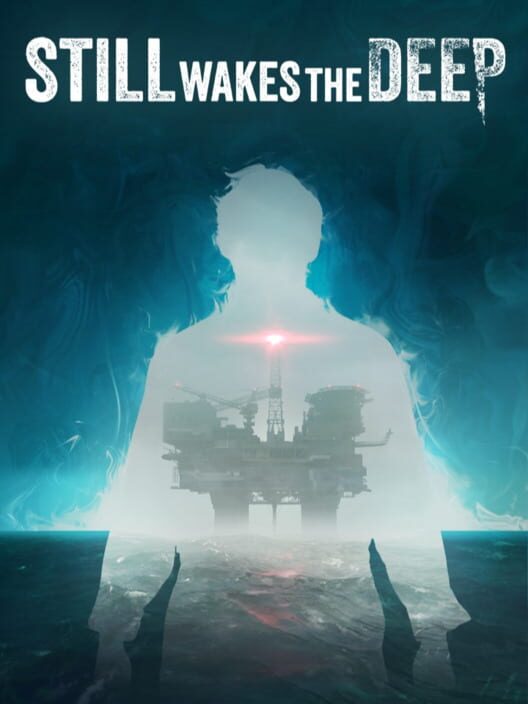
Still Wakes the Deep (2024)
This Still Wakes the Deep review comes down to a question no-combat horror often struggles to answer: Is the player genuinely vulnerable, or merely unable to fight? The Chinese Room understands the difference. Caz McLeary is not frighteningly powerless because his inventory lacks a shotgun. He is powerless because the Beira D is disintegrating around him, his colleagues remain trapped inside it, and nearly every familiar workplace space has turned hostile.
Developed by The Chinese Room and published by Secret Mode, the base game launched on June 18, 2024 for PC, PlayStation 5, and Xbox Series X/S. It is a single-player, first-person horror game built around traversal, hiding, distractions, and environmental survival rather than conventional combat. Those narrow parameters limit freedom, but they also establish the game’s identity. This is not a survival sandbox or a playground for elaborate monster manipulation. It is a controlled disaster story about ordinary people confronting something they cannot understand.
The Beira D makes vulnerability feel physical
The offshore rig is the game’s defining achievement. Before the horror becomes overtly unnatural, the Beira D is already intimidating: an industrial maze suspended above violent water, packed with heavy machinery, narrow passages, ladders, pipes, and rooms never designed for an emergency evacuation. Once the structure begins to fail, the setting does not merely frame the danger. It actively participates in it.
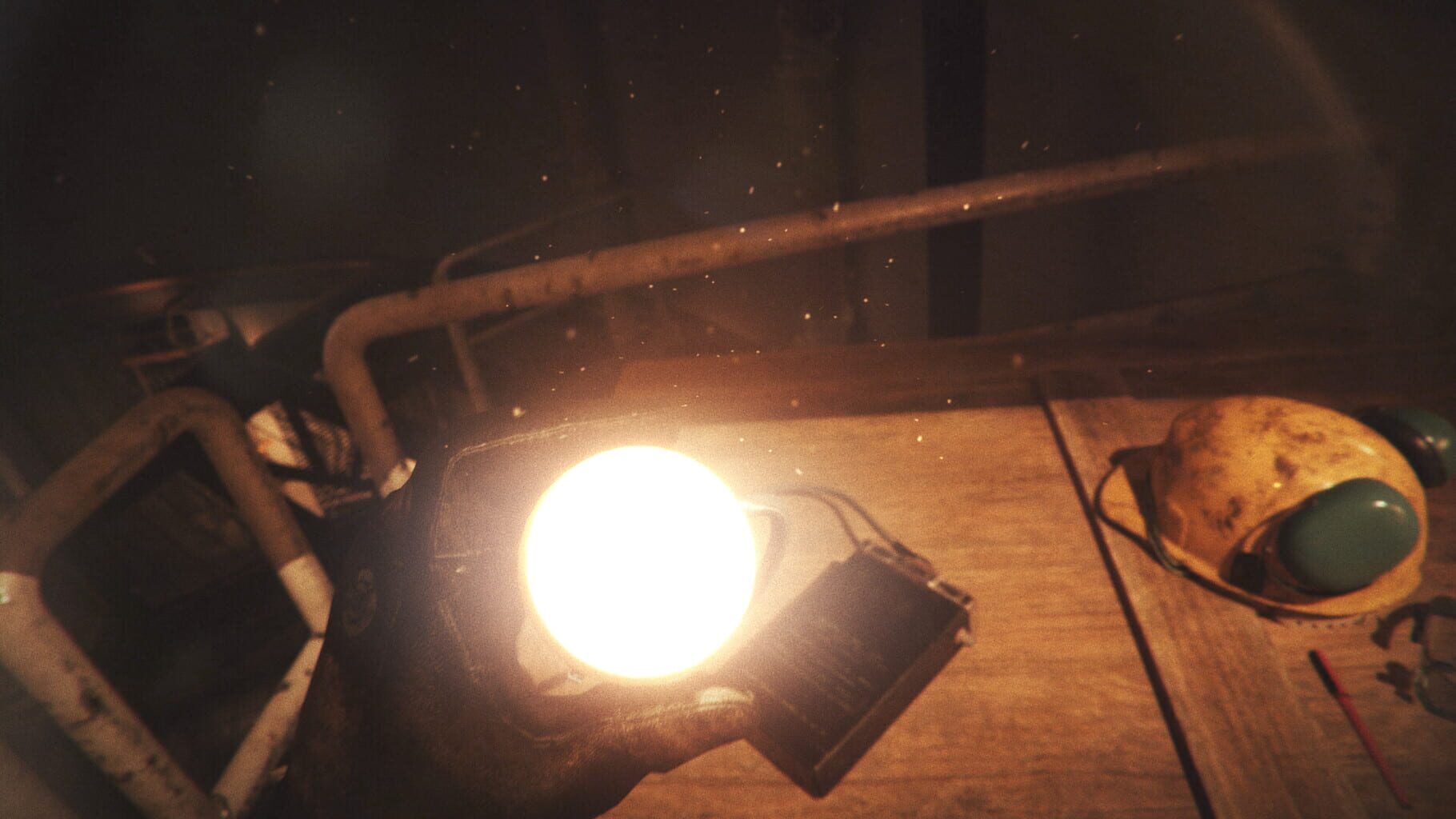
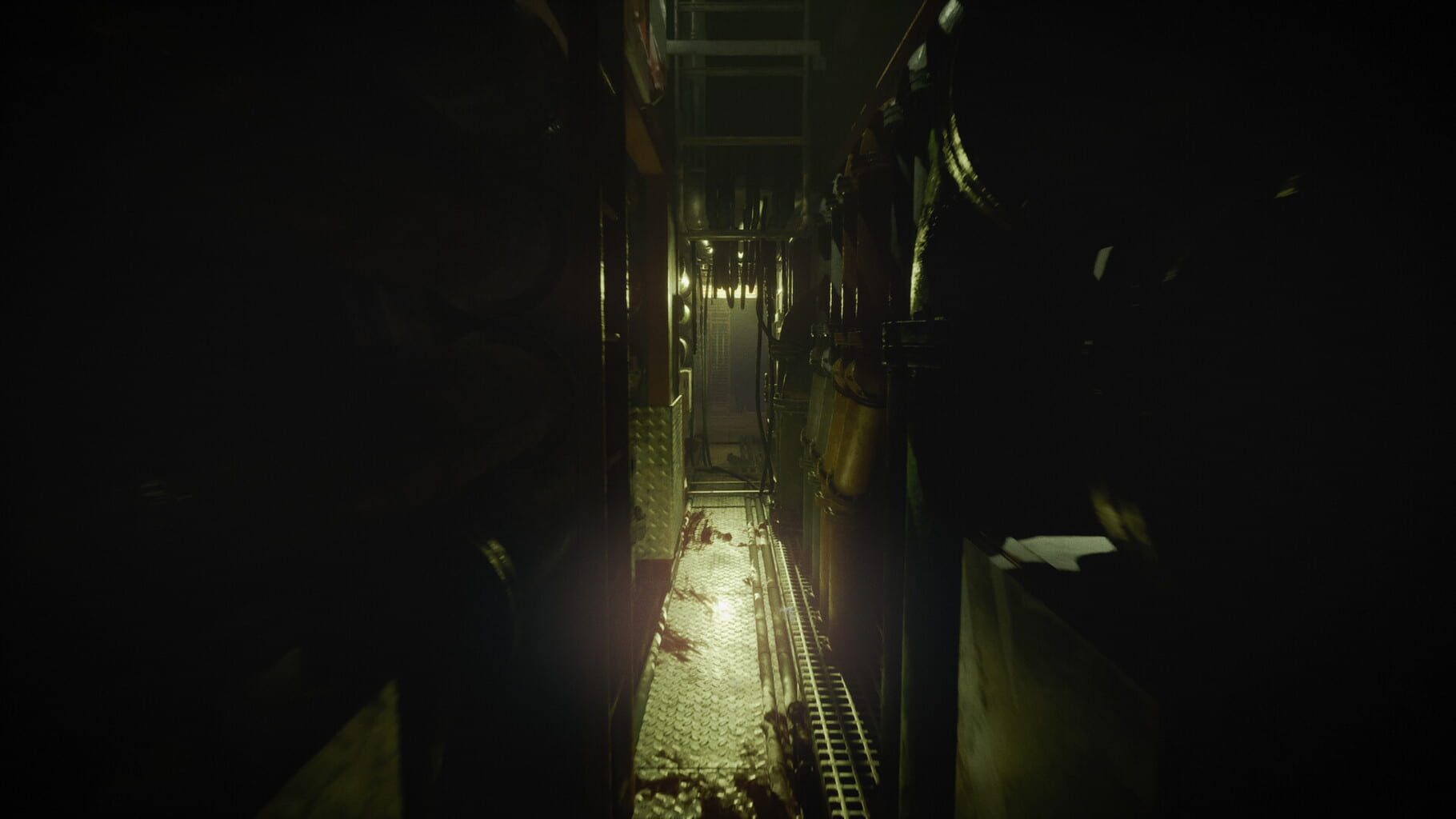
Floors tilt, routes disappear, compartments flood, and ordinary workplace architecture becomes a sequence of physical threats. This deterioration gives the campaign a strong visual and spatial progression. Areas are not frightening only because a creature might be waiting in them; they are frightening because the entire structure appears to be losing an argument with the sea.
For me, that environmental hostility is more effective than any isolated jump scare. Water carries particular weight because it is never just scenery. It represents exposure, disorientation, and the possibility that the Beira D can no longer keep the outside world outside. Even when the way forward is linear, the collapsing surroundings make movement feel urgent rather than routine.
The setting also gives familiar body-horror ideas a distinctive texture. Biological and industrial imagery seem to contaminate one another, transforming recognizable machinery and working spaces into something unstable. Still Wakes the Deep draws from an established tradition of isolated-monster fiction, but it finds a cohesive physical vocabulary of its own. Rust, water, flesh, metal, and oil begin to look as though they belong to the same nightmare.
That visual unity matters because the game is mechanically modest. It cannot rely on a large toolset to keep every corridor interesting, so the changing condition of the rig becomes a form of progression. The place that Caz understands as a workplace is steadily rewritten as a trap. By making that transformation readable, the game lets familiarity intensify the fear rather than diminish it.
The crew turns disaster spectacle into a human crisis
Atmosphere alone could have made the Beira D memorable, but the crew makes its destruction matter. Caz is introduced as a worker with existing relationships and personal troubles, not an empty survival-horror vessel waiting for the player to inhabit him. The dialogue establishes a community shaped by familiarity, friction, jokes, resentment, and dependence. These people sound as though they had lives together before the game arrived to ruin their day.
The Scottish performances are crucial to that effect. Conversations have an unpolished rhythm suited to a workplace where people know one another well enough to interrupt, insult, and worry without turning every feeling into a speech. Each radio exchange and desperate instruction sounds like contact with a recognizable person rather than delivery of the next objective. The emotional force comes from the accumulation of ordinary relationships, not from a late attempt to manufacture sympathy.
That grounding allows the game to move between large-scale disaster and intimate fear without losing its center. Caz is trying to survive, but survival is tangled up with responsibility. The crew members are not merely convenient bodies arranged along the critical path. Their familiarity gives the crisis emotional continuity even as the physical layout around them becomes increasingly unrecognizable.
This is also where the linear structure works best. A broader game might have offered more agency, but it could easily have diluted the urgency of Caz’s relationships. The controlled sequence keeps directing attention toward particular people and immediate dangers. Still Wakes the Deep knows that watching an oil rig collapse is impressive. It also knows that hearing fear in a familiar voice is worse.
Disciplined momentum compensates for modest mechanics
Still Wakes the Deep uses a deliberately small mechanical vocabulary: running, climbing, swimming, squeezing through confined spaces, hiding, and creating distractions. Official descriptions present these survival actions as the heart of the experience rather than treating combat as an eventual power upgrade. The absence of weapons remains meaningful because the campaign repeatedly changes the physical context in which those basic actions occur.
A climb across failing infrastructure produces a different pressure from a submerged passage or a stealth sequence through transformed machinery. None of these actions is especially deep in isolation. Their value comes from rhythm. The game knows when to shift from careful movement to panic, when to let an unsettling space breathe, and when to send the environment crashing into the foreground.
I like this controlled build-up more than I would have liked an unnecessary progression system. Crafting, weapon upgrades, or ability trees would not automatically have created richer horror. They might instead have encouraged players to view every threat as a resource problem waiting to be optimized. Caz remains a worker trying to reach the next patch of relative safety, and that consistency protects the story’s tone.
The game is particularly good at preventing one mode of play from exhausting its welcome. Traversal, environmental danger, quiet exploration, chases, and hiding sequences trade places quickly enough to maintain momentum. The result is not mechanical complexity but sustained immediacy. Still Wakes the Deep understands that a limited verb set can work when the dramatic circumstances around those verbs keep changing.
The tradeoff is limited room for mechanical ownership. Players who enjoy building mastery through experimentation will find relatively little to bend. There are no builds to refine, combat techniques to perfect, or broad spaces inviting radically different approaches. The first journey—and the unfolding transformation of the rig—is the main attraction. Once that uncertainty is gone, the underlying interactions are unlikely to support the same level of discovery.
Stealth sometimes mistakes restriction for tension
The creature encounters reveal the cost of such tight authorship. At their best, they turn industrial rooms into threatening puzzles of sightlines, sound, cover, and timing. A nearby presence changes how every opening is read, and the lack of combat prevents confrontation from becoming an easy release valve. Escaping remains the objective rather than clearing the room.
At their weakest, however, these sections feel less like improvisational survival and more like route validation. The tools are so limited that hiding and distraction can collapse into a binary exercise: identify the approved path, execute it, and repeat if the game rejects the attempt. GameSpot also characterized some encounters as binary or simplistic, but that diagnosis is only part of the problem. Caz’s weakness is dramatically convincing; it is the shortage of expressive decisions within that weakness that diminishes the tension. GameSpot’s critique of the creature encounters
A powerless protagonist can still support meaningful decisions. Good stealth lets the player judge risk, recover from a mistake, or turn incomplete information into an improvised plan. Still Wakes the Deep reaches that level only intermittently. Its strongest encounters make me feel hunted. Its lesser ones make the designer’s preferred solution too visible.
This limitation stands out because the setting and human drama are so specific while the stealth language is relatively familiar. The Beira D feels like nowhere else, yet crouching behind cover and waiting for a safe opening can resemble any number of narrative horror games. The underlying threat is less original than the workplace and relationships surrounding it. I remained more invested in what the disaster meant for these people than in decoding its genre lineage.
Sound makes the rig feel dangerously alive
Still Wakes the Deep binds its disaster and horror through sound. Groaning metal suggests strain beyond the player’s view. Machinery gives rooms a heavy industrial presence, while water and hostile proximity cues make safety difficult to measure. The result is a setting that rarely feels inert, even when Caz is momentarily alone.
Jason Graves composed the score, as The Chinese Room confirmed in its official release announcement. The Chinese Room’s release announcement The music supports the game rather than sanding away its roughness. It can amplify large-scale destruction, but it also leaves room for mechanical noise, voices, and the uncertainty of something moving nearby.
That restraint matters. Horror becomes exhausting when every second announces how frightened the player should be. Here, the soundscape often lets the rig carry the scene. A distant impact or stressed section of metal can create dread without immediately explaining its source. The Beira D seems to complain, buckle, and breathe, making its transformation feel like one continuous catastrophe rather than a collection of scripted set pieces.
Sound also joins the game’s human and physical stakes. A frightened voice over the radio, a mechanical failure somewhere out of sight, and a hostile presence nearby can occupy the same scene without competing for attention. The game does not need to choose between disaster fiction and monster horror because its audio design makes each pressure reinforce the others.
Still Wakes the Deep review verdict
Still Wakes the Deep is an easy recommendation for players who value atmosphere, character writing, disaster fiction, and disciplined pacing over mechanical freedom. Its best achievement is not simply removing combat. It builds vulnerability through place, relationships, sound, and momentum, ensuring that Caz feels like a person trapped inside a catastrophe rather than a conventional hero waiting for his arsenal to arrive.
The restrictive stealth keeps it from becoming a richer play space. Some encounters offer too little room for recovery or invention, and the limited systems make this a curated first journey rather than a game likely to reveal radically different strategies over repeated runs. Anyone seeking open exploration, build variety, combat mastery, or a deep survival simulation should treat that narrowness as the defining design—not an obstacle the campaign eventually sheds.
Yet the same control that constrains the mechanics gives the story its force. The Chinese Room keeps the pressure on, gives its crew enough warmth and friction to feel human, and turns an offshore workplace into one of horror gaming’s most convincing hostile environments. Still Wakes the Deep occasionally confuses following instructions with surviving by instinct, but its industrial nightmare remains immediate, frightening, and emotionally grounded. It is a mechanically modest journey elevated by exceptional craft, and one of the easiest recommendations for anyone who prefers authored horror to a sandbox full of weapons.
