
Scry in MTG is the little keyword that quietly fixes your draws and saves you from “cool, five lands in a row” moments. It’s not flashy. It’s not card advantage. But it makes your deck feel like it actually wants to cooperate.
If you’ve ever cast a spell that says “scry 1” and wondered if you’re supposed to reveal it, shuffle it, or chant over your library, you’re not alone. Here’s how scry works, what it does not do, and how to use it without overthinking it.
What is scry in MTG?
Scry is a keyword action that lets you look at the top cards of your library and decide what stays on top versus what goes to the bottom.
When a card says “scry N,” you look at the top N cards of your library. Then you may put any number of them on the bottom of your library (in any order). The rest go back on top (also in any order).
Two quick notes that clear up most confusion:
- You usually don’t reveal the cards you see. Scry is private unless a card specifically says otherwise.
- You are allowed to put zero cards on the bottom. If you like what you see, keep it.
How scry works (scry 1 vs scry 2+)
Scry 1 is the simplest version:
- Look at the top card.
- Decide: keep it on top, or put it on the bottom.
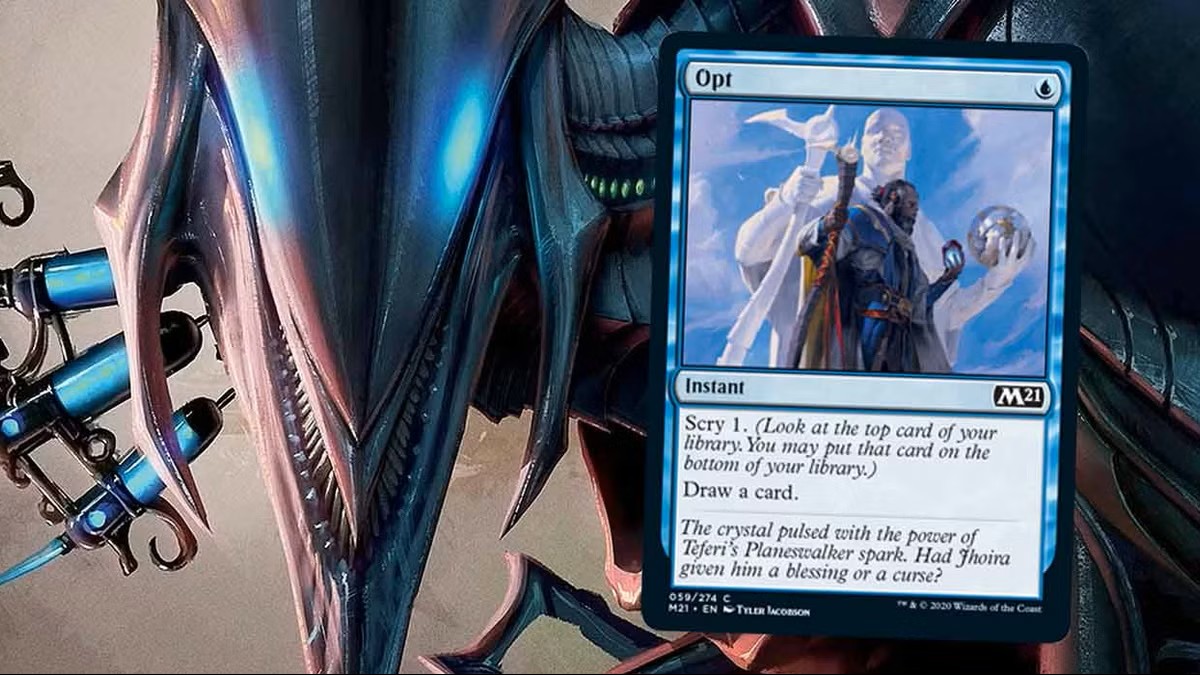
A clean example is Opt: it has you scry 1, then draw a card. That means scry can directly set up the very next draw if the wording says scry first.
Scry 2 (or more) adds one extra wrinkle: ordering.
- You look at the top two cards.
- You can bottom one, bottom both, or keep both.
- If you keep more than one on top, you choose their order. Same for anything you bottom.
Most of the time the “bottom order” doesn’t matter, because you’re basically sending cards to timeout. But the “top order” absolutely matters. If you keep two cards, you’re deciding what you draw first.
Does scry use the stack?
No. Scry happens as part of resolving the spell or ability that told you to scry. You don’t get a chance to respond “in the middle” of it.
So if a spell says “scry 1, then draw a card,” you don’t get to pause between the scry and the draw. The whole spell is resolving in one go.
How to use scry in MTG without getting fancy
The best way to scry in MTG is to ask one boring question:
“What do I need in the next 1-2 turns?”
Then make the top card match that plan.
A few practical heuristics:
- Need lands? Keep a land on top even if it’s not exciting. Missing land drops is how hands fall apart.
- Flooded already? Bottom lands unless your deck truly wants a pile of mana right now.
- Holding removal and behind on board? Keep interaction or cheap plays. Bottom clunky five-drops you can’t cast yet.
- You’re about to shuffle anyway? Don’t spend 30 seconds agonizing. If you’re cracking a fetch land or tutoring in a moment, your perfect topdeck setup is about to get wiped.
Also: scry is selection, not draw. You’re improving the quality of future draws, not getting extra cards. It feels subtle because it is. Over a game, that subtlety adds up.
And if you like gameplay “smoothing” concepts in general, mulligan decisions pair really well with scry decisions: How to Mulligan in Commander Without Throwing Games.
Common scry corner cases
“Can I choose to keep everything?”
Yes. “Any number” includes zero.
“What if I scry 0?”
Then nothing happens. No looking, no moving cards, and it won’t trigger “whenever you scry” effects.
“Does scry change what I draw?”
Only if the wording puts scry before the draw. Compare:
- Preordain: “Scry 2, then draw a card.” Your scry can set up the draw.
- Serum Visions: “Draw a card. Scry 2.” You can’t change the draw you already took, but you can set up the next turns.
Final thoughts
Once you understand scry in MTG, it stops feeling like a mini-game and starts feeling like a tool. Look at the top. Decide if that card helps soon. Keep it if it does. Bury it if it doesn’t.
And yes, sometimes you bottom a card and immediately regret it. Welcome to Magic.
