
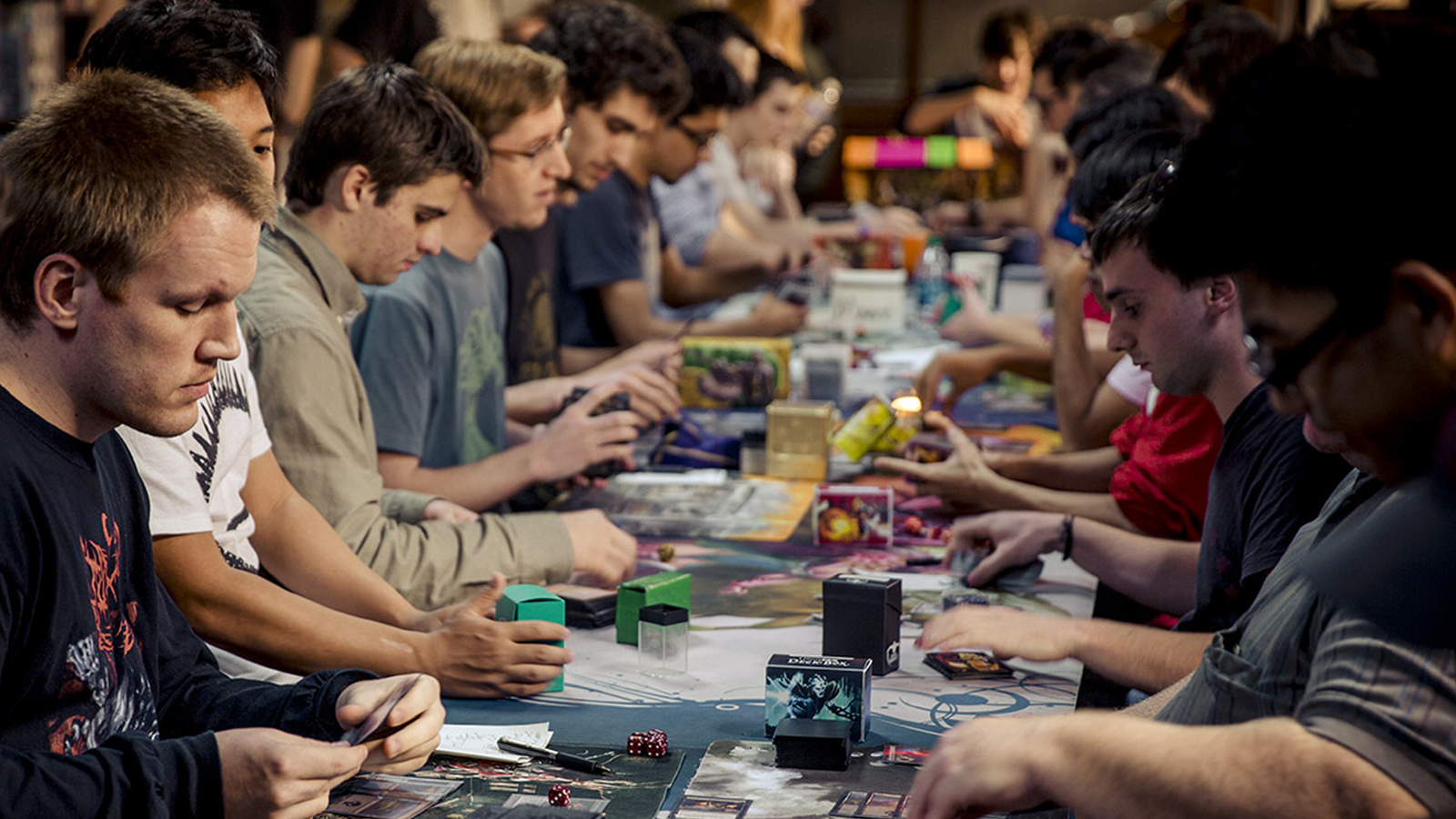
Walk into a room full of Magic players and you can feel it immediately: the culture of Magic the Gathering gamers is equal parts strategy club, improv theater, and group therapy with shuffling. One person is counting lethal through a board state that looks like a yard sale. Another is telling a heartfelt story about “that one time” their commander got stolen. Someone else is sleeving cards like they’re prepping for surgery. And somehow, all of this is normal.
Magic is old enough to have traditions, but big enough to keep reinventing itself. It lives at kitchen tables, local game stores, competitive events, and online ladders. The people shift with the setting, but the shared habits stay strangely consistent.
Why Magic culture feels like multiple hobbies in one box
Magic players don’t just play. They draft, brew, trade, collect, travel to events, watch content, and argue about rules text like it’s constitutional law. That sprawl creates mini cultures that overlap and occasionally collide.
If you’ve spent time around Netrunner, Flesh and Blood, Lorcana, or Pokémon, the vibe is familiar. The difference is that Magic has had decades to accumulate subcultures, norms, and grudges.
Player archetypes: Timmy, Johnny, Spike, and the illusion of “normal”
Mark Rosewater’s psychographics still explain a lot about why people play:
- Timmy/Tammy wants big moments and big feelings.
- Johnny/Jenny wants cleverness, novelty, and self expression.
- Spike wants skill, optimization, and winning.
Most players are mixes, which is why someone can brew a glorious nonsense combo for two weeks and then get salty when it loses. That’s not hypocrisy. That’s Tuesday.
In the wild:
Timmy: “If I cast this 10 mana dragon, the game becomes a story.”
Johnny: “This deck only works if I draw exactly these three cards, so it’s art.”
Spike: “I respect your art. Now watch me sideboard into a plan that uninstalls it.”
A good community makes room for all three. A bad one turns it into a debate about whether “fun” is legal.
The local game store: community hub with fluorescent lighting
For a lot of people, the local game store is where Magic stops being “a game i play” and becomes “a thing i do with people.” Wizards supports that ecosystem through the Wizards Play Network and recurring events like Friday Night Magic, which is basically a weekly ritual for learning and socializing.
Store culture has etiquette, even if nobody handed you the pamphlet:
- Communicate clearly. Say what you’re doing.
- Don’t angle shoot in casual play. If you’re weaponizing technicalities against new players, everyone notices.
- Help newbies. Yes, even when they ask the same question you heard in 2014.
Also, every store has at least one Rules Person. They will mention that they know the rules. Frequently. It’s fine. It’s who they are.
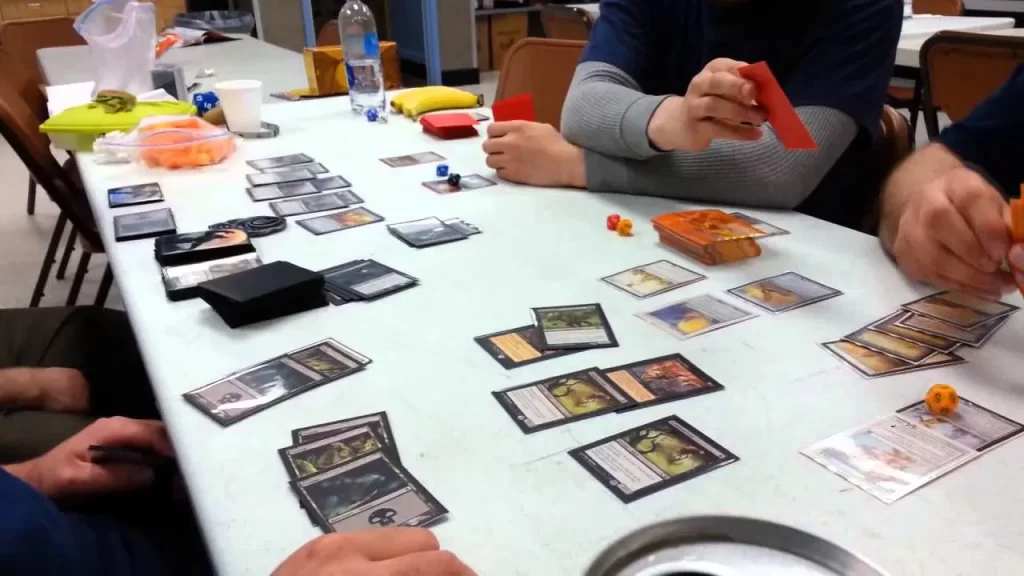
Commander and the culture of Magic the Gathering gamers at their most social
Commander is multiplayer, expressive, and extremely dependent on vibes. It’s also where you’ll most often see “Rule Zero,” the pregame conversation where players agree on expectations like power level, house rules, and what kind of game they want.
In theory, Rule Zero is simple: talk like adults, agree on the experience, play. In practice, it’s the part where someone says “It’s a seven” and nobody knows what that means, but everyone nods anyway because we’re already shuffling.
Commander brings out some of Magic’s best culture: politics, table talk, and big splashy plays that make the whole pod react. It also brings out some of the messiest culture: power mismatches, “social contract” guilt trips, and money drama when expensive staples become the center of a format that was supposed to be about hanging out.
Commander has even had public blowups involving bans, card values, and harassment in the wider community. That’s not cute “format drama.” That’s a reminder that any hobby can get ugly when identity, money, and internet outrage collide.
Competitive culture: precision, improvement, and saying “Judge” calmly
Competitive Magic is not automatically less friendly. It’s just more structured. You’re playing timed rounds with clearer expectations: both players are trying to win, and the rules are the shared language that keeps it fair.
Wizards’ organized play pathway includes local qualifiers that feed into Regional Championships and Pro Tour level events. That system creates its own culture of improvement: testing groups, sideboard guides, matchup spreadsheets, and the peculiar joy of playing the same matchup fifteen times because you want to understand it.
Judges are part of that culture, too. A judge call isn’t supposed to be a “gotcha.” It’s a safety rail. The judge program’s conduct expectations highlight basics a healthy scene needs: integrity, respect, and community trust.
If you want to see how rules precision becomes a shared obsession, start with priority and the stack. If those words already make you sigh, our guides on MTG: How the Stack Works (and Why Your Spell Didn’t Resolve) and MTG Combat Step Breakdown: Attacks, Blocks, Damage, Tricks are designed for humans.
Collectors, traders, and “this is totally not my retirement plan”
Magic has a secondary market, and it shapes the culture whether you like it or not. Some players collect because they love art and history. Some collect because they want options. Some collect because they enjoy saying “It’s an investment” while holding cardboard.
Wizards’ Official Reprint Policy includes the Reserved List, a promise that certain cards won’t be reprinted in functionally identical form. That’s one reason older cards can become expensive, and one reason “budget” is a recurring character in nearly every Magic conversation.
The finance layer creates a strange split. Some players treat price as a constraint and adapt with trading, borrowing, proxies in casual play, or picking formats that fit. Others treat price as identity and want the premium version and the flex. Stores and vendors experience price swings as real risk, not internet discourse.
Online Magic: Arena ladders, webcam Commander, and meme gravity
Magic culture isn’t only in stores anymore. MTG Arena gives people a fast way to learn, grind, and refine decks. It’s accessible, it’s efficient, and it can also train you to treat opponents like pop up ads if you’re not careful.
SpellTable normalized webcam Magic for paper players, especially Commander groups that wanted the in person feel without the in person logistics. Online spaces also amplify the content ecosystem: streams, YouTube deck techs, podcasts, Discord servers, and forums. Creators teach norms, for better or worse. Sometimes they calm things down. Sometimes they light the fuse and act surprised when it burns.
Crossovers, inclusion, and the ongoing project of not being weird
Universes Beyond made crossover fandom a structural part of Magic. Wizards has said that, starting in 2025, new Universes Beyond booster sets will be legal in all major Constructed formats like standard Magic sets. That changes the table. Some players love the bridge into the hobby. Others hate the vibe shift. Most people quietly build the deck anyway.
Because Magic is a social hobby, culture is also defined by who feels safe showing up. Wizards publishes community conduct guidelines, and many stores and play groups mirror those expectations. On the ground, though, the real rule is simple: don’t make the space worse for other people.
If you care about the culture of Magic the Gathering gamers long term, the best contribution is boring and effective: teach patiently, shut down nonsense early, and make room for newcomers without treating them like homework.
Why it endures
Magic’s culture survives because it offers multiple ways to belong. You can be a competitor, a storyteller, a collector, a rules nerd, or the person who just likes shuffling and hanging out. It’s messy, sometimes dramatic, often hilarious, and weirdly durable.
Also, the cards are pretty. That helps.
