
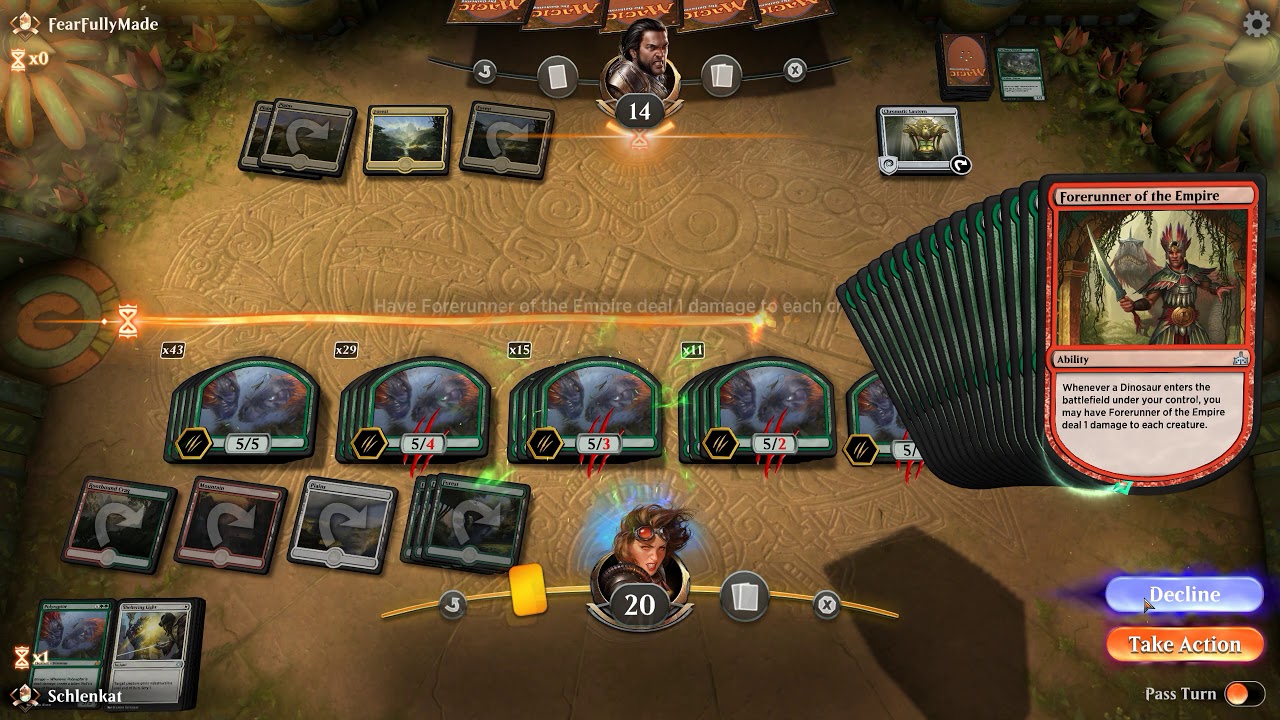
If you’ve ever cast a spell, confidently announced “that resolves,” and immediately got hit with a “hold on,” you’ve met the real boss of Magic: MTG stack rules. The stack is where spells go to wait their turn, and where your plans go to get audited.
This guide explains what the stack is, how priority actually works, and the most common reasons your spell “didn’t resolve” (including the classic: it tried, but the game said “no thanks”).
What the stack is, in human language
The stack is a game zone where spells and most abilities sit after they’re cast or activated, but before they happen. Think of it like a checkout line where everyone keeps sprinting to the front and tossing new items onto the conveyor.
Key idea: Last In, First Out.
The most recent spell or ability added to the stack is the first one that resolves.
So if you cast a spell and someone responds, their response resolves first. Yes, even if you were “still talking.”
MTG stack rules in 30 seconds
Here’s the core loop:
- Someone casts a spell or activates an ability. It goes on the stack.
- That player gets priority first (meaning they get the first chance to add more stuff).
- Priority passes around the table. Anyone can respond when they have priority.
- If everyone passes in a row, the top object on the stack resolves.
- Repeat until the stack is empty, or until everyone is out of friends.
Casting a spell: what actually happens
Let’s use a very normal moment of tabletop betrayal:
You cast Lightning Bolt targeting their creature.
- Bolt goes on the stack.
- You (the caster) get priority. If you’re doing combo stuff, this is where you can “hold priority” and add more.
- Eventually you pass.
- Opponent gets priority and casts Giant Growth on the creature.
Now the stack looks like this (top resolves first):
- Giant Growth
- Lightning Bolt
Everyone passes, so Giant Growth resolves first. Creature gets bigger. Then Bolt resolves and deals 3 damage. Maybe it still dies, maybe it doesn’t. But the order is not negotiable.
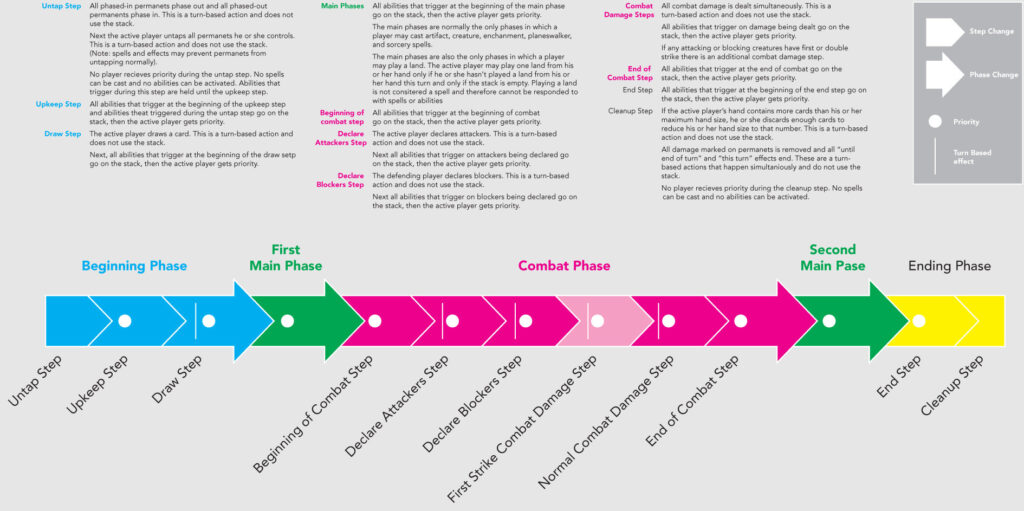
Priority: who’s allowed to do things, and when
Priority is the permission slip to cast spells, activate abilities, or take certain special actions. If you don’t have priority, you don’t get to do the thing. You can ask nicely, but the rules do not care.
A few practical truths:
- After a player casts a spell, they get priority again. That’s why players can stack multiple spells without “passing” in between.
- Nothing resolves until all players pass priority consecutively while the stack is not empty.
- After something resolves, the active player (whose turn it is) gets priority again.
If you play on MTG Arena, this is also why you sometimes feel like the game “skipped your response.” Often, it didn’t. You just didn’t have a priority window, or the action didn’t use the stack.
Why your spell didn’t resolve
Let’s talk about the greatest hits.
1) It got countered (the honest answer)
If your spell was targeted by Counterspell, Mana Leak, Force of Will, a triggered ability that counters something, or a “counter target spell unless…” effect, then it didn’t resolve because it was countered.
That’s the cleanest version of this story. Painful, but clean.
2) All its targets became illegal (the “fizzle” situation)
“Fizzle” is an informal term, but everyone knows what it means: your targeted spell goes to resolve, checks its target(s), and discovers it’s trying to affect something it legally can’t anymore.
Common ways targets become illegal:
- The target left the battlefield (bounced, sacrificed, blinked, phased out).
- The target gained hexproof or shroud.
- The target gained protection from the spell’s color or qualities.
- The target stopped matching the targeting requirement (it’s no longer a creature, no longer tapped, etc.).
If a spell has targets and all of them are illegal when it tries to resolve, the spell is removed from the stack and does nothing. If some targets are still legal, it resolves and does as much as it can, ignoring the illegal ones.
This is one of the most important pieces of MTG stack rules to internalize because it explains a ton of “wait, why didn’t it do the other part?” arguments.
3) State-based actions happened before anyone could respond
This is the one that makes players feel personally victimized by the rules.
State-based actions are game checks that happen automatically before a player gets priority. If the game sees something illegal or impossible, it fixes it immediately.
Classic example:
- You let Shock resolve on a 2/2.
- Shock deals 2 damage.
- Before anyone gets priority, state-based actions see a creature with lethal damage and put it in the graveyard.
So you don’t get a chance to cast a pump spell “after Shock resolves” to save it. The window was “in response to Shock,” not “after reality has already occurred.”
If your spell plan relies on reacting after damage is dealt, the stack is going to keep humiliating you until you stop trying.
4) What you tried to respond to didn’t use the stack
Some game actions happen immediately and do not sit on the stack, which means you cannot respond to them in the usual way.
Common culprits:
- Mana abilities (tapping lands, activating Llanowar Elves, etc.)
- Playing a land
- Certain special actions (some “turn it face up” actions, and a few other weird corner cases)
You can usually respond to what they cast with the mana, but you can’t respond to them tapping the mana source itself like it’s a spell on the stack. Because it isn’t.
5) Split second and “nope, nobody’s responding”
Split second is the rule that says: while this spell is on the stack, players can’t cast spells or activate non-mana abilities.
So if someone casts Sudden Spoiling, you’re mostly watching helplessly, which is the intended user experience.
Triggers and the “why did that happen first?” problem
Triggered abilities also use the stack, but they usually do not go on it the moment the trigger condition happens. They go on the stack the next time a player would get priority.
That’s why you’ll see this pattern:
- A spell resolves.
- During resolution, something triggers.
- The spell finishes resolving fully.
- Then triggers are put on the stack.
- Then players get priority to respond.
Also, when multiple triggers go on the stack at the same time, they’re ordered using APNAP:
- Active Player puts their triggers on the stack in any order they choose.
- Then Non-Active Player(s) do the same in turn order.
- Because of LIFO, the non-active player’s triggers usually resolve first.
If you’ve ever asked, “why did your trigger resolve before mine when it’s my turn?” this is why. The game is not being rude. It’s just being Magic.
A quick checklist for stack disputes
Next time the table pauses and everyone starts squinting at each other, ask:
- Is there something on the stack right now, or are we between actions?
- Who has priority?
- Did the spell/ability have targets, and are they still legal?
- Did something get countered, or countered on resolution?
- Did state-based actions clean something up before anyone got priority?
- Was the thing you tried to respond to actually a mana ability or special action?
If you want more “rules-adjacent” MTG reading for your next argument, check out our land guide for deckbuilding sanity: The Best Esper Lands in MTG. And if your playgroup is testing weird combo piles, you’ll probably end up having the proxy conversation too: All About MTG Proxy Cards.
Wrap up
The stack isn’t complicated because it’s trying to be clever. It’s complicated because it’s trying to be fair, consistent, and detailed enough to handle 30 years of cards that do increasingly unhinged things.
Learn the rhythm of priority, remember that the last thing added resolves first, and keep in mind the big three reasons spells “don’t resolve”: counterspells, illegal targets, and state-based actions.
And yes, sometimes the correct play really was “do it in response.” The stack loves that sentence.
