
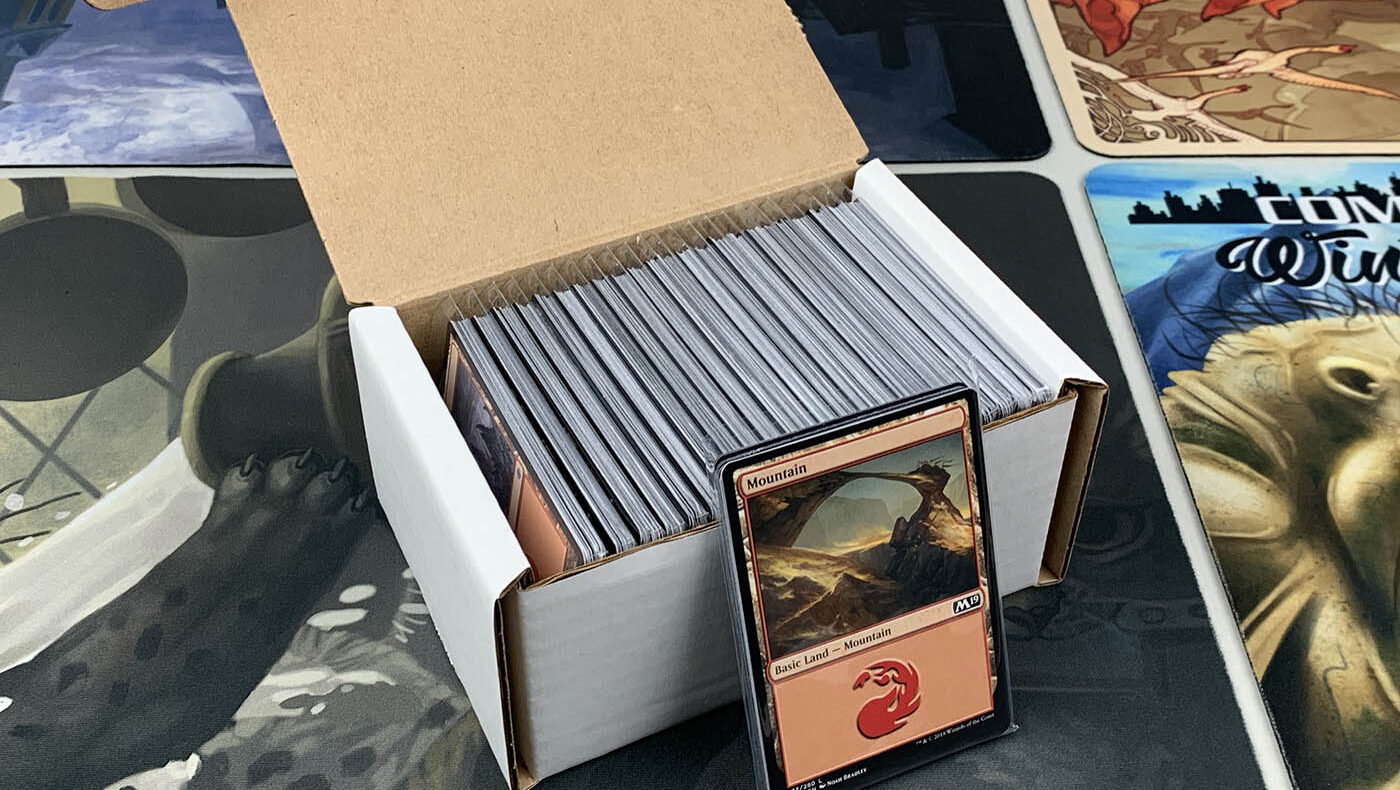
Tracking results in an MTG cube is how you stop arguing with your own brain after draft night. “Is Reanimator busted?” “Is White aggro secretly good?” “Did we all just lose to the same person again because they’re better at Magic?” Data can’t fix everything, but it can at least point your tweaks in a direction that isn’t pure vibes.
TLDR
- Start tiny: track deck colors + win-loss + 1 MVP card per deck. That alone gets you 80% of the value.
- Pick a tracking level: Good (paper), Better (simple spreadsheet/form), Best (CubeCobra deck/records).
- Avoid the classic trap: 2 drafts is not a “trend.” It’s two drafts.
- For 540-card cubes: track archetypes and packages, not “Card X is cursed” (you just won’t see each card often enough).
- Make it easy or it won’t happen: if it feels like homework, your cube will mysteriously “forget” to collect data forever.
Why bother tracking at all?
Because cubes change. You swap in new cards, you tweak archetypes, you add a spicy package, and suddenly your “balanced environment” becomes “who opened the one card that invalidates combat.”
Tracking results in an MTG cube helps with three real problems:
- Dead zones: cards that never make maindecks, archetypes nobody drafts, sections that look cool in theory but play like wet cardboard.
- Overperformers: the cards or strategies that keep warping drafts and games.
- Confirmation bias: the human brain’s favorite format is “I remember that one time… therefore it’s always like that.”
Also, if you’re running a 540-card cube (like our lists), your environment is naturally high-variance. Tracking helps you separate “this is part of the charm” from “this is a mistake I made in the name of novelty.”
What counts as a “result” in cube?
Before you track anything, decide what “success” even means for your cube.
Here are the usual suspects:
- Match record / win rate: useful, but noisy (skill differences matter a lot).
- Archetype representation: what decks are getting drafted at all.
- Maindeck rate: what cards actually get played versus “nice to see you in the sideboard forever.”
- Player feedback: fun rating, frustration points, “this card keeps ending games in a way that isn’t interesting.”
If you only track one thing, track what decks existed and how they did. Your cube is a draft environment. If nobody drafts the thing you built, the thing does not exist.
Good, Better, Best: pick your tracking level
Here’s the honest menu. Choose the one you will actually do.
| Tracking level | What you record | Per draft effort | What you learn | What you don’t |
|---|---|---|---|---|
| Good | Deck colors + record + 1 MVP | ~60 seconds total | Which archetypes show up and win | Card-by-card detail |
| Better | Add “archetype tag” + 1 bust card + quick notes | ~3 to 5 minutes | Early signals on under/over performers | Pick order data |
| Best | Save decklists (and optionally drafts) in a tool | ~5 to 10 minutes | Maindeck rates, archetype stats, longer-term trends | Your free time |
Rule of thumb
If you’re not currently tracking anything, don’t start with “full pick logs.” Start with “write down two numbers.” Build the habit first. Upgrade later.
The 5 data points that actually matter
If you want simple methods, here’s the minimalist kit. Track these five things per deck:
- Date / session (so you can compare before and after changes)
- Players (count) (4-player drafts behave differently than 8)
- Deck colors (UW, Jund, Mono-Red, etc.)
- Record (2-1, 3-0, 0-3)
- One MVP card (the card that felt like it carried)
Optional sixth data point, if you can handle it without sighing:
- One bust card (the card that looked good and then did nothing)
That’s it. If you collect this consistently, you can answer most cube design questions without inventing a conspiracy.
Simple ways to start tracking results in an MTG cube
Method 1: The index card “deck tag” stack (Good)
This is the lowest-friction option and it works because it’s dumb in the best way.
What you do:
- Keep a stack of index cards (or slips of paper) in the cube box.
- After each draft, each player writes:
- Colors
- Record
- MVP card
- (Optional) bust card
- Toss the cards back in the box.
How you use it later:
- Once you have 10 to 20 decks logged, skim for patterns:
- “Is UB showing up a lot but losing?”
- “Is RG never drafted?”
- “Why is the same white card showing up as MVP every week?”
This method won’t give you precise card stats, but it will give you something more important: a consistent record you’ll actually keep.
Method 2: Phone photo + later transcription (Better)
If you want decklist-level detail without slowing down the table, do what a lot of cube grinders do: take a picture now, do the nerd stuff later.
How it works:
- After deckbuilding, snap a photo of each maindeck (or the deck laid out by CMC).
- Store the photos in an album called “Cube Evidence.”
- Later, transcribe decklists when you feel like it.
Why it’s good:
- It keeps draft night moving.
- You can extract more detail over time (maindeck rates, archetype support, repeated packages).
Why it can fail:
- If you never transcribe, you just created a museum of blurry cardboard. Still kind of charming, but not helpful.
Method 3: A tiny Google Form (Better)
This is the “we track data but we still have friends” option.
Make a form with 6 questions:
- Date (auto or manual)
- Player name
- Deck colors
- Archetype (choose from a short list you define)
- Match record
- MVP card (free text)
Then the responses flow into a spreadsheet automatically, and you can filter by archetype, date, or player count.
The trick: keep the archetype list short. If your dropdown has 47 archetypes, you just built a compliance test.
Method 4: CubeCobra decks + records (Best, without building your own spreadsheet empire)
If you already keep your list on CubeCobra, you’re holding a tool that’s specifically built for cube management, drafting, playtesting, and analysis. You can save drafts/decks and build up enough data for trends to appear over time.
Two very practical CubeCobra habits:
- Save decklists when you can. Even a few per month adds up fast.
- Tag cards by archetype or role (reanimator payoff, control finisher, aggro one-drop). Then when something feels off, you can check if the support is actually showing up in decks.
If you want “data-driven improvements” without writing code, this is the path of least suffering.
How to interpret your data without making your cube worse
Tracking is great. Overreacting is how cubes become a rotating set of personal grudges.
Here are the big pitfalls and how to dodge them:
1) Small sample size lies to you
A card going undefeated in two drafts does not mean it is broken. It means it was in the right deck twice.
Simple guardrail:
- Don’t make “power level cuts” until you’ve seen a pattern across at least 8 to 12 logged decks, ideally more.
2) Player skill matters more than your last three swaps
If one person is the best drafter and pilot, their “win rate by archetype” is secretly “win rate by being them.”
Fix:
- Track archetype presence (what gets drafted) separately from archetype win rate (what wins).
- If the same archetype wins only when one player drafts it, that might be a player thing, not a cube thing.
3) Track packages, not single cards (especially at 540)
In a 540-card cube, an individual card might show up once every few sessions. That’s normal. You’ll go insane trying to judge it too quickly.
Instead, track:
- Reanimator as a whole
- Artifacts ramp shell
- Mono-Red density
- Selesnya creature toolbox package
If a package isn’t showing up, you adjust the support, not just one payoff card.
4) Separate “strong” from “unfun”
Some cards are powerful and still create great games. Others feel like slamming a door.
Add one simple qualitative prompt:
- “Did anything feel miserable tonight?”
If the same card or package keeps getting named, that’s a real signal, even if it’s not “too strong.”
A tiny testing loop for cube updates
Want a low-drama way to iterate? Use a “3-session rule”:
When you add a new card or package:
- Give it three draft sessions before you judge it.
- During those sessions, track:
- Was it maindecked?
- Did it matter (MVP votes, notable moments)?
- Did it show up in the intended archetype?
After three sessions:
- If it never makes decks, it might be unsupported or replaceable.
- If it makes decks but never matters, it might be too low-impact.
- If it ends games in the same boring way every time, it might be a vibe cut, not a power cut.
This keeps you from doing the classic cube-owner move: “I changed six cards last night and now I can’t tell what caused the problem.”
FAQs
Do I need to track win rates to have a good cube?
No. You need your group to have fun and draft meaningful decks. Tracking just helps you diagnose issues faster, especially when you’re making changes.
How many drafts before I cut a card?
If you’re tracking results in an MTG cube with any consistency, wait until you’ve logged at least 8 to 12 decks that could reasonably have played that card or strategy. For 540-card cubes, you may want longer.
Should I track individual card win rates?
You can, but be careful. Card win rate is noisy and easy to misread (good cards get drafted by good players, good decks, or both). Maindeck rate plus MVP/bust notes tends to be more actionable.
What’s the simplest thing I can track that still helps?
Deck colors + record + one MVP card. It’s fast, it’s consistent, and it gives you direction.
What if my group refuses to fill out anything?
Make it social: one person is the “scribe” each session, and everyone just says their colors/record out loud. Or do the phone-photo method and handle it later.
