
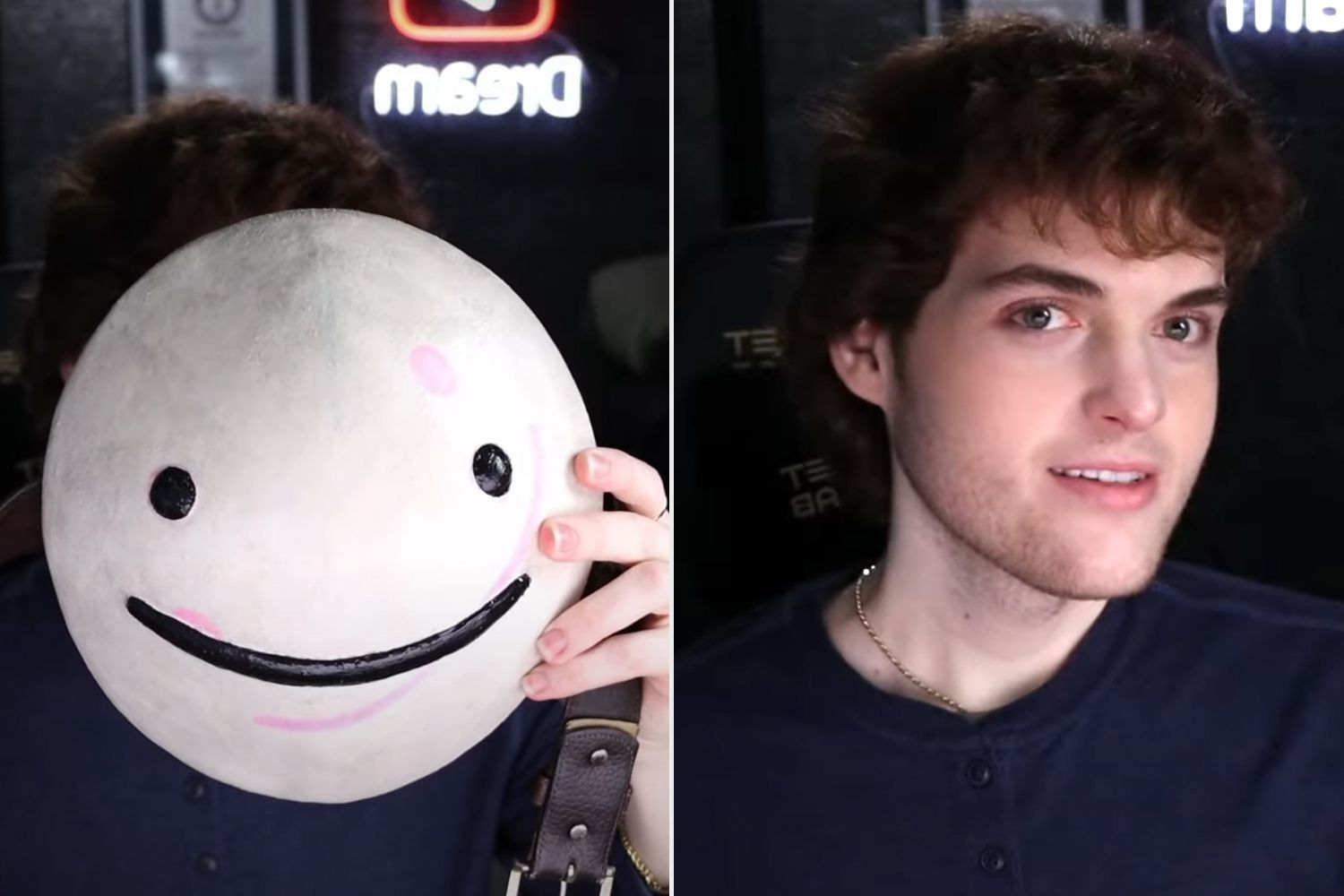
TL;DR: Dream can defend creative editing without being entitled to call edited footage unedited. The central problem is the gap between the competitive authenticity he promotes and the production choices viewers are expected to accept.
A spectacular Minecraft escape can be impressive for two very different reasons. Someone might have pulled it off under genuine pressure, with failure ending the game. Or someone might have built a terrific scene around a successful attempt. Both can entertain. They do not demonstrate the same achievement.
That distinction sits at the center of the Dream Manhunt controversy. His series asks viewers to follow a contest: Dream tries to finish Minecraft while hunters try to stop him. Its appeal depends partly on believing that the danger, opposition, and outcome belong to the same competition. YouTube
That is why the authenticity debate cannot be dismissed as people taking a block game too seriously. The stakes inside Minecraft are imaginary. The claims made to the audience are not.
Authenticity Was Part of the Product
In his 2023 WIRED interview, Dream denied scripting Manhunt while acknowledging that he sometimes reused audio from an earlier performance of a trick. WIRED
Those are not equivalent disclosures. Saying a contest has no script answers whether someone wrote the action in advance. It does not answer whether the finished recording preserves what happened, when it happened, and how the other players reacted.
Imagine watching an athlete land a difficult shot while opponents gasp. If those gasps came from another attempt, the shot might still be real. But the scene no longer records one event. It has been assembled to produce a particular impression.
The audience is entitled to care about that distinction. A reaction is not merely background noise when it helps establish that a moment was surprising, dangerous, or unprecedented. It contributes to the apparent evidence of what the viewer just witnessed.
Dream does not need to abandon entertainment editing. He needs to stop treating its dramatic benefits as automatically compatible with every claim of authenticity.
A Curated Challenge Can Still Be Honest
His January 2026 production breakdown described pre-scouted worlds and a system of cash rewards for hunters who kill him early, before an attempt becomes a worthwhile video. Those short attempts can be discarded in favor of another run. Dexerto
None of that alone proves a rigged result. Paying hunters to pursue an early kill could encourage genuine competition. Selecting an interesting world can be a sensible production choice. Recording multiple attempts is not the same thing as secretly combining failed attempts into one supposed victory.
But those distinctions should be explained clearly, not collapsed into the comforting claim that everything is simply real. Viewers assessing an extraordinary escape need to know what failure would have meant. Was the entire challenge at stake, or was this an opening attempt that could be replaced?
A successful maneuver remains successful either way. What changes is the meaning of the risk. A creator should not receive full credit for apparently irreversible stakes while leaving the restart conditions outside the audience’s understanding.
The responsible approach is straightforward: publish the rules, identify the selection process, and distinguish an edited entertainment upload from a record offered as evidence. None of that would make the videos unwatchable.
The Extended Record Should Clarify, Not Complicate
Dart Spark’s investigation identifies apparent hidden cuts across three recordings labeled uncut or unedited. Dream disputes the broader interpretation. He attributes many anomalies to a screenshot mod and acknowledges some real edits for breaks and technical interruptions. Dart
An apparent discontinuity does not, by itself, establish a staged victory. Nor does a bathroom break prove that hunters threw a fight. Those limits matter because a criticism loses force when it claims more than its evidence can support.
Yet Dream’s own explanation leaves a separate problem intact. A video promoted as unedited should not require viewers to discover an unstated definition of editing after they ask questions.
An extended version can provide useful context without being a raw record. Call it an extended version. Mark interruptions. Explain what has been removed. The objection is not that a human being needed lunch. It is that the language used to reassure viewers promises more than the production actually delivers.
Calling that concern pedantic reverses the responsibility. The audience did not choose the title. The publisher did.
The Dream Manhunt Controversy Goes Beyond Editing
There is also a reason skepticism does not begin from zero. In 2021, after disputing findings about his speedruns, Dream acknowledged that a modification had increased important item drop rates. He maintained that its use during those runs was accidental. PC Gamer
That history does not prove the Manhunts were staged. Competitive speedruns and an entertainment series are different productions, and allegations about one cannot automatically settle the other.
What it does undermine is the idea that his confidence should substitute for independent scrutiny. A previous assurance proved unreliable. Viewers are therefore reasonable to ask for more than another assurance when a new authenticity dispute arrives.
Credibility is not a punishment system in which someone becomes permanently guilty. It is an assessment of how much weight their unsupported statements deserve. Restoring it requires evidence, clear corrections, and a willingness to answer the actual criticism.
Being annoyed that people no longer trust you is not the same as giving them a reason to trust you again.
The Creator Owns the Representation
The strongest criticism in the Dream Manhunt controversy does not require declaring every famous play fraudulent. It concerns the standard he owes viewers when presenting his own achievements.
The person publishing a competition chooses how to describe it. That person can explain house rules, separate reconstructed moments from continuous gameplay, and acknowledge uncertainty about old recordings. Technical complexity may complicate verification. It does not remove the responsibility to communicate honestly.
There is a revealing imbalance in any defense that treats authenticity as important when attracting admiration but trivial when challenged. If the distinction between spontaneous competition and constructed entertainment does not matter, there should be no objection to labeling the production precisely.
And the people who enjoyed the videos are not fools for taking their premise seriously. Trusting a creator’s description is an ordinary way to watch entertainment. Requiring every viewer to become a Minecraft forensic analyst before believing a title would make the title practically useless.
The burden of clear presentation belongs with the person making the claim, not the audience trying to understand it.
Good Entertainment Does Not Erase Bad Disclosure
Dream could defend Manhunt as a carefully produced challenge series with genuine competition, selected attempts, and disclosed editing. That would be a coherent position. It would also leave individual technical allegations open to testing rather than pretending they are settled by a creator’s reputation.
What he cannot reasonably demand is admiration for apparently spontaneous achievement alongside indifference to how that appearance was created. Those positions protect the creator at the audience’s expense.
The Dream Manhunt controversy is not a complaint that Minecraft videos require work. It concerns production choices that can change what viewers think they are witnessing. When they do, disclosure is part of the job.
Dream deserves credit for what he actually accomplishes. He is not entitled to extra credit supplied by an inaccurate impression. An entertaining video can survive an honest description. A reputation built around authenticity should be expected to survive the same test.
