
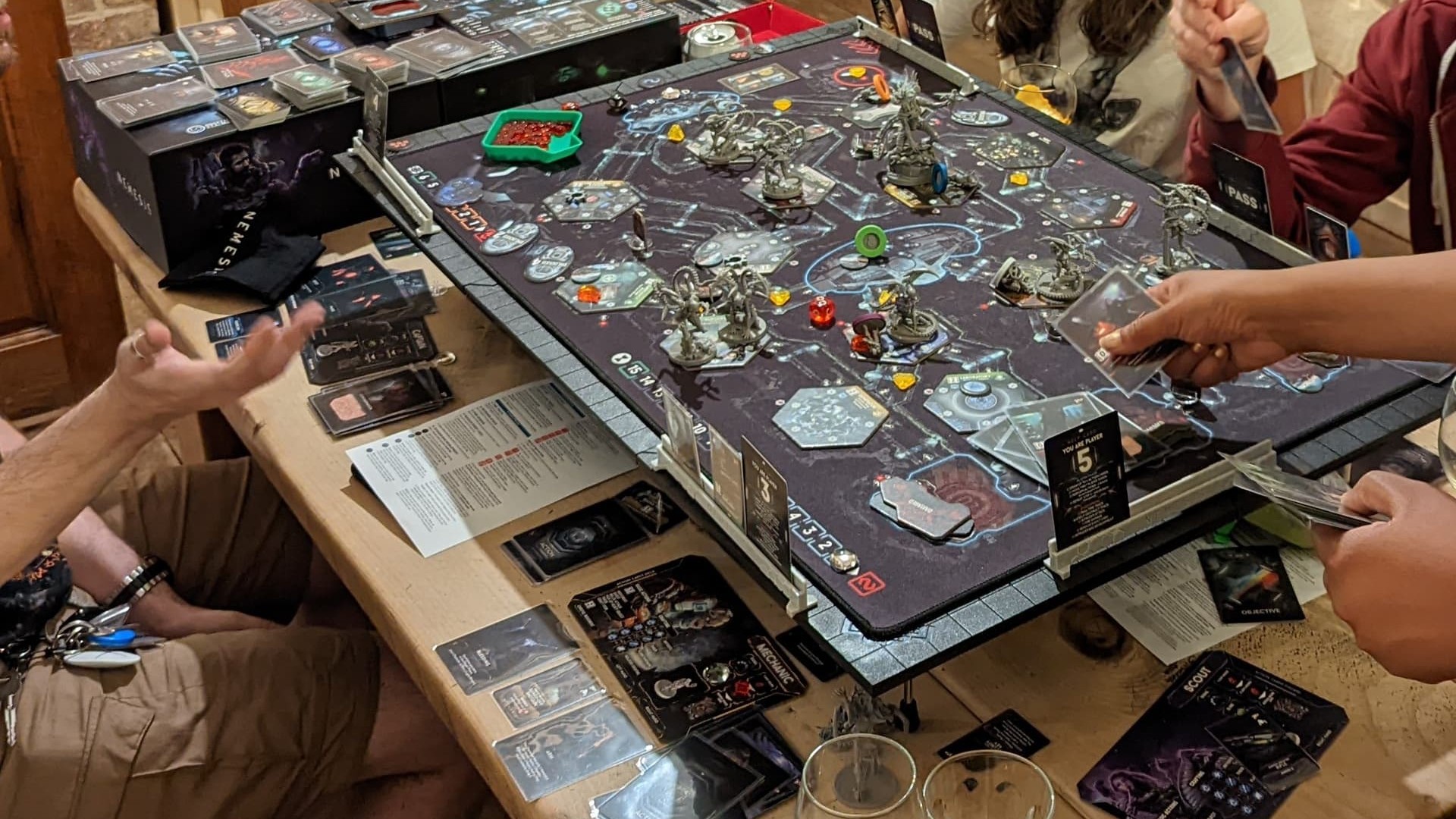
If you want a quick definition of board game culture, it’s this: a bunch of adults (and plenty of kids, too) voluntarily gathering around cardboard to make decisions that would get them fired in real life. “Yes, i will trade you two sheep for a brick, but only if you stop looking at my hand like that.”
But the real story is bigger than “people like games.” Modern board gaming has turned into a full ecosystem with its own shared language, etiquette, rituals, local hangouts, online hubs, conventions, and a surprisingly intense relationship with tiny plastic bags. And while trading card games like Magic: The Gathering sit in the next room over (sometimes literally, at the same store on the same night), board games have their own distinct vibe: less about “the meta,” more about “the night.”
So let’s talk about board game culture as it actually exists, not as Monopoly trauma flashbacks. Where it happens, how it works, what people value, what drives everyone nuts, and why the hobby keeps growing even though nobody has anywhere left to put the boxes.
What “board game culture” means now (and what it doesn’t)
Board games are old. “Board game culture” as a hobby identity is newer.
Most people grew up with mass-market staples: Monopoly, Risk, Scrabble, Clue. Those aren’t “bad,” but they were often the only mainstream reference point. The modern hobby scene is different in three big ways:
1) The games are designed for repeat play and fairness.
A lot of modern titles try to avoid “player elimination at minute 12, watch your friends have fun for 90 minutes.” There’s more emphasis on pacing, catch-up mechanics (sometimes), meaningful choices, and clear endings.
2) The experience is social by design.
Even when a game is competitive, the goal is often “good interaction” more than “total destruction.” You can feel this shift in how people talk about games: “It plays great at 4,” “it’s interactive but not mean,” “it teaches clean,” “downtime is low.” That’s culture talking.
3) The hobby has a shared infrastructure.
BoardGameGeek (BGG) for discovery, rankings, and rules clarifications. Crowdfunding platforms for releases. YouTube channels for reviews and teach-throughs. Conventions for demos and launches. Board game cafés for “try before you buy.” That infrastructure shapes what the community values and how newcomers enter.
In other words: board game culture isn’t just “people who play board games.” It’s the habits and norms that form around a growing hobby scene.
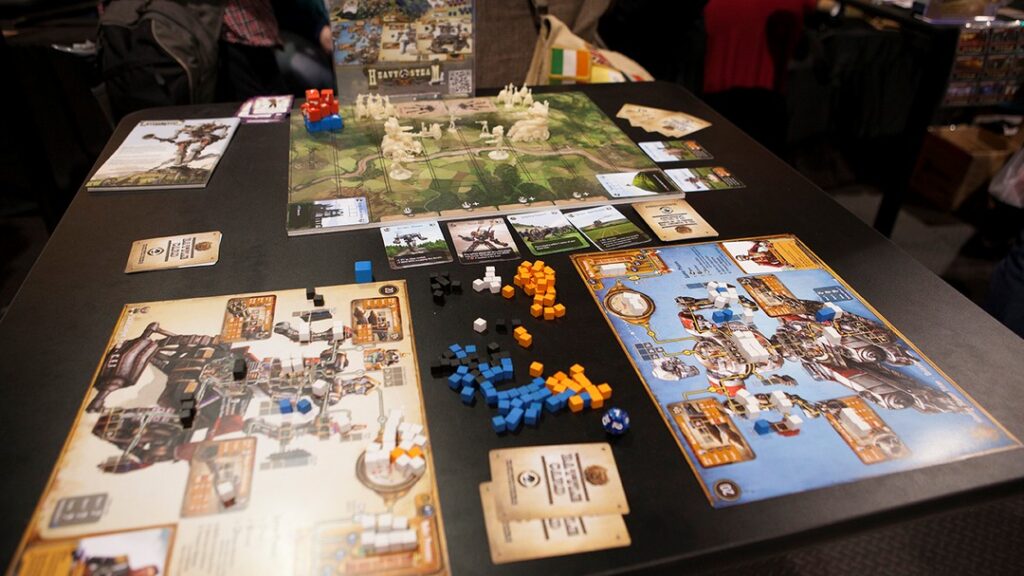
The places board game culture lives
Board games are portable, which means the culture shows up in a bunch of “third places” and semi-third-places. Each location has its own social rules and little quirks.
The kitchen table: the original local meta
Home game nights are where most people start, and they’re still the heart of the hobby. The culture here is usually about:
- Comfort (snacks, playlists, inside jokes, someone’s dog judging your tactics)
- Consistency (a rotating roster, a shared shelf, a soft rule about “nothing that runs past midnight on a work night”)
- Ritual (the same person always teaches, the same friend always “accidentally” becomes the banker)
This is also where you see the most “house culture”: how competitive the group is, how much table talk is allowed, whether takebacks are normal, whether “learning games” are treated gently.
Local game stores: community, commerce, and chaos in sleeves
If board game culture has a public square, it’s the FLGS (Friendly Local Game Store). Stores host demos, events, designer days, and open play. They’re also where subcultures overlap: board gamers, TCG players, miniatures folks, and D&D groups sharing the same oxygen.
The store scene tends to emphasize:
- Teaching and onboarding
- Game discovery (someone shows up with a weird box you’ve never seen)
- “Do we have enough table space for this?” negotiations
And yes, the board game shelves at stores are often one impulse purchase away from a moral lesson.
Board game cafés: “try it first” as a lifestyle
Board game cafés exploded because they solve a basic problem: games are expensive and hard to preview. Cafés typically charge a fee for access to a library and staff help, while also serving food and drinks. The culture here is more newcomer-friendly and “date-night safe” than a hardcore game night, but you still get plenty of hobby regulars.
The key cultural shift cafés create is permission: you can show up not knowing anything, pick something off a shelf, and get help learning it without feeling like you’re interrupting someone’s sacred tournament bracket.
Conventions: where the hobby becomes a city for a weekend
Conventions are where board game culture turns into a temporary civilization. Gen Con and SPIEL Essen are the obvious giants, but there are dozens of regional conventions that feel like their own micro-worlds: demos, play-to-win libraries, publisher booths, prototype rooms, late-night open gaming.
A good convention teaches you something about the hobby immediately:
- There’s a real “teach economy.” People who can teach well become social magnets.
- “New hotness” hype is real, but so is the joy of discovering something small and clever.
- You learn very quickly that your feet are not built for eight hours of concrete.
SPIEL Essen (Essen Game Fair) is especially famous for being a massive release moment for publishers, and Gen Con has become a huge North American hub for tabletop broadly, not just board games.
Online spaces: rules, recommendations, and the endless debate machine
Even though board games are analog, the culture is deeply online:
- Rules questions get answered (sometimes kindly, sometimes like a court deposition).
- Rankings and lists shape what people buy.
- Crowdfunding and preorders create long hype cycles.
- Communities form around genres (co-op, heavy euro, party games, war games, solos).
Online culture also amplifies the hobby’s common arguments: “Ameritrash vs euro,” “randomness is fine actually,” “co-ops are best,” “co-ops are basically group solitaire,” and so on. None of these debates ever end. That’s part of the charm. Or the curse. Hard to say.
The “genres” are also identities
Board game culture has a funny way of turning preferences into personality traits. You’ll see people self-sort quickly:
- Eurogame players: efficiency, engines, optimization, low luck, multiple scoring paths.
- Ameritrash or thematic players: big moments, dice, narrative, conflict, drama.
- Co-op players: puzzle-solving together, shared tension, sometimes a mild fear of “alpha gamers.”
- Party game players: energy, laughter, low rules overhead, social deduction bruises.
- War game players: simulation, history, long rules, deep commitment, the calm patience of someone reading a 40-page scenario book for fun.
- Solo gamers: the “i’m not waiting for schedules anymore” renaissance.
These categories overlap, but they matter culturally because they shape expectations. If someone says “this is a heavy euro,” you already know the night is going to involve a rules teach, quiet thinking, and at least one person staring at the board like it personally insulted them.
https://krakenopus.com/category/board-games
The unwritten rules of the table
If board game culture had one universal truth, it’s that the rules are not the only rules. The social layer matters just as much.
Teaching is a skill, and culture rewards it
Good teachers are the glue of game nights and public events. The best teachers:
- explain the goal first (what “winning” looks like)
- teach only what matters for the first few turns
- point out common mistakes before they happen
- keep the pace moving without rushing people
Bad teaches create bad first impressions, and board game culture remembers. People will avoid a game for years because of one rough teach. It’s not fair, but it’s true.
Downtime is the silent killer
Most table frustration is not “you attacked me.” It’s “i have been waiting nine minutes for you to do math you could have done while it wasn’t your turn.”
Downtime tolerance varies by group, but board game culture has developed a shared vocabulary for it: “analysis paralysis,” “turtling,” “fiddly overhead,” “too many triggers,” “this runs long.” The hobby has become increasingly aware that the best game on paper can still be a bad night if the table experience drags.
Quarterbacking and the “alpha gamer” problem
Co-op games are wonderful until one player starts playing everyone else’s turn. Board gamers call this quarterbacking: a player taking over the group’s decisions, intentionally or not.
It’s a culture problem as much as a design problem. Some groups handle it with social norms: “no telling people what to do unless asked,” “talk options, not commands,” “let people make mistakes.” Some co-op designs fight it by hiding information, forcing simultaneous choices, or giving players asymmetric roles that are hard to “solve” from the outside.
House rules: the dangerous shortcut
House rules can be great when they fix a genuine pain point for your group. They can also quietly break a game’s balance and then everyone blames the game. Board game culture has a common pattern here:
- Someone misreads a rule.
- The group plays it wrong for six sessions.
- Everyone agrees the game is “kinda busted.”
- Someone finds the rule online.
- The group realizes they invented a new, worse game.
The social takeaway: if something feels wildly off, check the rules before you rewrite the universe.
Sportsmanship is not optional
Board games are social games. Even competitive ones. The cultural baseline is usually:
- don’t mock new players for mistakes
- don’t gloat when you win
- don’t sulk when you lose
- don’t blame randomness like it’s a personal betrayal
People will invite the “pleasant 3rd place finisher” back before they invite the “miserable 1st place finisher.” Culture selects for vibes.
The collector side: shelves, sleeves, inserts, and acceptable obsession
Board game culture includes a parallel hobby: owning and organizing the hobby.
This shows up as:
- the “shelf of shame” (unplayed games)
- deluxe editions with upgraded tokens and metal coins
- storage solutions that cost more than the game
- sleeving everything because “it holds value,” or because shuffling feels better, or because it’s soothing, or because we’ve lost control of our lives
And yes, some people paint minis. Some people build inserts. Some people make spreadsheets. None of these people are wrong. They are simply expressing love in a language of foam core.
Crowdfunding accelerated this collector culture because it often sells experiences as “events”: big boxes, stretch goals, exclusive extras, and months of anticipation. The upside is creativity and variety. The downside is that the hobby occasionally resembles a logistics hobby that comes with a game as a bonus.
Inclusivity and accessibility: the culture is learning (sometimes slowly)
Board game culture has gotten more welcoming over time, but it still has work to do. A few cultural pressure points show up often:
- Gatekeeping: acting like complexity equals intelligence, or treating certain games as “real games” and everything else as “not for serious gamers.”
- Representation and comfort: who feels safe showing up to public game nights, how harassment is handled, how inclusive events are run.
- Accessibility: small fonts, color-dependence, unclear iconography, fiddly components, and physical barriers.
The best communities actively improve here: clear codes of conduct at events, patient teaching, accessible game choices, and designers paying attention to the realities of different players. There are even formal accessibility guidelines aimed at helping publishers and designers make games more playable for more people.
Culturally, this matters because board games are supposed to be social. If “social” comes with a barrier, the hobby shrinks for no good reason.
The overlap with TCGs (MTG included), without pretending it’s the same hobby
TCGs are absolutely part of tabletop culture, and there’s a lot of overlap in people and spaces. But the cultures differ in a few important ways:
TCGs are persistent.
A board game is usually “self-contained.” A TCG has decks, collection management, rotation or formats, and sometimes an economy that feels like a second job.
TCGs have meta pressure.
Even casual MTG has a shadow meta, especially in formats like Commander where power level and social expectations can collide. Board games can be competitive, but you rarely show up to board game night and discover your friends have been secretly practicing “the current Tier 1 Agricola openings.”
TCGs have identity expression baked in.
Your deck is your choices, your style, your “thing.” Board games have expression too, but it’s more about what you bring and what you like to play.
Still, the cultural skills transfer nicely:
- teaching clearly
- reading a room
- managing salt and competitiveness
- keeping the night fun even when the game is sharp
If you want the TCG side of this, we’ve written about how social expectations and personal well-being collide in MTG, including MTG Proxies 101: What proxies are, why people use them, and where the line usually is and MTG Culture. Different corner of the hobby, same basic truth: the table matters more than the cardboard.
Where board game culture seems headed
A few trends look like they’re sticking:
- Hybrid play: apps for setup, scoring, or hidden information. People used to hate this. Now they mostly hate bad apps.
- More solo and small player-count support: schedules are hard, and designers noticed.
- Bigger emphasis on teachability: clean iconography, better player aids, better onboarding.
- Online play as a supplement: digital tabletop tools let people try games or keep groups alive across distance.
- Pressure on production and pricing: global manufacturing realities affect publishers, and board gamers are increasingly aware of why “a box of cardboard” can get expensive.
And honestly, the biggest constant is still the simplest: people want a reason to gather that isn’t “stare at separate screens in the same room.” Board games give you a shared problem, a shared story, and a socially acceptable way to be petty about resource allocation for two hours.
That’s board game culture at its best.
