
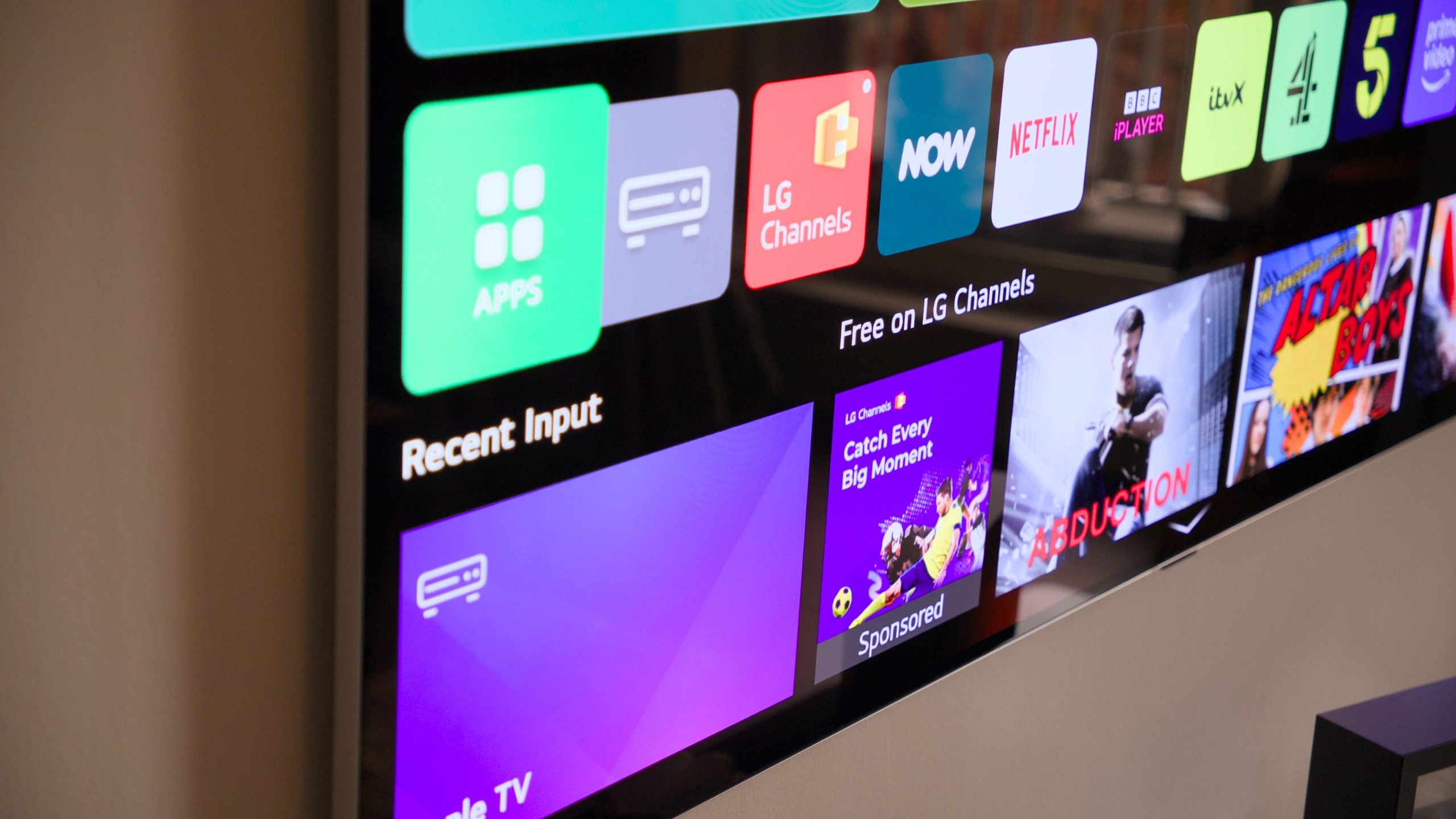
I am completely fed up with LG.
Not mildly annoyed. Not “concerned about the direction of smart TVs.” I mean genuinely disgusted with what companies like LG have decided they are entitled to do after you hand them thousands of dollars for a television.
At some point, we stopped being customers and became inventory.
You buy the TV. You pay for the panel. You pay for the processor, the remote, the stand, the electricity and the internet connection. You put the thing inside your own house. And apparently LG looks at that relationship and thinks, “Great. Now how else can we monetize this person?”
That is garbage.
I think people should stop buying LG televisions until the company gets the message.
And yes, LG makes some fantastic displays. Their OLED panels can look incredible. I know that. Everybody knows that. That is exactly what makes this so frustrating. LG could simply sell excellent televisions and enjoy being one of the best display manufacturers in the world.
Instead, we get ads, viewing-data systems, personalized advertising, content recognition, voice features, recommendation engines, accounts, promotional content and privacy agreements layered on top of a device whose fundamental job is incredibly simple:
Take a video signal and display it.
How did we manage to turn that into this?
Read this article to learn how to disable LG spyware.
You Already Paid for the TV. Why Is LG Still Trying to Make Money Off You?
This is the part that drives me crazy.
There is a perfectly reasonable business relationship available here. LG builds a television. I pay LG money. LG gives me the television. Transaction complete.
Apparently that isn’t enough anymore.
LG has been increasingly turning webOS into another platform for advertising and engagement. In 2024, LG began putting advertisements into television screensavers, with its advertising operation pitching the idle screen as another opportunity to reach viewers.
Think about how absurd that is for a second.
You have already purchased the physical screen, and when you aren’t even actively watching something, the manufacturer sees that unused screen space and starts thinking about how it can sell access to your eyeballs.
That isn’t innovation. It’s greed dressed up in marketing language.
Your television sitting idle is not an “engagement opportunity.” It is your television sitting idle.
Companies have become so accustomed to monetizing every available inch of digital space that apparently nobody in the room stops and asks whether maybe the person who bought the $3,000 OLED would prefer not to have the manufacturer turn their screensaver into a billboard.
That should not be considered a premium television experience. It should be embarrassing.
Then There Is Automatic Content Recognition
The privacy side gets worse.
LG televisions can support Automatic Content Recognition, or ACR. LG currently says its ACR implementation is optional, disabled by default, and uses content fingerprints rather than literally recording and storing screenshots. LG also says personalized advertising requires additional consent.
Fine. Those are important distinctions.
They do not make me like the feature.
What bothers me is the underlying idea that my television needs a system capable of identifying what I am watching in the first place.
And this isn’t limited to what you watch through an LG streaming app. On supported configurations, content recognition can involve material coming through external inputs such as HDMI.
Why?
Why does the display need to know what my Xbox is showing?
Why does it need to recognize a television program coming from a cable box?
Why should a television manufacturer have any involvement whatsoever with understanding what content is passing through an HDMI cable after the sale?
I bought a display. I didn’t hire an audience-measurement company to sit between my devices and my eyes.
In May 2026, the Texas Attorney General announced a settlement with LG over ACR privacy practices. The agreement required LG not to collect viewing information through ACR from Texans without informed consent and required clearer disclosures and opt-out mechanisms.
Whatever anybody’s politics are, the important point here is straightforward: this issue became serious enough to result in a formal privacy agreement with a state attorney general.
That should tell consumers that paying attention to these settings isn’t paranoia.
“But You Can Turn It Off” Is Not Much of a Defense
Every time these issues come up, somebody says the same thing: “You can disable it.”
Great.
You can also disable personalized advertising. You can reject optional viewing-information agreements. You can turn off hands-free voice control. You can disable recommendations. You can turn off Live Plus. You can change app permissions.
Do you know what would be even better?
Not building a television around all of this crap in the first place.
LG’s current support material explicitly says that several of these agreements are optional. Viewing information, voice features and personalized advertising are not fundamental requirements for displaying television content.
Of course they aren’t.
None of this is required to make pixels light up.
These features exist because the modern smart-TV business model is no longer satisfied with making money when the customer buys the television. Companies increasingly want a continuing relationship with the person sitting in front of it.
They want engagement.
They want accounts.
They want data.
They want advertising opportunities.
They want recurring value from hardware that you already paid for.
I don’t want a continuing relationship with my television manufacturer.
I want them to make the television and then leave me alone.
The Voice Features Are Another Perfect Example
LG has pushed back against claims that its televisions are simply recording everything said in the room. The company says supported voice features use local wake-word detection and that the televisions do not continuously record and transmit every household conversation.
That distinction matters. I’m not interested in inventing claims just because I am angry.
But I also don’t care enough about talking to my television to want a far-field microphone waiting for a wake word.
I don’t want Voice ID. I don’t want an AI assistant built into the television. I don’t want the television identifying me from my voice. I don’t want another microphone-enabled networked appliance sitting permanently in my living room.
We’ve already gone through this nonsense with phones, speakers, computers, cars and smart-home devices. Apparently televisions needed to join the party too.
And now privacy-conscious people are expected to dig through settings to disable hands-free voice control, reject voice agreements, remove Voice ID and flip a physical microphone switch if their model includes one.
This is insane.
A television should not require a privacy-hardening procedure.
It should not require an article called “How to Stop Your Television From Tracking You.”
The fact that such a guide is useful at all is an indictment of where this industry has ended up.
Smart TVs Have Also Become Needlessly Complicated Computers
Then there is security.
The more software you put into an appliance, the more things there are to go wrong. Every network service, account system, microphone API, app permission, advertising framework and background process becomes another piece of code that somebody has to secure and maintain for years.
In 2024, Bitdefender disclosed multiple vulnerabilities affecting LG webOS versions that could, under certain conditions, allow attackers to bypass authorization and ultimately gain elevated control of affected televisions. LG patched the vulnerabilities before public disclosure, which is exactly what the company should have done.
But look at the situation we’ve created.
We now have televisions with operating systems complicated enough that security researchers can talk about privilege escalation and root access.
On a television.
The device that used to sit in the corner and display whatever came through the input cable is now a Linux computer with advertising services hanging off the front of it.
And consumers are stuck with an absurd tradeoff. Disconnect the television from the internet to maximize privacy and you may miss security fixes. Leave it connected so it can receive updates and now all of the smart functionality has a permanent network connection.
Fantastic.
We added all this complexity ourselves and then act surprised that we have to manage it like another computer.
The Screensaver Ads Are What Really Show the Mentality
Of all LG’s decisions, the screensaver ads may be the one that annoys me most because they reveal exactly how these companies think.
When you look at your television, LG’s advertising division doesn’t necessarily see a piece of hardware that belongs to you. It sees a surface.
A surface that can display an ad.
A surface that can promote something.
A surface that can produce engagement.
A surface that is apparently being wasted whenever nothing profitable is happening on it.
That mentality is corrosive.
There used to be a clear distinction between the product you bought and a service supported by advertising. If I watch a free streaming channel, I expect advertising. That’s the trade.
If I buy a premium OLED television, I should not have to hunt through settings to stop the television manufacturer from advertising to me through its own operating system.
You already got my money.
Go away.
And I Don’t Care That Other TV Companies Do It Too
Another defense I cannot stand is: “Samsung does it too,” or “Roku is worse,” or “Every smart TV tracks something.”
Okay.
Then screw all of them when they do it.
The fact that an entire industry has adopted an obnoxious practice does not magically make that practice acceptable.
If every airline started charging passengers extra to use the bathroom, “all the airlines do it” would not suddenly make that reasonable.
Consumers need to stop treating industry-wide bad behavior as some law of nature.
These companies behave this way because it works.
They build the tracking system. Most people click through the agreements. The ads make money. The data is valuable. Almost nobody changes brands because of it.
So why would they stop?
They won’t stop until the behavior starts costing them sales.
That is why I think people need to move beyond simply saying, “Remember to turn off ACR.”
Stop rewarding companies for building products this way.
LG Had One Job, and It Was Already Really Good at It
The maddening thing is that LG doesn’t need any of this nonsense.
They make excellent displays.
Give me an outstanding OLED panel. Give me excellent HDR. Give me Dolby Vision. Give me four HDMI 2.1 ports. Give me VRR, low latency, good processing and a remote that doesn’t make me want to throw it through a window.
Then stop.
I don’t need a content relationship with LG.
I don’t need LG recommendations.
I don’t need an LG identity.
I don’t need LG knowing what I watch.
I don’t need LG helping advertisers understand me.
I don’t need LG’s AI.
I don’t need LG’s microphone.
I don’t need LG figuring out what I’m doing on another HDMI device.
Just make the television great.
That should be enough.
Somehow we have reached a point where asking a television company to focus on making televisions feels like an extremist position.
LG’s Privacy Explanations Don’t Fix the Bigger Problem
LG has recently published detailed explanations saying that some criticism of its privacy practices misrepresents how its systems work. The company says ACR is optional, voice functions do not continuously record household conversations, and interest-based advertising requires consent.
I am perfectly willing to accept those statements as LG’s position.
My problem goes deeper than whether one especially alarming description of the technology was overstated.
I dislike the system even under LG’s own description.
I don’t want optional content recognition.
I don’t want optional advertising identification.
I don’t want optional voice profiling.
I don’t want optional cross-device advertising.
I don’t want optional viewing-data collection.
I want none of it.
And that is why the endless technical debate over exactly how much data is collected sometimes misses the bigger consumer issue.
Why are we tolerating the creation of televisions where this argument is even necessary?
This isn’t Facebook.
It isn’t Google Search.
It isn’t a free email account.
It is a television.
So Yes, I Think People Should Boycott LG
At some point, consumers need to make these decisions expensive.
That means sales.
If privacy matters to you, don’t buy another LG television.
It doesn’t matter that the picture quality is excellent. It doesn’t matter that the G-series looks beautiful on a wall. It doesn’t matter that reviewers love the gaming features.
There are other televisions.
There are other displays.
And if enough customers say, “I’m not buying hardware from a company that wants to monetize me after the sale,” eventually somebody notices.
Companies rarely abandon profitable practices because customers politely complain on Reddit.
They abandon profitable practices when the profit disappears.
A boycott doesn’t mean LG is uniquely evil. It doesn’t mean every LG employee is plotting to spy on people. It doesn’t even mean LG has the worst privacy practices in the industry.
It means you have looked at the company’s direction and decided you don’t want to financially reward it.
That’s where I am.
If You Already Own an LG TV, Don’t Throw It Away
I would not throw away a perfectly good LG television just to prove a point.
If you already paid for it, use it.
But strip out as much of the smart functionality as you can.
Turn off viewing-data collection. Disable Live Plus. Decline advertising personalization. Turn off hands-free voice control. Disable the physical microphone if your model has one. Delete stored viewing and voice information where webOS allows it. Kill home-screen promotions and content recommendations.
And if you don’t actually need LG’s apps, take the TV off the internet.
That may actually be the ideal LG experience: a gorgeous OLED panel with as much of LG’s software ecosystem disabled as possible.
Use an Apple TV, game console, Shield or another external device and reduce webOS to the job it should have been doing all along.
Displaying an image.
I Am Tired of Every Object in My House Trying to Become a Service
This is bigger than LG.
Everything is turning into a platform.
Cars want subscriptions.
Printers want accounts.
Software wants telemetry.
Appliances want Wi-Fi.
Operating systems advertise to you.
Streaming services collect mountains of behavioral data.
And now the television hanging in your living room is another platform trying to generate advertising value after you buy it.
At some point consumers have to say no.
There needs to be a line between buying a product and enrolling in a company’s ecosystem.
There needs to be a point where ownership actually means ownership.
When I buy a television, I should not have to study privacy agreements, hunt for ACR settings, disable voice recognition, opt out of advertising personalization and think about putting the damn thing on an isolated network.
That isn’t progress.
That’s a worse product wrapped around a better panel.
LG can keep improving OLED brightness, refresh rates and image processing all it wants. None of that fixes the underlying problem for me.
I do not want to be LG’s user.
I do not want to be LG’s audience.
I do not want to be LG’s advertising opportunity.
I do not want to be another viewing-data point.
I want to be the person who bought the television.
Until LG understands the difference, I think consumers should stop rewarding the company with more money.
Keep the LG you already own. Lock it down. Disconnect it if that works for you. But when it eventually dies, buy something else.
Maybe if enough people do that, LG will finally remember who the customer is.
