
Last updated: April 6, 2026
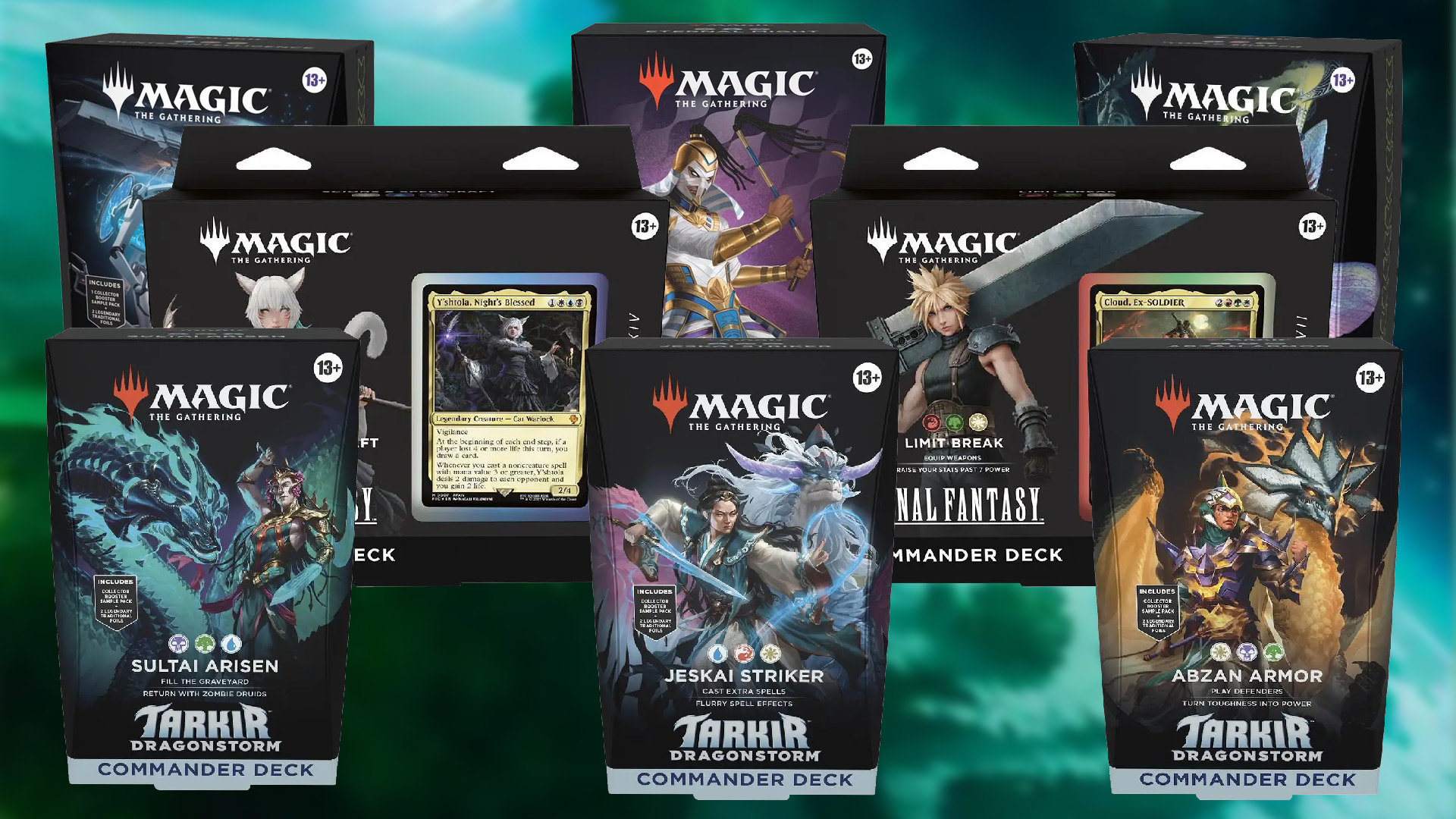
Precon decks vs custom-built decks in EDH is one of the first real Commander questions most players run into. You buy a precon, sleeve it up, play a few games, and then sit across from someone whose deck feels suspiciously like it was assembled by a committee of goblin engineers. Your deck is playing nice, their deck is filing taxes and tutoring twice.
That does not mean precons are bad. Far from it. It just means they are built for a different job.
A precon is meant to be playable right away, understandable for newer players, and broad enough to appeal to a lot of different tables. A custom-built deck is built for you and your exact plan. That one difference changes almost everything: power, consistency, speed, budget use, and how the deck feels in actual games.
If you want the format basics first, MTG Commander Explained: History, Rules, and How to Start is the clean starting point. And if your group keeps describing every deck as “about a 7,” this companion read helps a lot: MTG Commander Power Levels Explained (and why everyone is a ‘7’).
Here is the short comparison before we get into the details:
| Category | Precon Decks | Custom-Built Decks |
|---|---|---|
| Starting Power | Usually lower to mid casual | Anywhere from low casual to cEDH |
| Consistency | Decent, but often uneven | Usually better when built well |
| Mana Base | Often slower | Can be tuned to be smoother and faster |
| Theme | Broad, sometimes split | Usually more focused |
| Win Conditions | Fair and straightforward | Flexible, often cleaner or stronger |
| Best For | New players, even pods, low-stress games | Brewers, tuned pods, specific goals |
What Precons Are Built To Do
Wizards sells Commander precons as ready-to-play 100-card decks. That matters. A precon is not trying to be the sharpest version of a strategy. It is trying to be a product you can open and play tonight without needing a spreadsheet, six decklists, and an argument with yourself about the 37th land slot.
That gives precons some clear strengths.
First, they are accessible. You get a full deck, a real game plan, and usually enough ramp, interaction, and threats to function. For a lot of players, that is the easiest on-ramp into EDH.
Second, they are usually balanced with other precons in mind. That makes them good for beginner pods, store precon nights, or friend groups that want slower games where people actually get to cast their seven-drops without being immediately punished for it.
Third, they are a solid shell for upgrades. And this is important. Precons are not only products. They are also starting points.
But that same design creates limitations. Precons often support more than one possible commander, or more than one subtheme, which means card slots get pulled in different directions. The mana base is usually serviceable instead of great. The interaction package is often fine instead of dense. And the finishers tend to be fair, obvious, and a little slow.
So when people ask whether precons are weaker, the answer is usually yes. Not because they are badly made, but because they are intentionally not maxed out.
Why Custom-Built Decks Usually Pull Ahead
This is where precon decks vs custom-built decks in EDH gets real.
A custom deck gets to cut the fluff.
You are not trying to support three possible face commanders. You are not leaving in cards because they looked good in the product box. You are not carrying around an off-theme six-drop that is “kind of neat” but never actually matters. Every slot can serve the exact thing your commander wants to do.
That focus shows up in a few ways.
The first is consistency. A custom deck usually draws the right half of its deck more often because the list is built around one plan, not a compromise between several.
The second is mana. Even on a budget, custom decks can use cleaner ramp and more deliberate land choices. A stock precon often spends its first few turns entering tapped and trying its best. A tuned custom deck does not apologize for itself nearly as often.
The third is card quality. Custom builders trim weak draw spells, awkward removal, and redundant payoffs. They replace them with cards that are cheaper, stronger, or more synergistic.
And the fourth is closing power. Precons often win through fair combat, value buildup, or one big spell. Custom decks can still do that, but they can also tighten the finish. They can add compact combos, better tutors, more protection, and stronger recovery after a board wipe.
That does not mean every custom deck is brutal. Some are goofy, underpowered, or built around jokes that should probably stay in the group chat. But the ceiling is way higher, and even the floor can be more focused than a stock precon.
Power, Speed, and Consistency at the Table
The biggest difference is not just “who wins more.” It is how often the deck does what it is trying to do.
A stock precon usually has more fail states. You draw the wrong half. Your lands come in tapped at the wrong time. Your commander gets removed once or twice and suddenly your hand is full of cards that are technically legal but emotionally useless.
A custom deck usually has fewer of those problems because it is built to reduce them.
In rough community terms, a stock precon usually lives in that lower-to-middle casual range. It is real Magic. It can absolutely win. But it tends to win later and less often against tuned lists. An upgraded precon usually jumps into the middle. A fully custom casual deck can land around that same middle range, or way above it if the builder is optimizing hard.
That is why broad “power level” arguments get messy. A custom deck is not a category with one number attached to it. It is a giant range.
So the cleaner comparison looks like this:
- A stock precon is usually slower and less consistent than a well-built custom deck.
- An upgraded precon often lands in the same neighborhood as many casual custom decks.
- A tuned custom deck usually outclasses a stock precon by a lot.
- cEDH is basically a different planet.
And that is before pilot skill. A good player can squeeze a lot out of a precon. A bad player can absolutely build a custom pile that loses to itself. Commander remains humble that way.
The Real Sweet Spot Is the Upgraded Precon
In my opinion, this is where most Commander players end up and probably should.
They start with a precon. They learn what feels clunky. Then they swap 10 to 30 cards.
That approach fixes the parts that matter most without forcing you to build from zero. You already have the shell, the colors, and the broad plan. Now you clean it up.
Usually the first upgrades are boring in the best possible way:
Better lands
Better ramp
More draw
Cheaper interaction
A clearer finish
Fewer off-theme cards
And honestly, that is enough to make a deck feel dramatically better.
This is also why EDHREC has spent years building precon upgrade tools and articles around common additions and cuts. The path from stock precon to upgraded precon is one of the most normal things in Commander. You are not breaking the deck. You are helping it become itself.
A lot of players think the next step after buying a precon is “build a totally custom deck.” Sometimes that is true. But often the smarter move is smaller. Fix the mana. Trim the weird filler. Add redundancy for the parts you actually care about. Done.
When You Should Play a Precon
Play a precon when the point of the night is a good game, not a deckbuilding flex.
That usually means:
You are new to Commander.
Your whole pod is on precons or lightly upgraded lists.
You want slower games with more room for splashy plays.
You are teaching someone.
You want a known baseline for Rule 0 conversations.
Precons are also good when your group does not want to think too hard about hidden power spikes. A stock precon tells the table a lot before the game starts. That clarity is useful.
And in a format built around the social contract, clarity matters more than people admit.
When You Should Play a Custom Deck
Play a custom deck when you know what kind of game you want and your table wants that too.
That usually means:
You enjoy brewing.
Your pod already plays tuned lists.
You want your deck to express a specific playstyle or commander fantasy.
You need your deck to hit a certain speed or consistency level.
You are tired of drawing cards that feel like they belong in somebody else’s deck.
Custom decks shine when intent is clear. If your group wants focused synergy, tighter play, and more deliberate power, custom lists make sense. If your group wants chaos, long games, and people reading every card twice, precons and lightly upgraded decks often do that better.
That is the part Commander players sometimes skip. The answer is not just “custom is stronger.” It is “stronger for what table?”
Bottom Line
So, how do precon decks compare to custom-built decks in EDH?
Precons are better entry points.
Custom decks are better precision tools.
A stock precon gives you fairness, accessibility, and a clean way into the format. A custom deck gives you focus, consistency, and a much higher ceiling. That is why stock precons tend to lose ground against tuned custom lists, even when the budget gap is not huge.
But the middle ground is where a lot of the best Commander lives. A smartly upgraded precon can absolutely hang in many casual pods, and it often feels better than building from scratch too early.
So the clean answer to precon decks vs custom-built decks in EDH is this: precons are usually the better starting point, custom decks are usually the better endpoint, and upgraded precons are where most players find the sweet spot.
