
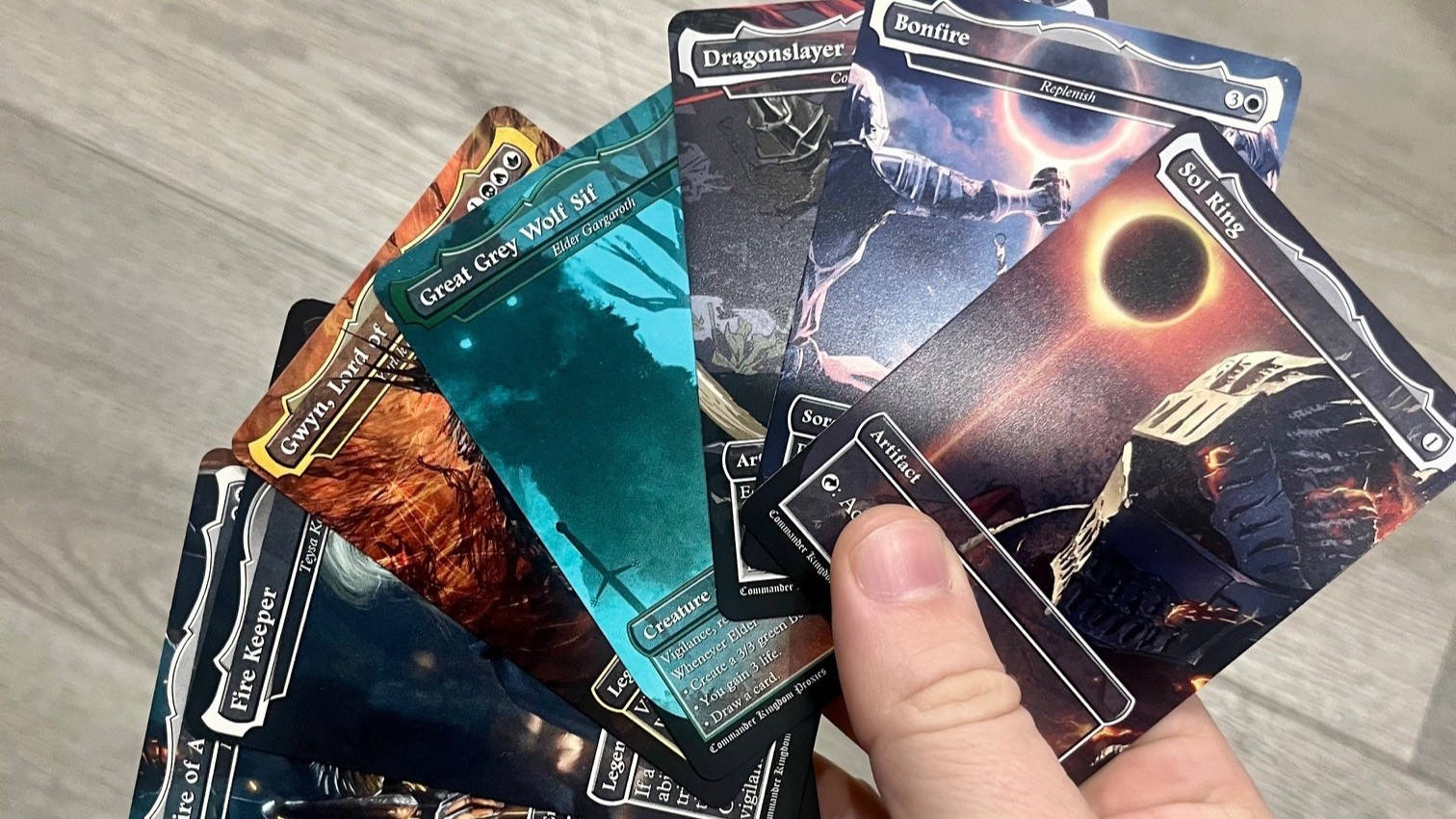
This post helps MTG players who want reliable print on demand proxy cards decide whether Proxy MTG fits their needs by explaining how its workflow, print standards, and guardrails differ from traditional proxy sellers, so they can get playable decks without drama or guesswork.
TLDR
- Proxy MTG is built for print on demand, not bulk preprints or mystery packs
- Upload a deck, print exactly what you need, and update it whenever you want
- Quality is consistent, readable, and sleeve-safe without crossing into counterfeiting
- Best for deck testers, cube curators, and players who iterate a lot
- Not trying to fool anyone, which is the point

Most MTG proxy services fall into one of two camps. Either they sell prebuilt packs of staples and hope your deck happens to line up, or they push realism so hard it starts to feel awkward explaining yourself at the table.
Proxy MTG took a third route. It treats proxy cards like what most players actually need them to be. Temporary, flexible, readable play pieces that can be printed on demand, swapped out easily, and explained in one sentence without anyone getting defensive.
That design choice sounds obvious. It is also surprisingly rare.
Print on Demand, Not Print and Pray
The core difference with Proxy MTG is simple. You are not buying a product catalog. You are printing your deck.
Print on demand proxy cards mean:
- You upload or paste a decklist
- You print only the cards you need
- You can reprint individual changes later
- You are not locked into fixed bundles or filler cards
If you change five cards in a Commander list, you reprint five cards. You do not reorder a full set or dig through leftovers hoping you kept the right proxy from last year.
This matters more than it sounds, especially for players who iterate constantly. Commander brewers, cube designers, and Legacy tinkerers live in a state of perpetual adjustment. Proxy MTG is designed for that reality.
Built for Playtesting and Real Tables
Proxy MTG proxies are optimized for use, not display.
That shows up in a few practical ways:
- Clean, readable text at sleeve distance
- Consistent card backs so shuffling does not become a tell
- Print alignment that actually lines up inside a sleeve
- Cardstock that feels stable without pretending to be something it is not
The goal is zero friction during gameplay. You should be able to draw a card, read it, and move on. No squinting. No explaining what version of the card this is supposed to be. No table pause while someone rotates it under the light.
That usability focus is why Proxy MTG resonates with pods that care more about gameplay balance than price tags.
Clear Line Between Proxies and Counterfeits
One of the quiet strengths of Proxy MTG is what it does not try to do.
It does not help players pass proxies off as authentic cards. It does not blur the line between playtest pieces and collectibles. It does not encourage deception, even accidentally.
That restraint matters.
Proxy MTG is explicit about intent. These are proxy cards for casual play, testing, and accessibility. They are not for sanctioned tournaments. They are not for resale. They are not for fooling anyone.
In practice, this makes table conversations easier. When your proxies are clearly proxies, most of the ethical tension disappears. You are not asking for trust. You are offering transparency.

Designed Around How People Actually Build Decks
Most proxy sellers still think in terms of card lists. Proxy MTG thinks in terms of decks.
That difference shows up in the workflow:
- Deck upload instead of individual card shopping
- Automatic formatting consistency across a full list
- Easy reprints when lists change
- No pressure to bulk order to get reasonable pricing
For anyone who builds decks digitally first, this feels natural. Your decklist is already in text form. Proxy MTG simply turns that list into a playable object.
This is especially useful for:
- Commander players tuning power levels
- Cube owners maintaining multiple archetypes
- Legacy and Vintage players testing mana bases
- Content creators iterating builds week to week
If you test decks often, print on demand proxies stop being a novelty and start being infrastructure.
Quality That Is Honest About What It Is
Proxy MTG prints meet the quality level they claim. Colors are solid, text is crisp, and cards hold up to normal play. But they are not marketed as indistinguishable collectibles, because that would be missing the point.
The cards feel good in sleeves. They shuffle cleanly. They survive game nights. And when one gets scuffed or outdated, you replace it without guilt.
That last part is underrated. Proxies should be disposable in the healthiest way possible. You should not hesitate to update your deck because you are worried about sunk cost.
Where Proxy MTG Makes the Most Sense
Proxy MTG is not trying to be everything for everyone. It shines in specific use cases.
It is ideal if you:
- Play Commander regularly and tune decks often
- Maintain a cube that evolves over time
- Test expensive formats without committing thousands of dollars
- Care about clarity and table trust
- Want proxies that look clean without inviting awkward questions
If your goal is museum-grade replicas, this is not that. If your goal is playable cards that respect both the game and the people you play with, it fits extremely well.
Tradeoffs Worth Acknowledging
No service is perfect, and Proxy MTG makes conscious tradeoffs.
You give up:
- Ultra-realistic aesthetics
- Tournament legality
- The illusion of owning something valuable
In return, you get:
- Flexibility
- Ethical clarity
- A workflow that matches how decks actually change
For most casual and testing environments, that is a very good trade.
The Bigger Picture
MTG proxies are not going away. Costs are not coming down, formats keep expanding, and players want to explore ideas without financial friction.
Proxy MTG succeeds because it accepts that reality and designs around it instead of fighting it.
Print on demand proxy cards are not about shortcuts. They are about making the game playable, testable, and welcoming without turning every deck decision into a financial commitment.
Proxy MTG understands that. And more importantly, it builds for it.
FAQs
Are Proxy MTG cards legal in tournaments?
No. Sanctioned events require authentic cards, with rare judge-issued proxy exceptions for damaged cards during the event. Proxy MTG is intended for casual and testing play.
Do Proxy MTG proxies look real?
They look clean and readable, but they are not designed to pass as authentic cards. That distinction is intentional.
Is print on demand more expensive than bulk proxy packs?
Per card, sometimes slightly. Overall, often cheaper, because you only print what you actually use.
Can I reprint just a few cards from a deck?
Yes. That is one of the main advantages of the print on demand model.
Who should not use Proxy MTG?
Players looking for tournament-legal cards or hyper-realistic replicas for display purposes.
