
What is popular culture?
Put simply, it’s the shared soup of ideas, tastes, trends, and “everybody knows this” references that a society absorbs—largely through mass media. And mass media isn’t just the news anymore. It’s entertainment, advertising, apps, social platforms, streaming, and whatever else can reach a huge audience at once.
For a long time, trading card games (TCGs) lived in the “niche hobby” corner of that world. You had to know a guy who knew a guy (or at least a local game store) to even understand why people were arguing about cardboard.
Now? You can buy booster packs next to laundry detergent. You can watch tournaments like they’re sporting events. You can follow deck tech creators the way people follow comedians. And if you say “I pulled a Charizard,” a suspicious number of adults will nod like you just described a stock portfolio.
So if video games were the “new media” that helped reshape pop culture in the 2000s, TCGs are the quietly relentless media that have been reshaping it for decades—by mixing gameplay, collecting, art, community, and storytelling into one very portable obsession.
TCGs started as a hobby… and then escaped containment
When Magic: The Gathering first hit in 1993, it didn’t feel like pop culture. It felt like a clever, nerdy invention that lived in hobby shops—somewhere between tabletop RPGs and comic book bins.
Then it did what great media always does: it spread.
Pokémon’s card game launched in Japan in 1996 and arrived in the U.S. shortly after, bringing an already-beloved monster universe into a format that was easy to collect, trade, show off, and argue about. Yu-Gi-Oh! followed with its own wave, blending story, anime aesthetics, and competitive play into something that could grab kids and pull them into a full-blown community.
And suddenly, TCGs weren’t just games. They were:
- A new retail category
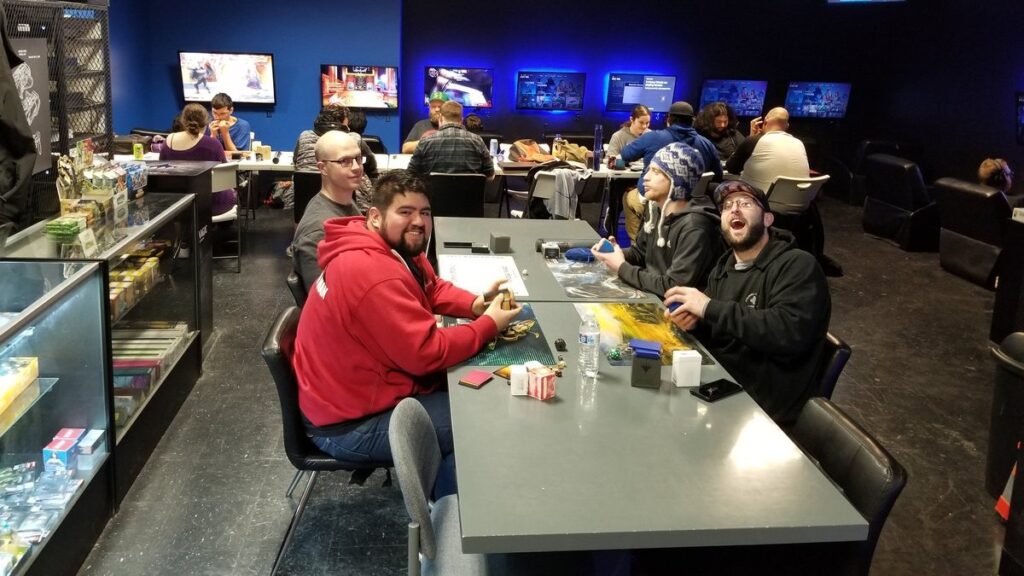
- A new social scene
- A new form of fandom
- A new kind of “identity hobby” (the way you can be “a Commander player” or “a Pokémon collector” and people instantly get the vibe)
The thing people missed early on is that TCGs don’t just sell cards. They sell participation.
Trading was social media before social media (just with binders)
Before we had feeds, likes, follows, and algorithmic doomscrolling, TCG players had something surprisingly similar:
Your binder was your profile.
It showed what you liked. What you valued. What you were chasing. What you could flex. You’d bring it to school, the shop, a tournament, a friend’s house—then negotiate trades in person, in real time, with social stakes attached.
TCGs also built early versions of modern online community behaviors:
- Meta discussion (what’s “best” this week?)
- Content creation (decklists, primers, combo explanations, set reviews)
- Status signaling (rare cards, foils, promos, playmats, signatures)
- Tribes (Spikes, Timmies, collectors, casuals, competitive grinders, “I only play Gen 1” Pokémon loyalists)
Even in the early internet era, TCG forums and deck sites acted like proto-social platforms: people gathered around shared interests, shared tech, shared drama, and shared in-jokes. The only difference is that the “profile picture” was sometimes a beat-up copy of a staple in a sleeve that had seen things.
And this is important for pop culture: TCGs created social spaces and shared language long before mainstream culture took online identity seriously.
TCGs didn’t just reflect pop culture—they produced it
One big reason TCGs keep growing is that they don’t merely borrow from pop culture. They create their own.
Pokémon didn’t become cultural wallpaper because of cards alone—but the card game helped keep Pokémon present in everyday life in a way that TV seasons and game releases couldn’t do by themselves. Same idea with Yu-Gi-Oh!: the card game and the animated brand identity fed each other until “card game” wasn’t just a product—it was part of the franchise’s DNA.
Magic is the weirder (and kind of impressive) version of this. MTG built a sprawling fantasy universe, rotated through worlds like a film studio, and trained an entire generation to treat illustration credits like they’re music liner notes. It normalized the idea that “game pieces” could also be collectible art and serialized storytelling.
In pop culture terms, TCGs taught millions of people to interact with media actively:
- You don’t just watch the story—you build with it.
- You don’t just consume the art—you collect it.
- You don’t just like a character—you make them your deck’s identity.
That’s a different relationship with entertainment than most media offers.
The crossover era: when pop culture started living inside the cards
Here’s where it gets extremely obvious that TCGs are now part of mass culture:
Pop culture IP doesn’t just inspire TCG aesthetics anymore—it becomes the product.
MTG’s Universes Beyond is the clearest example: it’s Magic saying, “We’re not just referencing pop culture. We’re hosting it.” Lord of the Rings, Doctor Who, Warhammer 40,000, Fallout, Final Fantasy—suddenly the TCG is a stage where multiple fandoms can collide in one rules system.
And when one of those crossover releases starts breaking sales records and generating mainstream coverage, that’s the exact moment a hobby stops being “niche.” It becomes cultural infrastructure. Like sneakers. Like anime. Like streaming.
This also works in the other direction: once pop culture is inside a TCG, the TCG community starts shaping how people talk about that IP. New memes, new art favorites, new “best character card” debates, new collector targets. It’s not passive anymore—it’s participatory fandom with cardboard receipts.
Digital play turned local scenes into global culture
A huge part of why TCGs now feel omnipresent is the shift from “you must physically go somewhere” to “you can always play, always watch, always participate.”
MTG Arena made Magic playable (and streamable) at scale. Pokémon TCG Live pushed Pokémon’s card ecosystem deeper into a digital-first reality. And mobile expansions of the hobby—whether full battle clients or collector-focused apps—made “TCG engagement” something you can do in tiny slices throughout the day.
That shift matters for pop culture because it multiplies visibility:
- More creators making videos
- More clips circulating
- More discourse in real time
- More onboarding for new players who don’t have a local store yet
In other words: digital made TCGs easier to broadcast, not just easier to play.
And broadcastability is basically the modern definition of “will this become pop culture?”
Collecting culture: the hobby that looks like a lifestyle
Even people who don’t play TCGs often know the collecting side. They’ve seen grading slabs. They’ve seen pack openings. They’ve seen “I pulled something insane” reaction videos.
That’s pop culture behavior: the same energy as sneaker drops, limited vinyl pressings, or rare game cartridges—except it’s wrapped in a game system with its own social structure. You can be:
- a player,
- a collector,
- a trader,
- a competitive grinder,
- a lore person,
- a sealed product goblin,
- or some chaotic combination of all of the above.
And that flexibility is why TCGs scale into mainstream culture so well. They don’t demand one type of participation. They offer multiple doors into the same world.
Where proxies fit into the culture (yes, even in non-MTG TCG land)
Proxies are a cultural tell. They’re proof that TCGs have grown big enough to create a familiar tension: people want to participate, but participation can get expensive.
In MTG, proxy culture often shows up as playtesting, budget fairness in casual Commander, or “I want to try this before I commit.” In other TCGs, you’ll see similar behaviors: testing decks before buying, using placeholders in casual settings, or printing stand-ins for kitchen-table play.
The important pop culture angle isn’t “are proxies allowed here.” It’s this:
When fans start inventing ways to participate despite cost barriers, you’re looking at a community that’s bigger than the product. The culture is now driving behavior, not just the publisher.
(If you want to cover this more directly on-site, this is a natural internal-link moment to your proxy explainer and etiquette guides.)
Why TCGs matter to pop culture
Trading card games are no longer a side hobby. They’re a modern media format that happens to be played with your hands.
They package:
- Art (illustration as collectible)
- Story (worldbuilding you can literally own)
- Community (local scenes + online platforms)
- Competition (events, rankings, metas)
- Commerce (packs, singles, drops, scarcity)
- Identity (what you play says something about you)
And because they touch all of those at once, they don’t just sit inside pop culture. They produce pop culture: slang, memes, aesthetics, rituals, creators, and entire social spaces.
So yes—video games changed pop culture.
But don’t sleep on TCGs. They’ve been doing it quietly, consistently, and with enough cardboard to build a small house.
