
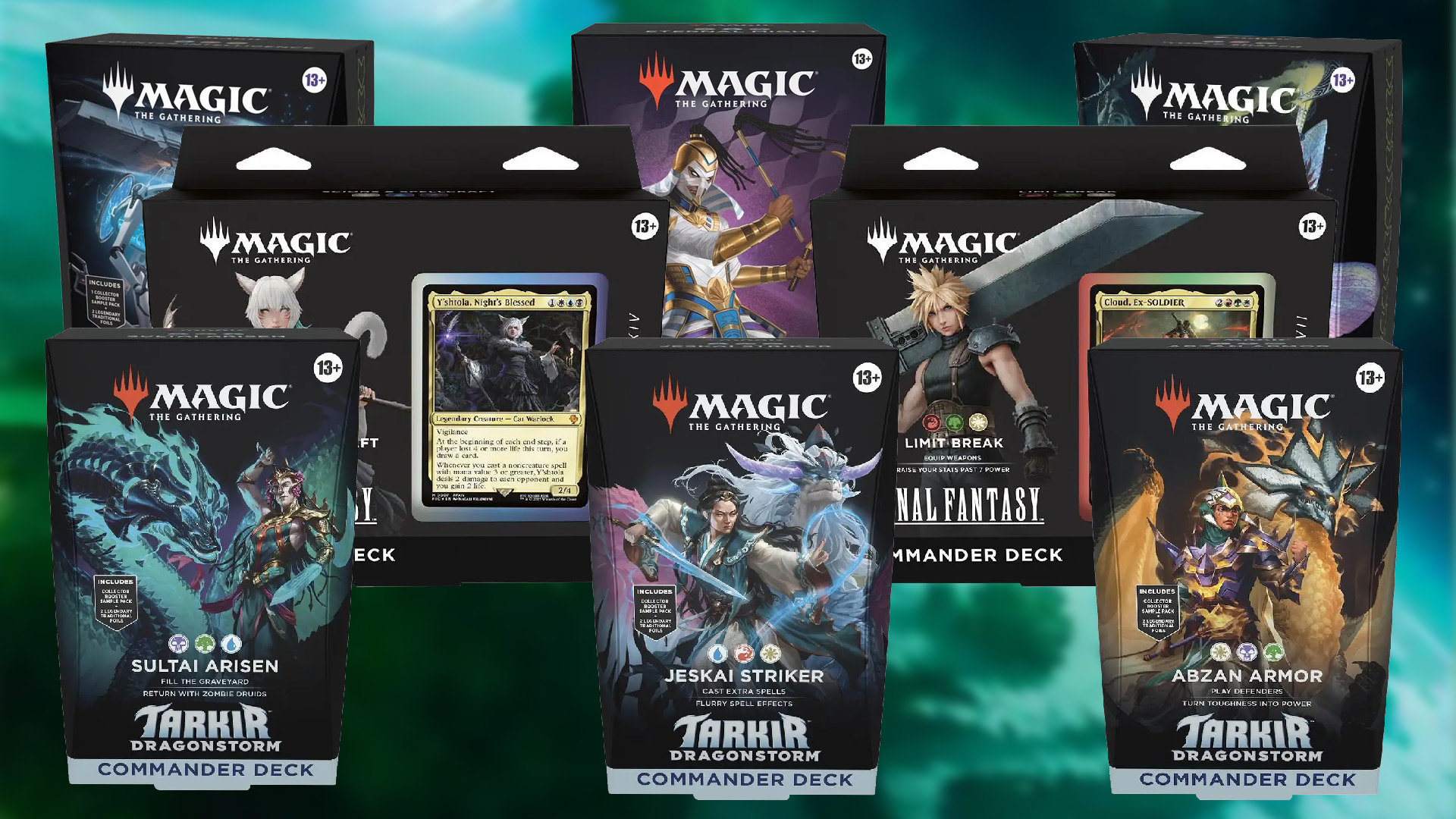
Commander is Magic’s most popular multiplayer format for a reason: it takes the “one more game?” energy of kitchen-table Magic and turns it into a 100-card, singleton brawl where your deck has a main character and everyone else has opinions about it. This guide is MTG Commander explained from the ground up: where it came from, what the actual rules are (the ones that matter at the table), and how to start without accidentally building a deck your friends will ban with their eyebrows.
What Commander is (and why it feels different)
At a rules level, Commander is simple: you build a 99-card singleton deck plus a commander (100 total), start at 40 life, and play a free-for-all game where you can attack anyone. In practice, Commander is different because of three things:
- More players means more politics. You are not “the problem” until you are, and then you are everyone’s shared hobby.
- The games run longer. Big mana, big spells, and big turns are not only allowed, they are basically the point.
- The social contract matters. Commander is a casual format with a competitive game engine. That mismatch is where most arguments are born.
If you like deckbuilding expression, splashy plays, and the occasional “Wait, that card does WHAT?” moment, Commander is home.
A quick history lesson: from EDH to Commander
Commander started life as a judge-made variant called Elder Dragon Highlander (EDH). The early hook was flavorful and weird: each deck was “helmed” by one of the five Elder Dragons from Legends, and you built around that identity. Judge and community leader Sheldon Menery helped popularize the format, playing it with judges at Pro Tours after the day’s work was done, and the idea spread fast. Eventually, Wizards of the Coast made an official Commander product in June 2011, and “Commander” became the name most players use today.
That origin story explains a lot about the format today:
- It is community-first by design.
- It is meant to be varied and replayable, not solved.
- It expects you to be a grown-up and talk to other humans before the game starts. (Yes, even if you sleeved up the deck in silence like a mysterious goblin.)
The core Commander rules (in plain English)
You can read the full rules any time, but these are the ones that come up constantly.
Deck construction: 100 cards, singleton, and a commander
A Commander deck contains exactly 100 cards, including your commander. With the exception of basic lands, you can only play one copy of any card by English name.
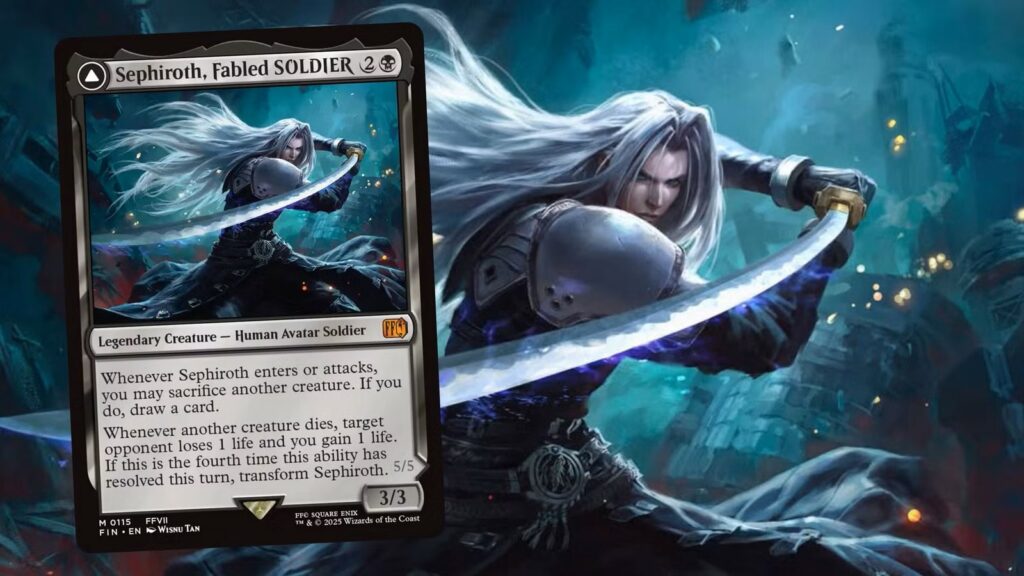
Most commanders are legendary creatures, and some noncreature cards can be commanders if their text says so. Your commander starts the game in the command zone, face up, so everyone knows what you are about to try.
Color identity: your commander’s colors are your deck’s colors
Your deck is restricted by your commander’s color identity. Color identity is not just the colored mana symbols in the casting cost. It also includes colored mana symbols in rules text (and color indicators, when relevant). The practical rule is easy:
- If your commander is green-white, every card in your deck must be green, white, green-white, or colorless.
- You cannot run a card with an off-color mana symbol anywhere on it, even if you never plan to activate that ability. Magic does not care about your intentions.
(If this feels strict, that is because it is. It is also why Commander decks have such distinct “personalities.”)
Starting the game: 40 life and a table full of threats
In a typical multiplayer Commander game:
- Each player starts at 40 life.
- Each player puts their commander in the command zone.
- Each player draws seven cards.
- Turns proceed clockwise. You can attack any opponent, not just the person next to you.
Casting your commander and “commander tax”
You can cast your commander from the command zone, following the normal timing rules for that card (usually sorcery-speed, unless it has flash or something gives it flash).
Each time you cast your commander from the command zone after the first time, it costs {2} more for each previous time you cast it from the command zone that game. This is the famous “commander tax.”
Commander tax is the game’s way of saying: “Sure, you can have your main character back. You just have to pay the late fee.”
What happens when your commander dies, gets exiled, or gets tucked
This is the part that gets misplayed a lot, so here is the clean version:
- If your commander would go to your hand or library, you can put it into the command zone instead.
- If your commander goes to the graveyard or exile, you usually get the option to move it to the command zone after it hits that zone (so “dies” triggers still work).
Either way, your commander is hard to permanently remove. That is intentional. Commander is built around recurring access to your signature card.
Commander damage: the 21-point rule
In addition to normal life total loss, there is a special knockout condition:
If a player has been dealt 21 or more combat damage by the same commander over the course of the game, that player loses the game.
A few important clarifications:
- It is combat damage only. A commander’s triggered ability that pings you does not count.
- The damage is tracked per commander. If two different commanders hit you for 11 each, you do not die to commander damage.
- “Same commander” means the physical card, even if control changes hands.
“Wish” cards do not work the way you want
Effects that bring a card you own from outside the game into the game (the classic “Wish” family) generally do not function in Commander. In most casual Commander games, there is no sideboard to pull from anyway, so the rule keeps things consistent.
Commander is multiplayer first: politics, timing, and the stack
If you are coming from 1v1 formats, Commander has one main adjustment: your “default” play patterns get punished.
- You cannot spend all your resources answering the first threat you see.
- You cannot ignore the table, because the table will not ignore you.
- You cannot assume everyone passes priority cleanly, because someone is always “thinking about it.”
If your games get messy around timing (and they will), it helps to learn the table habits that cause the most confusion. Two reads worth linking in your Commander hub:
- MTG Priority Explained: Passing, Holding, and Table Shortcuts That Cause Fights
- MTG Multiplayer Priority (Commander): APNAP, Priority Loops, and Why It Takes Forever
Those topics sound “rules nerd,” but they are really “how to avoid your friend saying ‘that’s not how it works’ for the third time this turn.”
Rule 0: the unwritten rule that keeps Commander playable
Commander has a famous “Rule 0” idea: talk with your group before the game about what kind of experience you want. This is not official rules text, but it is part of why the format functions at all.
A useful pregame conversation is not a 10-minute podcast episode. It is usually three questions:
- How does your deck try to win? Combat, combo, value engine, locks, alternate win conditions.
- How fast can it win if nobody stops you? “Turn 6” means something very different from “turn 12.”
- What kind of stuff is in here that people hate? Mass land denial, heavy tutors, repeated extra turns, hard stax, or a commander that makes the table miserable.
If you want a shortcut, a lot of groups now use brackets.
Commander Brackets and Game Changers: a new shared language (optional)
Commander is a format with a huge card pool and a huge range of player goals. To help people find the same kind of game, Wizards introduced an optional Commander Brackets system, plus a small Game Changers list of cards that tend to warp games.
The important part is that brackets are about intent, not just raw power. You can build a “low bracket” deck that still plays brutally if your intent is to do that. The system is trying to make that mismatch harder to hide.
The five brackets
As announced, there are five Commander Brackets:
- Bracket 1: Exhibition (ultra-casual, theme-first)
- Bracket 2: Core (roughly modern precon level)
- Bracket 3: Upgraded (stronger than precons, but not fully optimized)
- Bracket 4: Optimized (high power, no restrictions beyond the ban list)
- Bracket 5: cEDH (competitive, metagame-aware play)
Brackets 1 and 2 exclude Game Changers. Bracket 3 allows up to three Game Changers. Brackets 4 and 5 allow unlimited Game Changers (the only hard restriction is the banned list).
What are “Game Changers,” exactly?
Game Changers are cards that dramatically warp Commander games: fast mana that launches someone into the future, tutors that turn every game into the same script, resource engines that bury the table, or cards that prevent people from playing at all. The beta list is intentionally short (40 cards) so it stays readable.
The point is not “these cards are evil.” The point is “these cards create a different kind of game, and people deserve to opt in.”
What brackets do well (and what they do not)
Brackets help with matchmaking, especially with strangers at a store or event. They give you a shared vocabulary beyond “my deck is a 7,” which is Commander’s most famous lie.
What they do not replace is Rule 0. Even within a bracket, you still need to communicate. “Bracket 3 but it’s mostly goofy” is very different from “Bracket 3, three Game Changers, and I tutor for them every game.”
The banned list and who manages Commander now
Commander has always had a ban list, but it is intentionally small compared to competitive formats. The format leans on social solutions first, because banning your friend’s pet card does not actually fix your friend.
That said, bans happen.
- On September 23, 2024, the Commander ban list was updated to ban Dockside Extortionist, Jeweled Lotus, Mana Crypt, and Nadu, Winged Wisdom.
- On April 22, 2025, five cards were unbanned: Gifts Ungiven, Sway of the Stars, Braids, Cabal Minion, Coalition Victory, and Panoptic Mirror (and those unbanned cards were placed on the Game Changers list).
Also worth knowing: in October 2024, Wizards of the Coast announced that the Commander Rules Committee had given Wizards management of Commander, and Wizards formed the Commander Format Panel (CFP) to keep community voices involved.
As of late 2025, the CFP was still treating brackets as beta, planned another check-in by the end of February 2026, and said there would be no Commander bans or unbans for the remainder of 2025.
Common Commander misunderstandings (the ones that start arguments)
Here are the greatest hits:
“Commander tax goes away if my commander dies”
Nope. Commander tax counts how many times you cast your commander from the command zone, not how many times it died. The game does not care about your commander’s tragic backstory.
“Commander damage is any damage from my commander”
Nope. It is combat damage only.
“I can run off-color activations if I never use them”
Nope. Color identity looks at mana symbols on the card, not your plans.
“Tucking a commander is permanent”
Not usually. Commanders have special rules that let them go back to the command zone from most places. (And you should still bring it up before the game if your deck is built around making commanders disappear, because that is the kind of fun only one person is having.)
How to build your first Commander deck (without making it weird)
If you want MTG Commander explained as deckbuilding advice, it comes down to this: your deck needs a plan, but it also needs to function when your plan gets punched in the face.
Here is a simple, reliable recipe for new builders:
1) Pick a commander that tells you what the deck wants
Good first commanders do one or more of these:
- Reward you for doing something normal (casting creatures, drawing cards, playing lands)
- Provide card advantage or mana over time
- Do not require a five-card combo to matter
If your commander only does something when you already have a perfect board, your deck will feel like it “does nothing” in real games.
2) Start with boring numbers, then get creative
There is no universal template, but most functioning decks land roughly here:
- 36 to 39 lands (start higher if your deck is slow or has few cheap plays)
- 8 to 12 ramp pieces (mana rocks, land ramp, mana dorks)
- 8 to 12 card draw or card selection pieces
- 8 to 12 interaction pieces (spot removal, board wipes, counterspells where appropriate)
Then you add the fun parts: synergy cards, payoffs, and your personal nonsense.
If you hate templates, here is the honest truth: templates are how you get to the part where you get to be special.
3) Build for the table you actually play at
Commander is not one format, it is a bunch of overlapping micro-formats held together by friendship and snacks. Ask yourself:
- Do games end via combat, combo, or attrition?
- Do people run lots of board wipes?
- Do people play fast mana?
- Is “infinite combo” acceptable, or is it a betrayal?
Your answers tell you whether your deck should be Exhibition-Core casual, bracketed Upgraded, or something closer to Optimized.
4) Respect the clock
Commander games can run long, but “long” and “stalled” are different. To keep your games moving:
- Avoid repeated extra turns unless your group is into it.
- Keep tutor chains reasonable (searching your deck three times a turn is not a personality).
- Practice your lines if your deck has complicated loops.
A deck can be strong and still be polite.
Why Commander keeps winning
Commander is not perfect. It is a format where one person can accidentally take a 12-minute turn, another person can accidentally win with a card they did not read, and everyone can accidentally become rules lawyers. And yet, it works because it lets players express themselves.
If you take nothing else from this pillar, take this:
- Commander is at its best when everyone knows what game they agreed to play.
- The rules support that goal, but the table conversation does most of the heavy lifting.
And if you want the one-line summary: MTG Commander explained is “singleton, 40 life, a face-up commander, and a social contract strong enough to survive a turn-one Sol Ring.”
SEO Pack
SEO Focus Keyphrase: MTG Commander explained
SEO Title (60 chars max): MTG Commander explained: rules, history, and how to start
Meta Description (155 chars max): MTG Commander explained with clear rules, quick history, brackets, and deckbuilding tips so you can start playing without table drama.
URL Slug: mtg-commander-explained-rules-history
Excerpt: Commander is Magic’s biggest multiplayer format. Learn the rules, the history, brackets and Game Changers, and how to build a first deck that actually works.
Tags: commander rules, deck building, multiplayer magic, commander brackets, game changers, color identity, rule zero
