
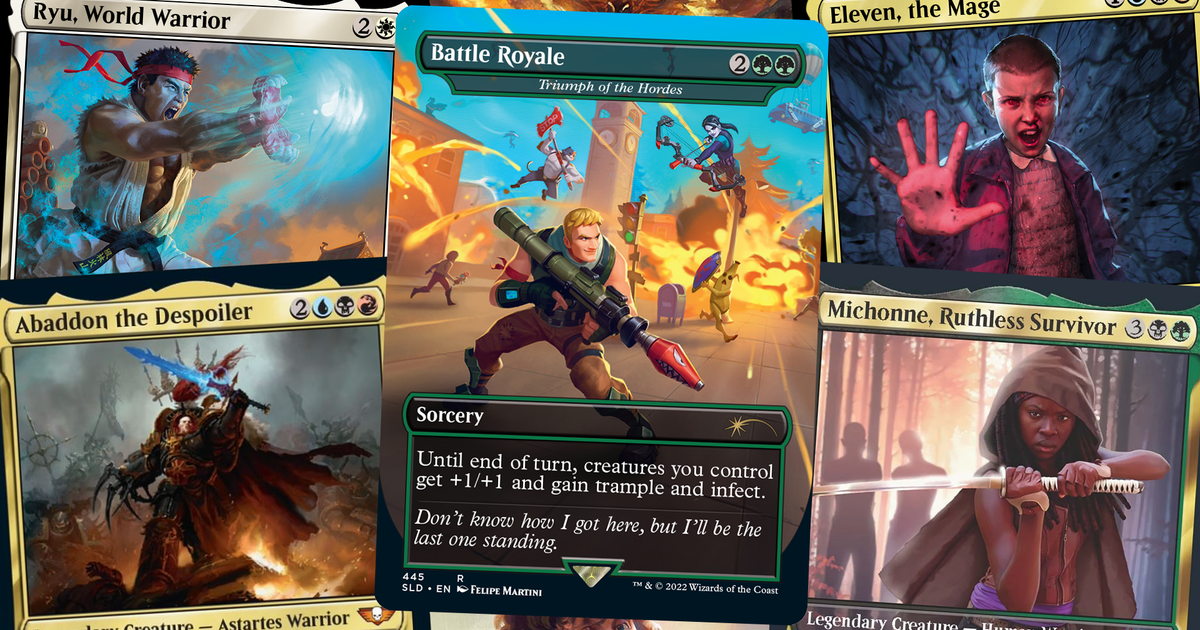
Magic: The Gathering has always been a blender of tropes. Elves, goblins, angels, necromancers, a guy named Urza who definitely has “problematic genius” in his LinkedIn bio. But Universes Beyond MTG isn’t just another flavor of fantasy. It’s a decision to turn Magic into a meeting place for other fandoms, with the rules engine as the common language.
And once you make crossovers a core pillar instead of a novelty, the culture shifts. Not “people argue online” shifts. That’s the natural state of the internet. I mean the day-to-day stuff: what shows up at your LGS, how players talk about decks, what new players expect, what old players feel they’re losing, and what everyone quietly learns to tolerate because the next set is already on the way.
From side dish to main course
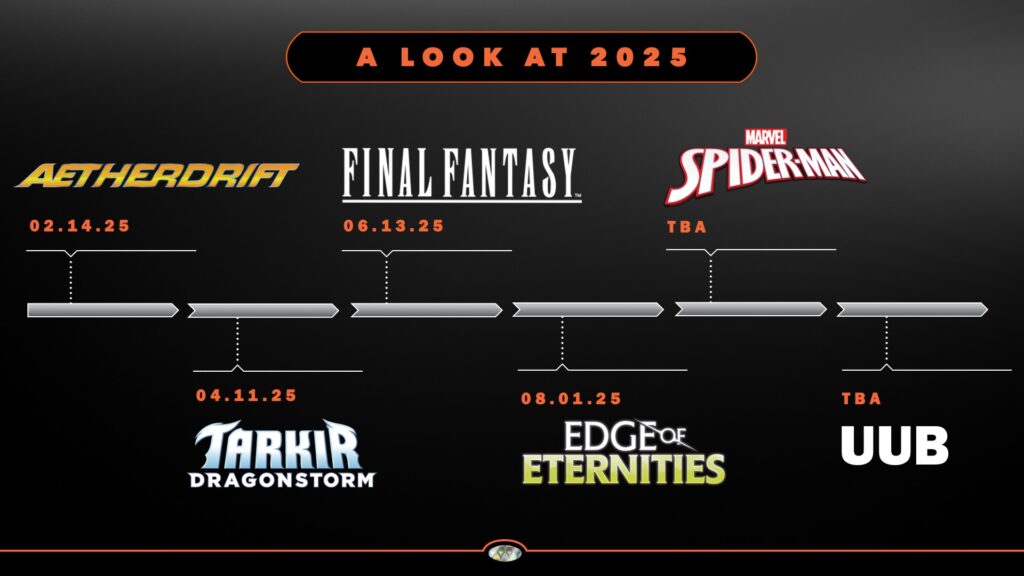
The simplest cultural change is also the loudest: Universes Beyond stopped being an occasional “special product” moment and became part of the main release calendar. Wizards didn’t just keep making crossovers, they changed how those sets plug into the game’s legality structure. When Universes Beyond becomes something you can expect on a schedule, it stops being a surprise and starts being an identity.
That matters because Magic culture is built on shared context. Not just rules context, but vibes context. You sit down, you assume the other person broadly recognizes what a “planeswalker” is, what “Golgari” implies, and why a random squirrel might be a win condition. Universes Beyond adds a second layer of shared context: outside franchises. And now the table can be split between people who know Magic deeply and people who know Spider-Man deeply, and both are “right” to be there.
The result is that Magic becomes less like a single fandom with expansions and more like a host platform with guests. Some players find that exciting. Some find it exhausting. Both reactions are reasonable, which is inconvenient because we prefer our discourse to be simple and morally certain.
The rulebook gets simpler, the identity gets weirder
Wizards framed the legality changes as simplification. In practical terms, it removes the constant “wait, is that legal here?” friction that newer players hit. From a culture angle, though, it also changes what “normal Magic” means.
Once the default expectation is that Universes Beyond cards can show up across major Constructed play, you get a new kind of normalization. The question isn’t “should this be here?” It becomes “how much of this is the new baseline?” That’s a very different argument, and it’s harder to “win” because it’s not about one product. It’s about what Magic is becoming over time.
If you want a concrete example of why this feels different now: Universes Beyond has already produced cards that didn’t just show up, they shaped formats. When a crossover set can drop a card so universally powerful that it ends up banned in Modern, players stop treating “it’s just a fun guest appearance” as a comforting story. It becomes part of the competitive ecosystem, with all the baggage that implies.
So yes, the legality rules may be cleaner. But culturally, the identity question gets louder because it’s no longer quarantined to “Commander night and the occasional Secret Lair.”
The table becomes a fandom crossroads
Here’s the part that people rarely say out loud because it sounds too wholesome for 2026: crossovers genuinely bring people in.
Universes Beyond doesn’t just sell cardboard. It lowers the intimidation barrier. A player who wouldn’t touch Magic because it looks like a graduate seminar on combat math might try it because they recognize the characters and the themes. The game feels less like “enter a 30-year tradition” and more like “show up and play with something you already love.”
That shifts the culture at local tables in a few ways:
- Deck identity changes. People describe decks less by archetype and more by franchise, especially early on. That can be refreshing. It can also make veteran players feel like they’re watching Magic become a language for other fandoms instead of a fandom with its own language.
- Conversation changes. Pre-game chatter stops being only about metas and matchups and starts being about lore comparisons, character moments, and “okay but would this character actually be Blue-Red?”
- The vibe diversifies. Some pods become more casual and theme-forward. Others get more polarized, because now you’re not just arguing about power level. You’re arguing about taste, nostalgia, and what “belongs.”
If you’ve ever had a Rule 0 chat that went sideways over something small, you already know how fragile table harmony can be. When you add franchise attachment on top of that, it’s worth brushing up on social tooling. Our guide on MTG Proxy Etiquette is about proxies, but the same social muscle applies here: clarify expectations early, assume good intent, and remember that being correct is not the same as being invited back.
Commander gets louder, Standard gets… broader
Commander was already Magic’s cultural center of gravity: social, expressive, and built around personal identity. Universes Beyond slides into that like it was always meant to be there. Your commander is literally a flag you plant on the table. So of course people want that flag to be a character they’ve loved for 15 years.
That creates a noticeable shift: Commander becomes even more about self-expression through fandom. The “deck as personality” trend accelerates. The upside is more joy and more creativity. The downside is more friction when someone doesn’t share your definition of fun, because fandom decks can still be brutal decks. A themed list is not automatically a gentle list. Sometimes it’s just a brutal list with better merch.
Standard and other competitive spaces feel the change differently. When Universes Beyond becomes part of the mainstream pipeline, competitive players don’t get to opt out based on aesthetics. They can only opt out by leaving the format, and that’s a cultural pressure point. Some will adapt quickly. Others will treat it like a permanent identity breach, because competitive Magic culture is built on the idea that the game is a coherent world, even when the mechanics get weird.
That’s why “Magic is becoming Fortnite” is such a sticky comparison. Not because it’s perfectly accurate, but because it captures the feeling that the game is becoming a shared stage for many brands, not a single world with occasional references.
Vorthos grief is real, even if you think it’s silly
Magic has lore-first players. Always has. They care about planes, characters, and continuity. For them, Universes Beyond can feel like a kind of cultural displacement. Not “i dislike this product” but “the thing i loved is being redefined in front of me.”
And here’s the tricky part: Wizards can be both sincere and strategic at the same time. They can care about Magic’s internal worlds and also chase crossovers because the numbers are loud. That creates a kind of ongoing mourning cycle for lore-first fans, because the reassurance is never final. The next announcement resets the conversation.
There’s also a subtle social shift inside the fandom: it becomes easier to dismiss lore attachment as “cringe” because the game itself is now explicitly open to outside properties. If the official product line says the multiverse has guest stars, the culture starts treating “purism” as optional. Some people will be fine. Some will feel like they’re being told their way of loving Magic is old-fashioned.
The money changes the mood
Magic has always had a money layer. Singles, staples, chasing foils, “investments” that mostly look like stress with nicer binders. Universes Beyond intensifies that layer because it pulls in buyers who aren’t traditional Magic players.
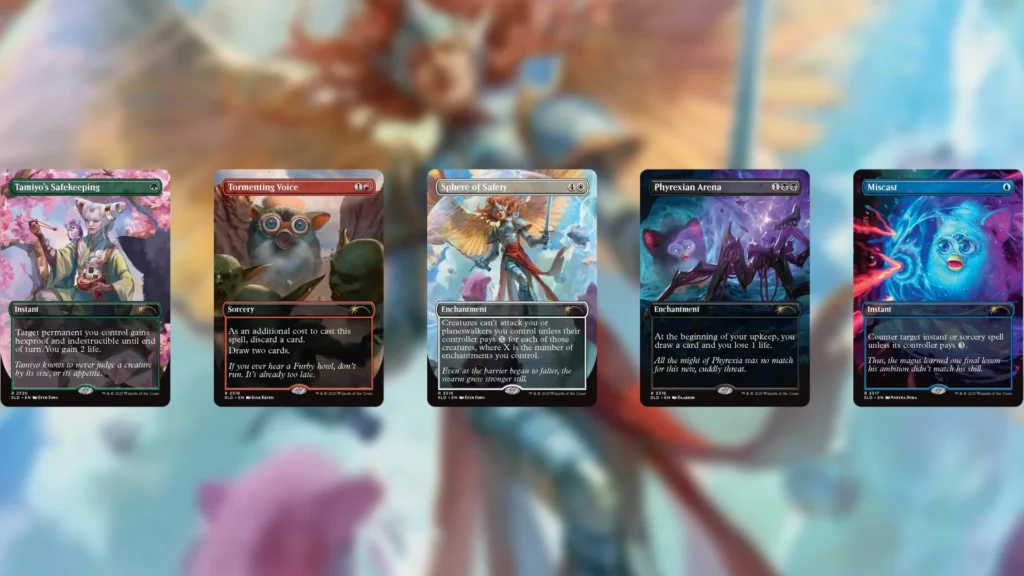
https://printmtg.com/mtg-furby-secret-lair-drop-yes-wizards-actually-did-this/
When a crossover set hits huge demand, you get more scarcity narratives, more price spikes, and more resentment. Not all of that is fair, but it’s predictable. The cultural effect is that release season feels less like a shared celebration and more like a scramble. Some players love the hype. Others get tired of feeling like they’re competing with collectors, scalpers, and nostalgia tourists who are here for one franchise and gone the next.
That tension bleeds into LGS culture too. Stores benefit from big releases, but they also have to manage player frustration when product is tight, prices jump, or the “new normal” pushes players out of their comfort zones.
If you want a parallel: our explainer on All About MTG Proxy Cards exists partly because cost pressure changes behavior. Universes Beyond doesn’t create that problem, but it can absolutely turn the dial up.
So what is Magic culture becoming
In my opinion, Universes Beyond MTG is pushing Magic toward three cultural identities at once:
- Magic as a game engine: the rules system is the product, and settings are modular skins you swap in and out.
- Magic as a fandom commons: a place where different communities overlap, share language, and occasionally argue about who brought the “real” snacks.
- Magic as a prestige collector ecosystem: where big IP releases act like cultural events, not just expansions.
Those identities don’t have to be mutually exclusive. But they do compete for oxygen. And the friction you see online is often just players reacting to which identity feels like it’s winning.
The weird part is that none of this is abstract anymore. The schedule tells you where the priorities are. Universes Beyond isn’t a cameo. It’s a lane.
And if you’re trying to predict how the culture shifts next, here’s a boring answer that is still true: it will depend less on “does this IP belong” and more on whether the sets play well, feel cohesive, and don’t make the average player feel like they’re paying more for less. People can accept a lot if the games are fun. They can reject almost anything if it feels sloppy, scarce, or cynical.
So yes, you may eventually cast a removal spell on someone’s childhood hero. But Magic has always been about imagination, conflict, and adaptation. We’re just doing it with bigger guest stars now.
And if nothing else, it’s nice that the game finally found a way to make everyone equally annoyed. That’s real community.
